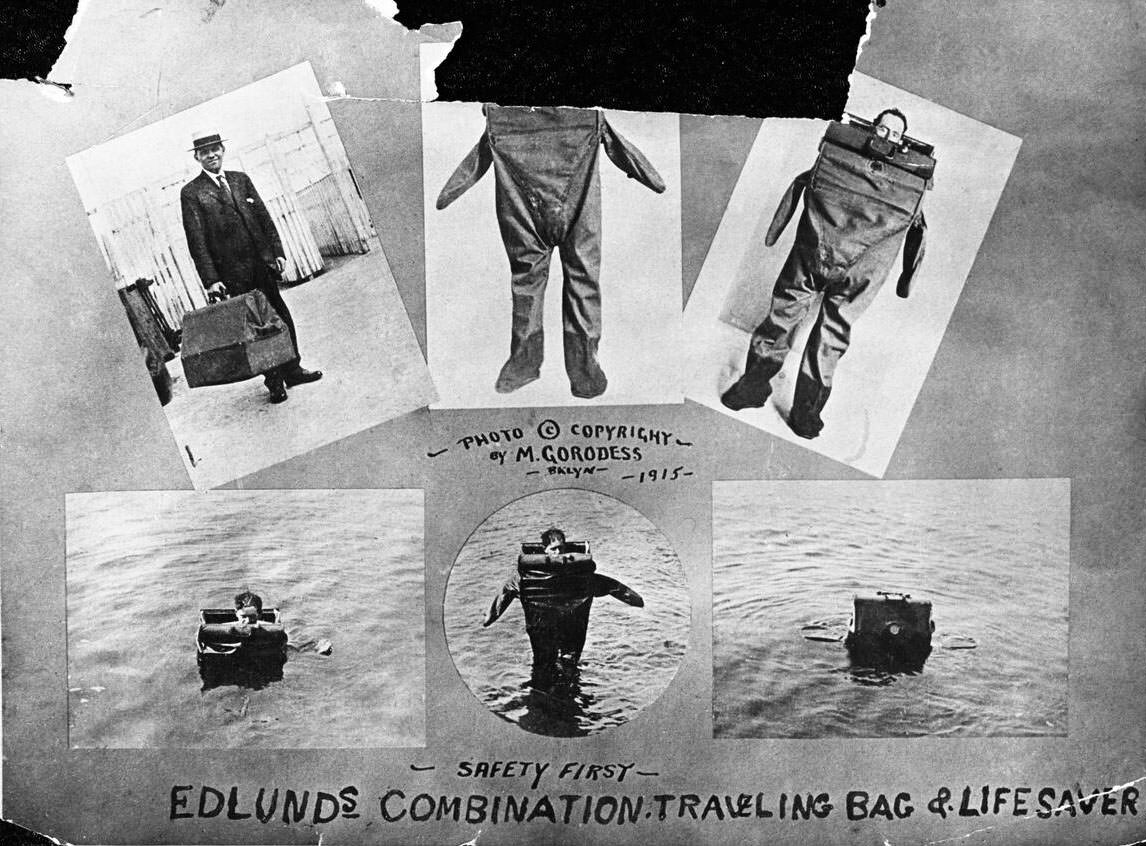
A man in a suit stands beside an ordinary-looking suitcase, and the sequence that follows explains why it mattered: the bag is shown as a full-body, waterproof-looking outfit, then worn with the traveler’s head peeking above a stiff, buoyant collar. Below the posed studio-style images, three water shots complete the promise—first floating, then wading, then bobbing like a compact little craft. Scrawled captions emphasize “Safety First” and identify the device as “Edlund’s Combination Traveling Bag & Lifesaver,” tying the whole display to the inventive spirit of 1915.
John Edlund’s idea speaks to an era when modern travel was thrilling but not always safe, and inventors chased practical solutions that could be carried anywhere. The concept is simple and startlingly ambitious: luggage that transforms into an emergency flotation aid, bridging everyday convenience with lifesaving utility. Even without technical diagrams, the photographs sell the transformation step by step, turning a familiar suitcase into something closer to a portable lifeboat.
For readers interested in early 20th-century inventions, maritime safety history, or the culture of “safety devices” marketed to the public, this photo set offers a vivid piece of visual evidence. The staged progression, the water demonstration, and the bold labeling combine like an advertisement and a proof-of-concept in one. It’s a reminder that behind many historic patents were people trying to solve real fears—especially the fear of water—using whatever materials, photography, and persuasive flair they had at hand.