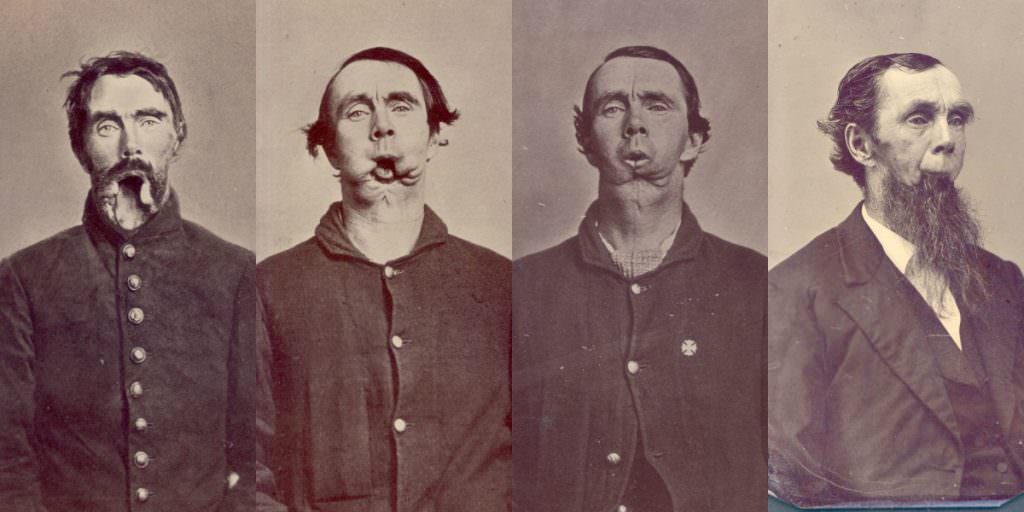
Four men line up before a plain studio backdrop, their posture stiff with the practiced stillness early photography demanded. What breaks the formal pose is the damage: swollen lips, distorted jaws, and mouths held open as if each breath has to be negotiated. The title, “Broken Faces of Warriors,” lands hard here, because the camera isn’t chasing glory—it’s recording what violence leaves behind.
Their clothing hints at military life and its aftermath, from buttoned uniforms to a worn jacket, while the expressions range from weary endurance to a distant, almost absent focus. Whatever the exact conflict, the accompanying theme of civil wars fits the grim intimacy of the scene: men who likely fought neighbors, then returned to be examined, documented, and displayed for proof. The image reads like an early medical record as much as a portrait, where scars and missing tissue become the story.
Viewed today, this historical photo invites uncomfortable questions about survival, treatment, and the cost of close-range fighting in an era before modern reconstructive surgery. It also underscores how photography became a tool for witnessing—capturing injuries that written reports could soften or skip. For readers searching Civil War history, wartime trauma, or the origins of medical documentation, this post offers a stark reminder that the battlefield’s damage followed soldiers long after the shooting stopped.