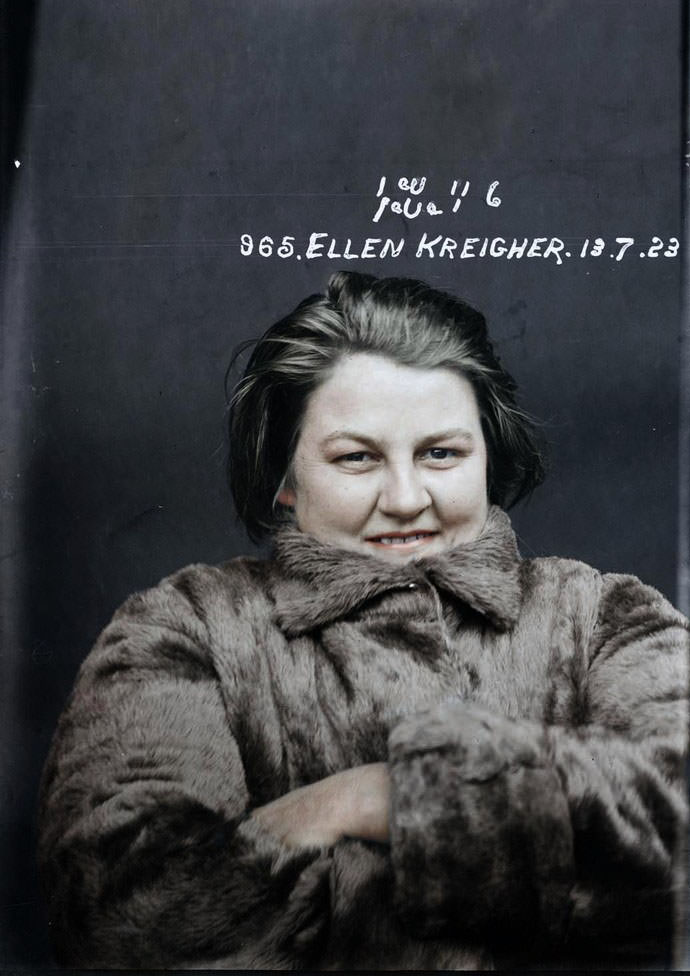
Ellen Kreigher faces the camera at Sydney’s Central Police Station on 13 July 1923, a moment frozen just after her arrest on a murder charge. The stark station backdrop is marked with chalked identification—her surname and the date—turning a human face into an official record. Even so, the portrait retains a disquieting intimacy: a steady gaze, a tightened mouth, and the sense of a life abruptly rerouted by the machinery of law.
A heavy fur coat dominates the frame, its plush texture rendered all the more vivid through modern colorization, and it reads like both armor and shelter. Her arms are drawn in close, suggesting cold, self-protection, or simply the posture demanded by a hurried custodial photograph. Against the blank wall, every detail—hair swept back, collar raised, skin tones brought forward—invites the viewer to linger on expression rather than surroundings.
Police images like this sit at the intersection of crime history and everyday social history, revealing how early 20th-century justice systems documented suspects and constructed authority through visual evidence. The handwritten board behind her underscores the bureaucratic certainty of the moment, while the colorized treatment encourages new engagement with an old record. For readers searching Sydney crime archives, 1920s policing, or the story of Ellen Kreigher, this arrest photo offers a compelling, unsettling window into the era’s procedures and public fascination with notorious cases.