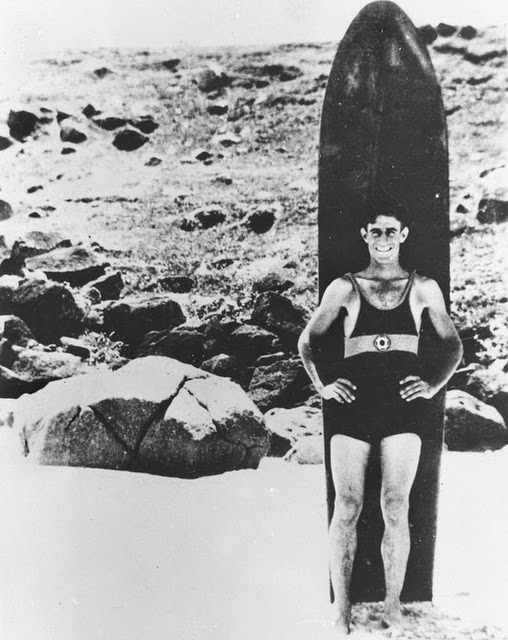
Leaning into his tall, dark surfboard with hands planted confidently on his hips, the surfer in this ca. 1935 scene looks every bit the beach athlete of the interwar years. The rocky shoreline behind him keeps the setting spare and elemental, drawing attention to the clean silhouette of board and body against bright sand. It’s a posed moment, but not a stiff one—his expression and stance suggest pride in skill and equipment, as if the board itself were a badge of membership in a growing seaside culture.
Clothing tells its own story here, linking sport, style, and the era’s ideas about health and modern living. The fitted swimwear—functional yet distinctly fashionable—signals how beachwear was becoming a public statement rather than merely practical attire, echoing broader 1930s shifts in leisure and display. Paired with the imposing, streamlined board, the outfit reinforces the period’s admiration for strong lines, athletic form, and the promise of outdoor freedom.
Surf history enthusiasts will recognize the value of photographs like this for understanding how surfing presented itself before it became mass media spectacle. With no distracting signage or identifiable landmarks, the image works as a timeless reference point: a surfer, his board, and the rugged edge of the sea. For readers exploring 1930s fashion and culture—whether in Australia’s coastal life or the wider beachgoing world—this portrait offers a crisp, characterful glimpse of how leisure, identity, and style met on the sand.