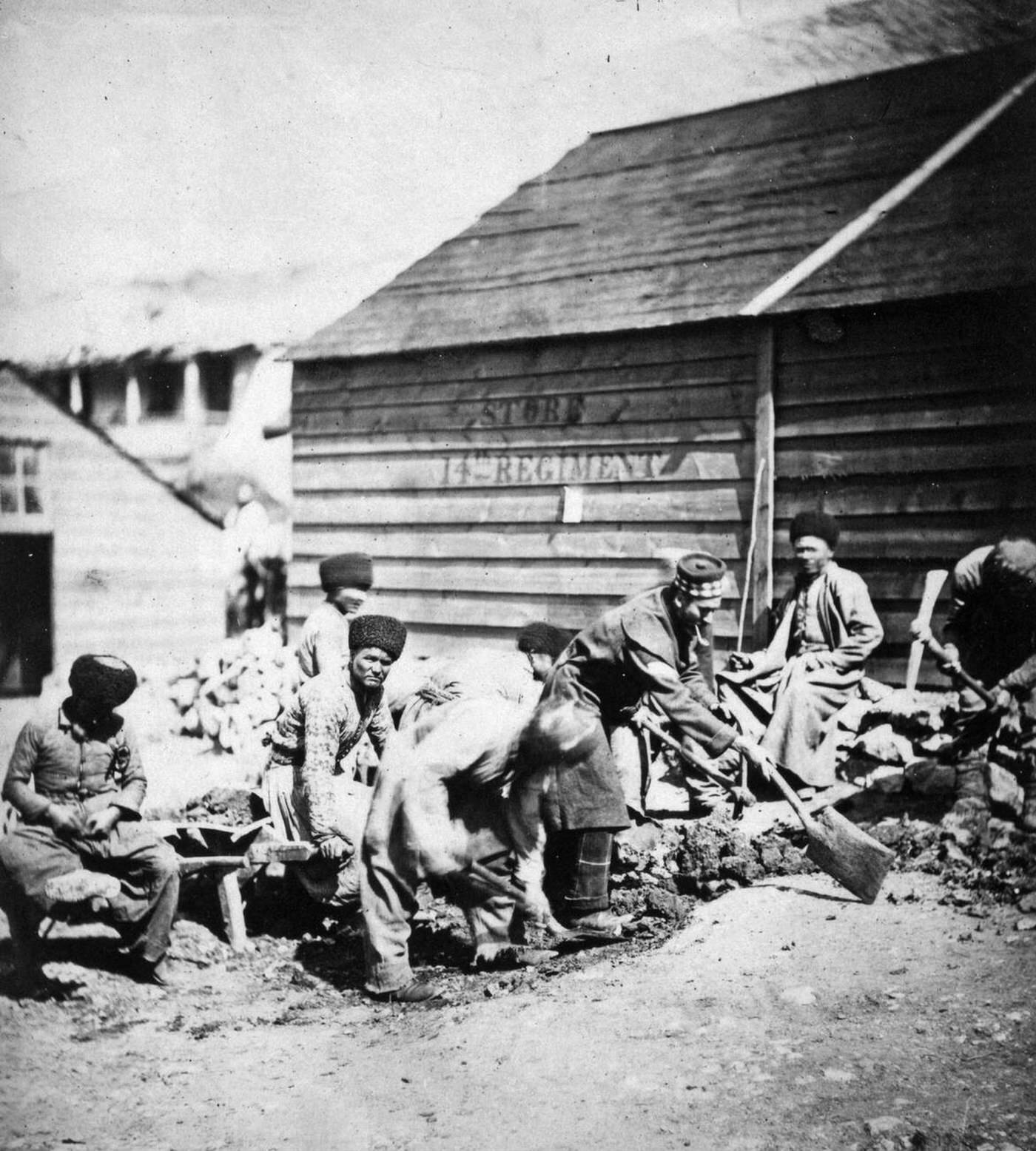
Against the rough plank wall of a military hut, a small group of Tartar laborers pauses and works in the churned earth of a Crimean War camp. Heavy coats, layered garments, and tall fur caps stand out against the glare of the open yard, while shovels and a wheelbarrow turn the scene into a quiet study of manual effort rather than battlefield drama. Faint lettering on the building hints at an organized regimented presence nearby, underscoring how close civilian labor and military life could sit side by side in 1855.
Work dominates the frame: one man drives a spade into the soil, another bends low to lift or level, and others rest briefly as if caught between tasks. The ground looks muddy and trampled, the kind of improvised infrastructure that kept armies fed, housed, and supplied—roads mended, earth moved, debris cleared, and camps kept functioning through long stretches of waiting. The expressions and postures suggest fatigue and concentration, reminding viewers that war’s tempo is often set by routine labor as much as by combat.
Seen today, this historical photo offers a valuable window into the overlooked workforce that sustained the Crimean War behind the lines. It speaks to logistics and survival—how camps were built and maintained, how supplies moved, and how local and regional communities became entangled in a modern industrial conflict. For readers exploring 19th-century military history, wartime labor, or the lived experience of 1855 in Crimea, the image brings the human scale of the war sharply into focus.