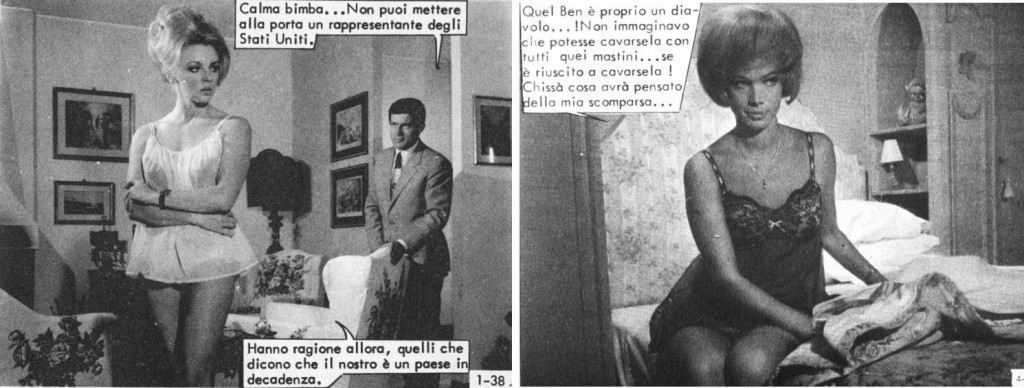
Glamour and danger collide in this striking slice of Italian-language fotonovela cover art, where staged photography does the work of inked panels. On the left, a tense domestic interior—framed pictures, heavy furniture, and a sharply dressed man in the background—sets up a classic crime-comic mood of suspicion and confrontation. The speech balloons, printed directly over the image, pull the reader into a melodramatic exchange that feels at once cinematic and tabloid-sharp.
Across the spread, the right-hand scene shifts to a bedroom tableau with a woman seated on the bed, lit like a film still and posed for maximum emotional impact. Lace, satin, and soft shadows contrast with the hard edges of the dialogue, a hallmark of 1960s–70s crime and romance hybrids that thrived in Spain and Italy. The result is a suspenseful visual rhythm: two moments, two settings, and a narrative snap cut between them.
Fotonovelas like these were designed to be devoured quickly—sensational stories told with real actors, expressive body language, and punchy text that promised scandal, intrigue, and consequences. For collectors and pop-culture historians, the appeal lies in the intersection of pulp publishing and popular cinema aesthetics, preserved here in the typography, styling, and staged drama. As an artifact of mid-century mass entertainment, this cover art opens a window onto how crime comics sold emotion, aspiration, and peril one photographic frame at a time.