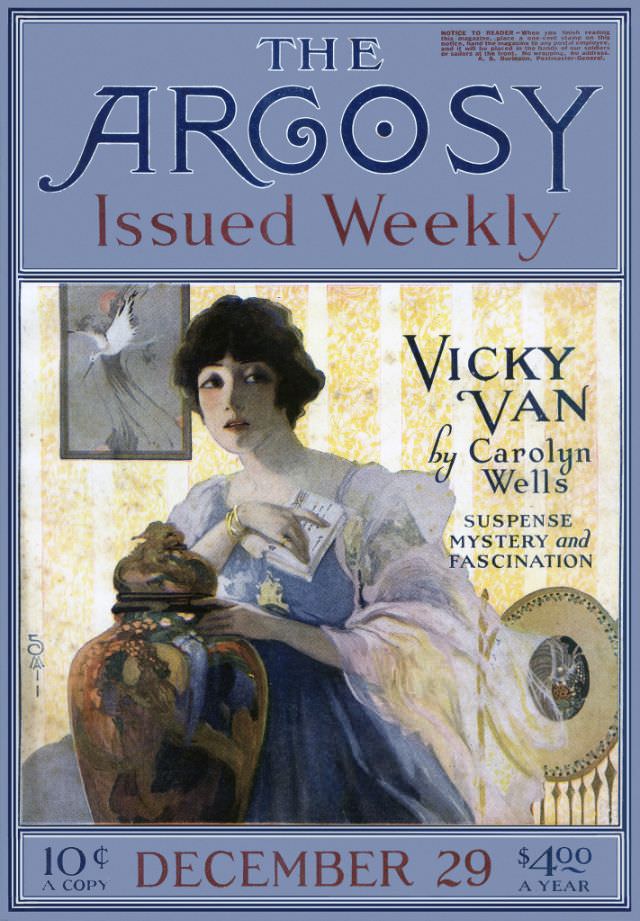
Argosy’s December 29, 1917 cover is a confident slice of early 20th‑century magazine design, dominated by bold typography and a carefully staged interior scene. The masthead proclaims “THE ARGOSY” and “Issued Weekly,” while the lower border anchors the period details—10¢ a copy and $4.00 a year—reminding modern readers how mass-market fiction was priced and promoted. Warm creams, cool blues, and soft shadowing give the illustration a polished, painterly finish typical of high-end cover art from the era.
At the center sits a stylish woman in a blue dress with a pale, translucent wrap, her gaze turned slightly away as if caught mid-thought. She rests an arm along an ornate ceramic vessel topped with a small sculptural figure, an object that reads as both décor and quiet symbol of intrigue. Behind her, patterned wallpaper and a framed picture deepen the sense of a private room—an intimate setting that fits the magazine’s promise of drama and secrets.
To the right, the cover text advertises “Vicky Van” by Carolyn Wells with the enticing tagline “SUSPENSE MYSTERY and FASCINATION,” a compact summary of what readers expected from Argosy’s weekly offerings. The composition balances literary marketing with lifestyle glamour, selling not just a story but a mood: modern, mysterious, and comfortably upscale. For collectors of vintage magazines, pulp-era illustration, or World War I–era print culture, this Argosy cover remains a vivid example of how storytelling began before the first page was even turned.