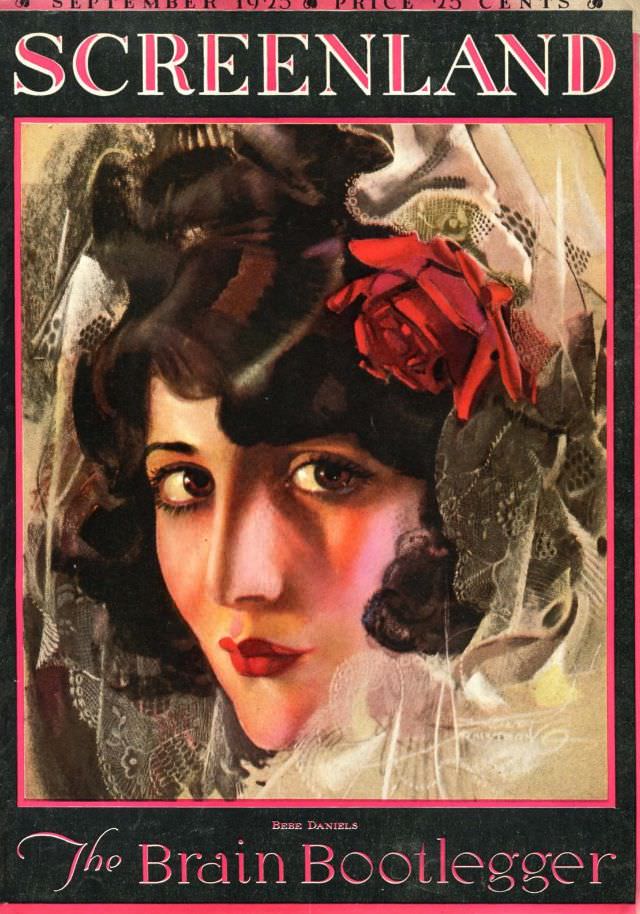
Bold serif lettering crowns the September 1923 cover of Screenland, setting a glamorous stage for an intimate illustrated portrait framed in rich reds and velvety blacks. A young woman’s face dominates the composition, her dark, sculpted curls softened by a veil of patterned lace and a vivid red flower tucked at the crown. The artist’s palette—warm skin tones, rosy cheeks, and carefully shaded eyes—leans into the era’s romance with cinematic allure and high-contrast drama.
Closer details reward a slower look: the lace reads almost like mist, drifting across the background while still letting the figure’s expression stay sharp and direct. Her lipstick and the crimson bloom pull the eye inward, echoing the magazine’s title color and tying the design together like a stage costume under spotlight. Even the worn edges and aged paper texture add to the charm, reminding viewers that this was meant to be held, read, and admired on a newsstand nearly a century ago.
At the bottom, the issue’s featured text includes the name “Bebe Daniels” and the enticing line “The Brain Bootlegger,” a hint of the story-driven celebrity culture Screenland helped cultivate in the 1920s. As cover art, it’s a compact lesson in early Hollywood marketing—beauty, mystery, and a promise of inside access wrapped into a single striking image. For collectors and film-history readers, this Screenland magazine cover from September 1923 offers a vivid window into the visual language of the silent-era fan press.