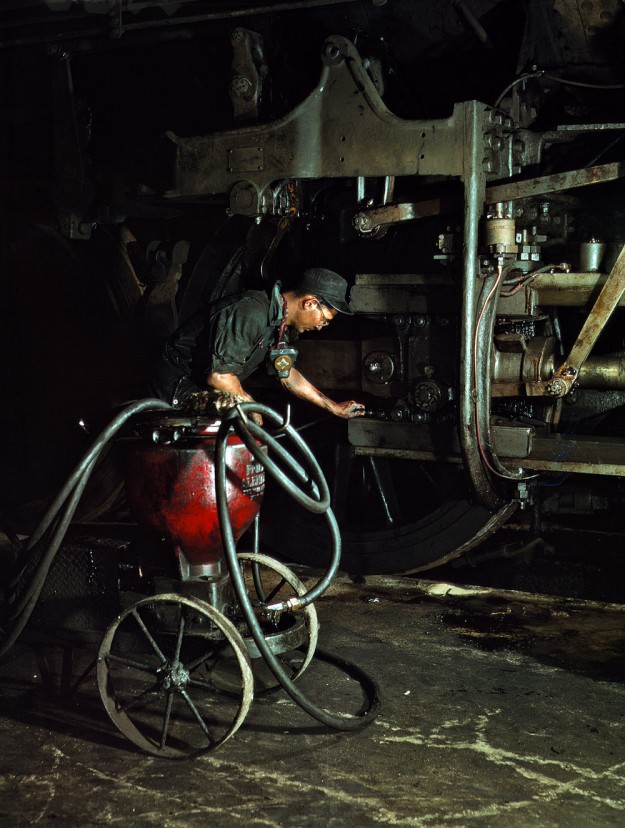
Inside the Rock Island Railroad roundhouse at Blue Island, Illinois, Thomas Madrigal leans into the shadowed mass of a steam locomotive, hands busy at the running gear where movement and friction meet. The 4×5 Kodachrome transparency renders the scene in deep, industrial color—soot-dark metal, oily highlights, and the unmistakable red of a wheeled grease can in the foreground. Delano’s wartime lens brings the viewer close enough to feel the cramped workspace beneath the engine’s frame and the quiet concentration of a mechanic doing essential, skilled labor.
Greasing a locomotive was not a glamorous task, but it was a critical one, keeping bearings and joints from overheating and ensuring a heavy machine could roll safely back onto the rails. The roundhouse setting—part workshop, part engine shelter—speaks to the daily routines of railroad maintenance: tools within reach, hoses coiled like thick cords, and the immense wheel and rods looming beside the worker. Details like Madrigal’s work clothes and cap, and the grime on the floor, underscore how railroading depended on hands-on care as much as on horsepower.
Photographed in April 1943 for the Office of War Information, this image sits within a larger visual record of American industry during World War II, when railroads moved troops, fuel, food, and raw materials across the country. Jack Delano’s use of color makes the mechanical world feel immediate rather than distant, emphasizing texture, weight, and the lived reality of wartime work. For anyone searching railroad history, Rock Island R.R. heritage, or WWII-era industrial photography, this roundhouse moment offers a vivid reminder that victory also ran on maintenance, discipline, and grease.