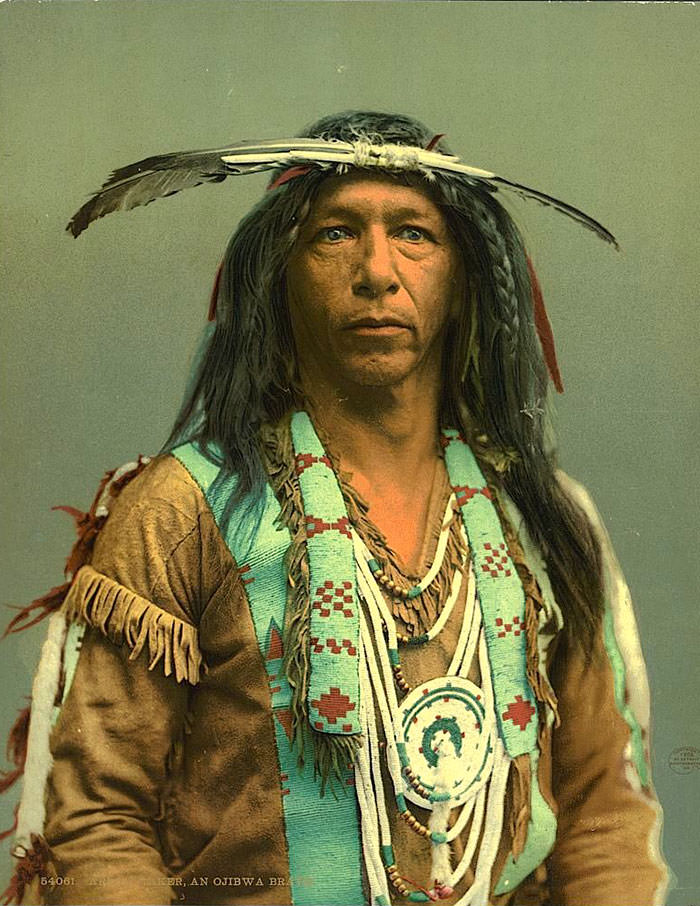
Arrowmaker’s steady gaze meets the viewer head-on, giving this 1903 portrait an immediacy that feels almost conversational. The colorization brings warmth to his face and heightens the presence of his long, dark hair, while the plain studio backdrop keeps attention fixed on expression and bearing. As a historical photo of an Ojibwe man, it offers a rare, intimate encounter with a person rather than a scene, inviting a slower look at the details that define the moment.
Feathers arc across his headband, and layered beadwork and necklaces fall across a buckskin-style shirt trimmed with fringe. A turquoise-toned vest or sash, patterned with red motifs, stands out vividly against earth-colored garments, giving the portrait its visual rhythm and making the craftwork unmistakable. Every element—textiles, adornment, posture—suggests deliberate presentation, the kind often required when Indigenous sitters were photographed in the early twentieth century.
Colorization can be more than a cosmetic choice here; it restores depth to materials that were carefully made and carefully worn, helping modern readers see beadwork, leather, and featherwork with renewed clarity. For those searching for Ojibwe history, Indigenous portrait photography, or early 1900s Native American images, this post highlights a single figure whose presence carries its own story without needing embellishment. Spend a moment with Arrowmaker’s face and regalia, and the distance of more than a century narrows into something quietly human.