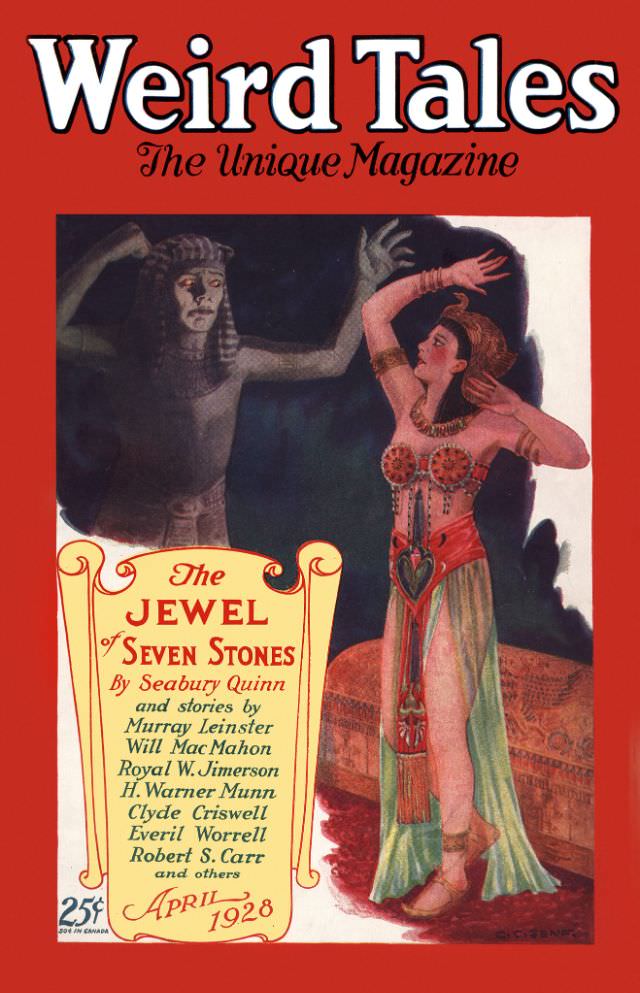
Bold scarlet borders and oversized lettering announce *Weird Tales: The Unique Magazine*, pulling the eye straight into the lurid theater of pulp-era imagination. The April 1928 cover teases “The Jewel of Seven Stones,” and the composition delivers: a richly dressed dancer in an exoticized setting recoils as a looming, gray-green apparition reaches toward her from the darkness. Painted light and shadow do most of the work here, turning a stage-like interior into a nightmare space where glamour and dread share the same spotlight.
In the lower panel, the typography functions like a marquee, stacking author names and story promises beneath decorative scrollwork that feels half-Art Nouveau, half-carnival poster. Even the small “25¢” price tag anchors the piece in the everyday economics of magazine racks, reminding us that supernatural thrills were a mass-market commodity. The contrast between the elegant ornamental frame and the threatened figure above is classic *Weird Tales*—high drama packaged for impulse buyers and late-night readers.
Collectors and horror literature fans still hunt covers like this because they distill what made 1920s pulp magazines so influential: sensational artwork, heightened emotion, and a hint of forbidden antiquity. As a historical artifact, the April 1928 *Weird Tales* cover offers a window into how fantasy and terror were marketed visually, from the bold color choices to the suggestive, cliffhanger moment frozen mid-gesture. It’s a striking example of vintage magazine cover art that continues to shape the look and mood of modern weird fiction.