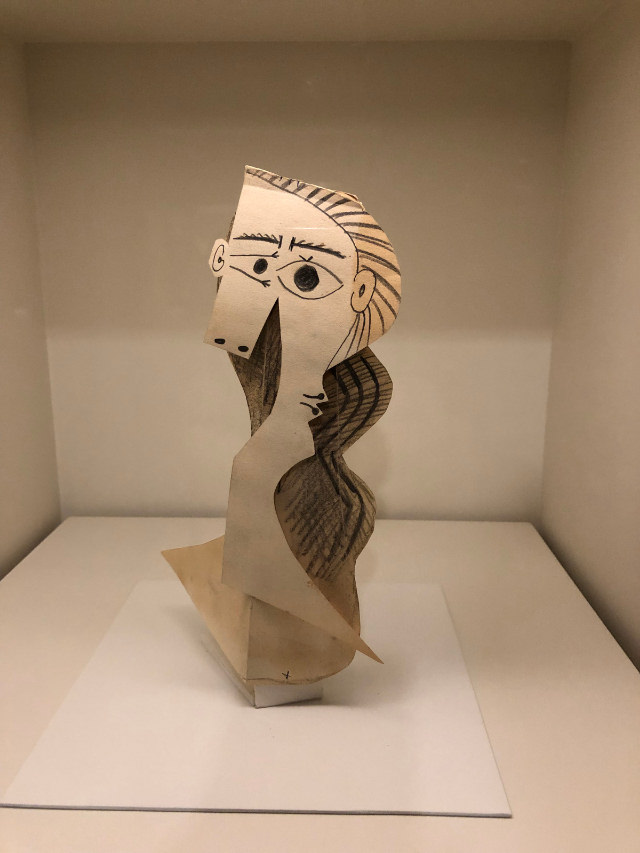
Paper, cut and folded into a standing figure, becomes sculpture as much as drawing in this rare look at Picasso’s cut-paper experiments. A single sheet is transformed into a face with bold, simplified features—wide eyes, a sharp, beak-like nose, and quick ink lines that suggest hair and shadow. Set in a clean display space, the work reads like a small “paper mosaic,” where flat shapes and negative space do the heavy lifting.
What makes the piece so compelling is its play between fragility and presence: thin paper bends into volume, creating a profile that shifts as you move around it. The economy of line feels deliberate, almost playful, yet the construction is precise, balancing at the base like a miniature stage set. In these cut-paper artworks, the studio practice of collage and the language of sculpture meet in a single, deceptively simple object.
For art lovers and researchers searching for Picasso paper art, cut-out techniques, and modernist experiments beyond the canvas, this historical photo offers an intimate view of process and invention. It highlights how everyday materials—paper, ink, and a few decisive cuts—could be pushed into new forms that echo Cubist fragmentation and theatrical assembly. If you’re exploring Picasso’s lesser-seen works, this post invites a closer look at the tactile, hands-on side of his creativity.