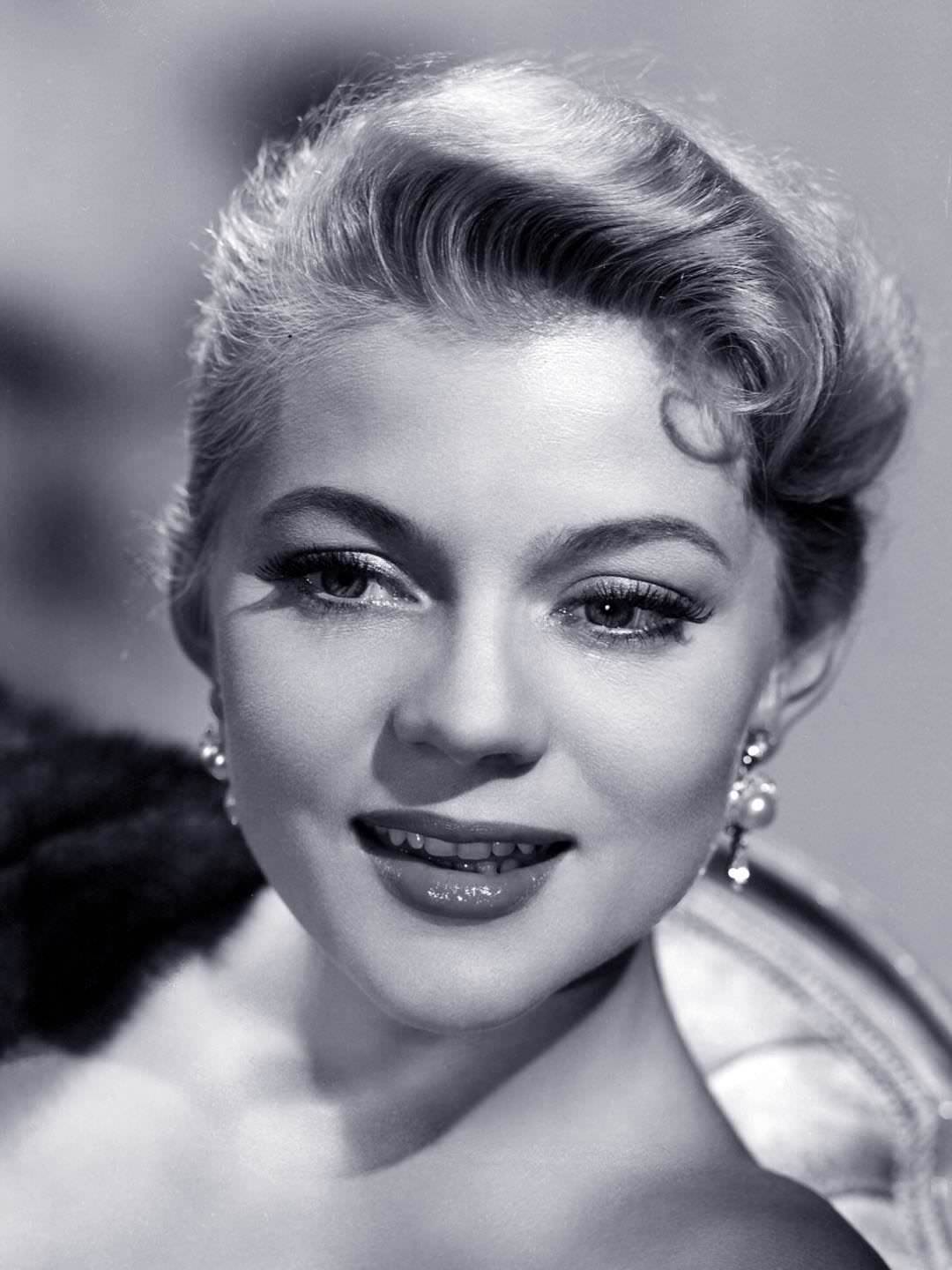
Peggy Castle appears in a tightly framed studio-style portrait that leans into mid-century glamour, with soft lighting smoothing the background into a gentle blur. Her hair is sculpted into a polished wave and curl, a hallmark of 1950s beauty culture, and the camera lingers on carefully defined brows, long lashes, and a glossy, poised smile. Pearl drop earrings and a plush, fur-like wrap at the neckline complete the elegant look, suggesting the world of fashion publicity and magazine-ready sophistication.
What stands out is the deliberate balance between warmth and control: an inviting expression paired with the precise styling that studios and fashion houses prized. The close-up composition emphasizes symmetry and immaculate grooming, while the shallow depth of field keeps attention on the face, jewelry, and the luminous sheen of makeup. Even without visible context or a runway setting, the photograph communicates “fashion model” through classic cues of texture, sparkle, and immaculate presentation.
As an artifact of fashion and culture, the image reflects how 1950s portrait photography helped shape public ideals of femininity—refined, approachable, and meticulously curated. The title, “Peggy Castle,” anchors the subject for viewers searching classic Hollywood-style portraits, vintage fashion models, and mid-century beauty standards. In a single frame, it preserves the era’s visual language: studio glamour, polished styling, and the quiet confidence expected of a model in front of the lens.