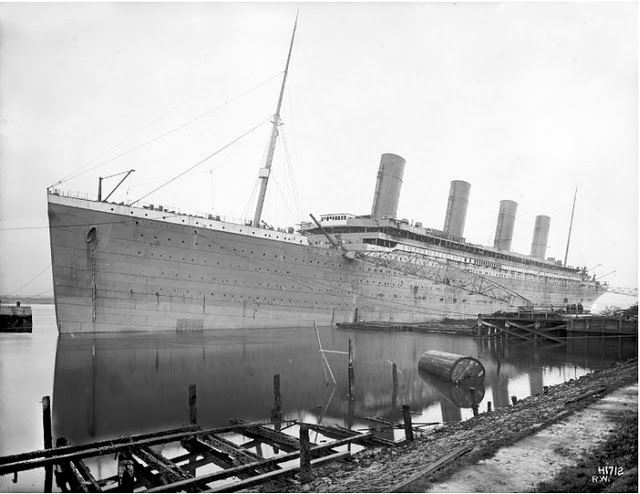
Towering above the quiet harbor water, the Titanic sits alongside a pier with its long steel hull dominating the frame and a line of funnels rising like factory chimneys. The angled view emphasizes sheer scale—rows of portholes, riveted plates, and the clean sweep of the bow—details that remind modern readers how much shipbuilding depended on heavy industry, precision metalwork, and organized labor. Even without a crowd in sight, the scene feels busy, as if the dock itself is holding its breath before the next phase of fitting-out.
Behind the famous “unsinkable” reputation was a construction story built on Edwardian engineering ambition and the era’s appetite for speed, luxury, and technological prowess. Photographs like this one invite a closer look at the practical inventions and systems that made a giant ocean liner possible: compartmentalized interiors, complex piping and ventilation, robust propulsion arrangements, and the orchestration of cranes, slipways, and workshops needed to assemble a ship of unprecedented size. The stillness of the water contrasts with the implied motion of progress—an industrial world pushing boundaries in steel and steam.
As the Titanic rose from blueprint to reality, its fame spread long before its first passengers stepped aboard, fueled by newspaper fascination and the public’s trust in modern design. This post explores that rise—how construction methods, materials, and confidence in new maritime technologies shaped the ship’s legend, and why the language of innovation often outpaced sober caution. For readers searching Titanic construction photos, shipyard history, or early 20th-century inventions, this image offers a compelling doorway into the moment when engineering optimism became headline history.