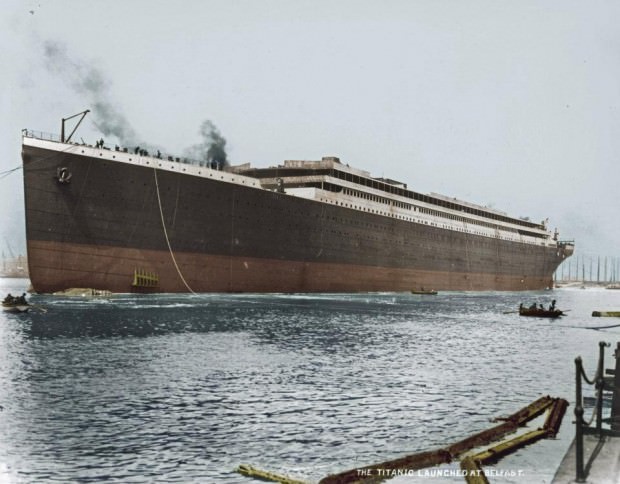
Towering above the harbor water, the Titanic sits newly afloat, its dark hull stretching across the frame like a floating city. Small boats and dockside details emphasize the sheer scale of the liner, while faint smoke drifting from the upper decks hints at machinery waking to life. It’s an arresting moment from the era when shipbuilding was as much spectacle as industry, and “unsinkable” confidence was part of the sales pitch.
Behind that immense silhouette lies a story of construction ingenuity—steel plates, dense rows of rivets, and the compartmentalized design that promised greater safety on the North Atlantic run. The photo invites a close look at the ship’s clean lines and layered decks, hallmarks of early 20th-century engineering aimed at speed, comfort, and prestige. For readers searching the history of Titanic inventions and design, this scene evokes the practical innovations that helped create a legend long before its maiden voyage.
Fame followed quickly, fueled by newspaper headlines, public curiosity, and the symbolism of a vessel that seemed to embody modern progress. Yet the quiet water in the foreground also adds a reflective note, reminding us how swiftly technological triumph can become historical cautionary tale. As a WordPress post centerpiece, this archival view connects Titanic construction, shipyard ambition, and the mythology of “unsinkable” engineering in a single, unforgettable frame.