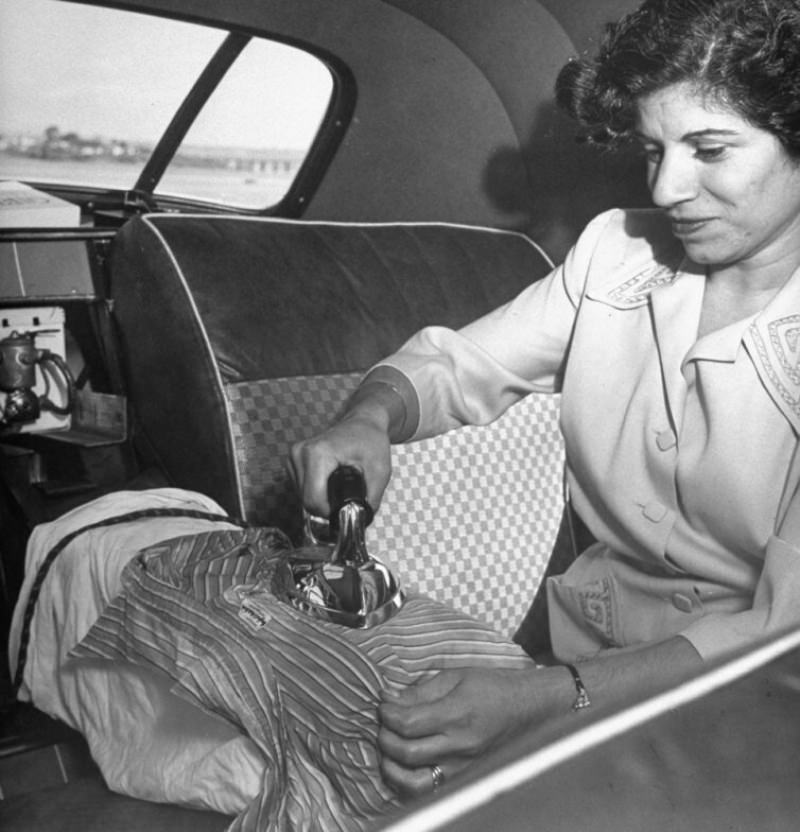
Inside the back seat of a car, Mrs. Mattar presses an iron over a striped shirt draped neatly across an arm rest that doubles as an ironing board. The scene has the feel of a mid-century “life made easier” demonstration: poised hands, tidy upholstery, and a domestic chore relocated into an unexpected setting. What stands out is the calm practicality—wrinkles meeting their match while the car’s interior becomes a compact workspace.
Along the side panel sits a small power setup, suggesting a built-in outlet where a toaster or razor could be plugged in, turning the vehicle into a rolling convenience station. That detail speaks to an era fascinated by electrification and multipurpose gadgets, when manufacturers and inventors alike promised that modern design could tame everyday tasks. Even without a visible roadmap, the idea is clear: comfort and utility were being engineered into travel, blurring the line between home routines and life on the road.
For readers interested in historical inventions, vintage domestic technology, and the culture of automotive innovation, this photo offers a vivid snapshot of optimism about labor-saving design. It also hints at changing expectations—especially for women—where efficiency and readiness were marketed as virtues worth building into the objects of daily life. Whether practical or purely promotional, the image preserves a moment when the future looked like it could be plugged in anywhere.