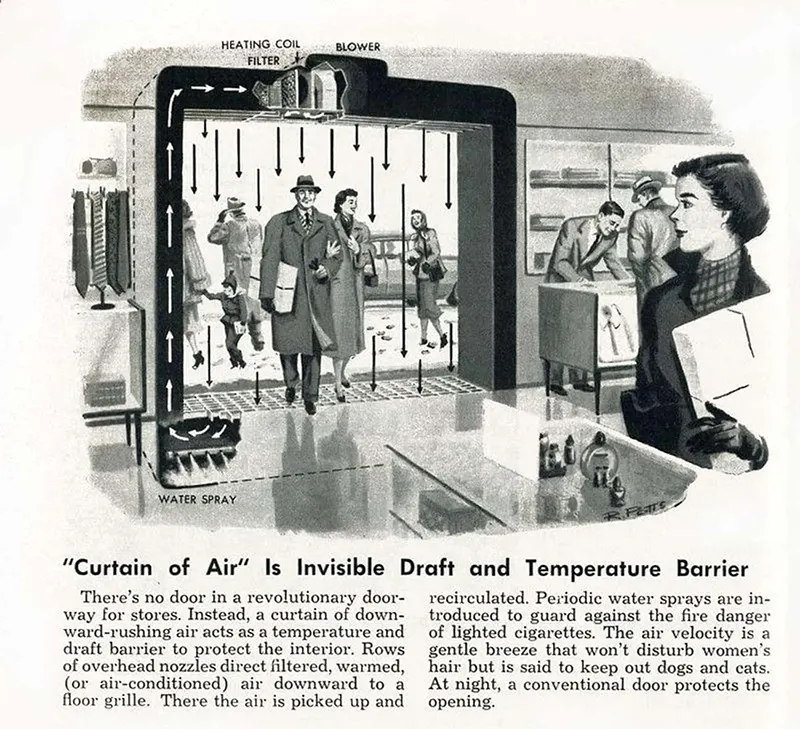
Mid-century shoppers stride through an entrance with no door at all, stepping beneath a neatly diagrammed “curtain of air” that pours downward like an invisible waterfall. The illustration turns a simple doorway into a small engineering spectacle, complete with arrows that trace the flow from blower to floor grille, suggesting how modern stores promised comfort without drafts. It’s the kind of optimistic 1950s retail innovation that treats climate control as part of the customer experience, not just a backstage utility.
Look closely and the details read like a magazine ad for progress: heating coil, filter, and a water spray system all labeled as if the building itself were a machine on display. The people are dressed for the era—coats, hats, and the crisp poise of city errands—while the air barrier claims to keep cold out and warmth in without interrupting foot traffic. Even the text leans into everyday practicality, selling the air curtain as a temperature barrier that feels “gentle” and keeps the entrance open and inviting.
In 1956, the idea of an “air curtain entrance” fit perfectly with a culture enamored of frictionless convenience, from automatic doors to new forms of air conditioning. For today’s reader, the humor comes from the earnestness: a doorway rendered with the seriousness of a laboratory diagram, promising to tame weather, odors, and the chaos of the street using nothing but carefully aimed airflow. As a historical photo-illustration for a WordPress post, it’s a charming snapshot of how retailers marketed comfort, efficiency, and modernity—one invisible gust at a time.