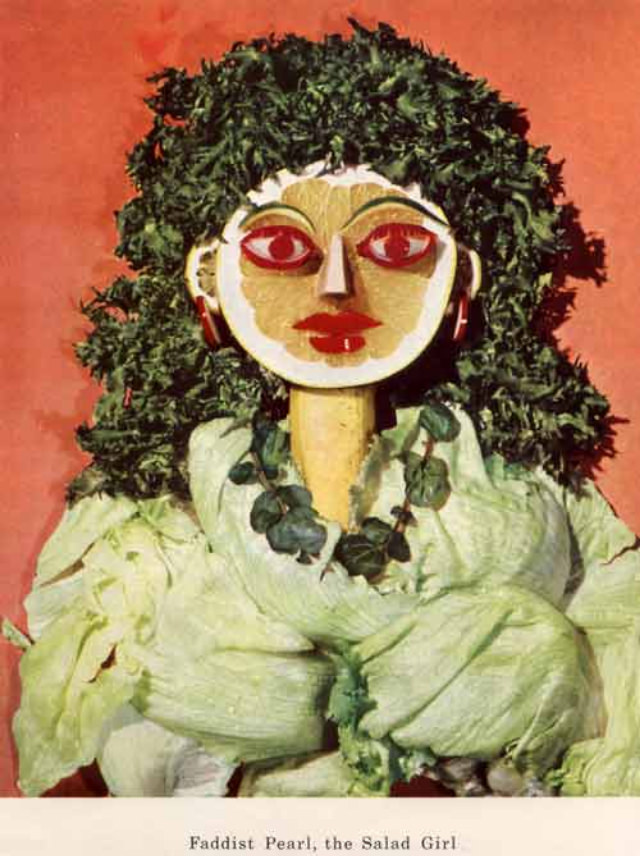
Against a warm, poster-like backdrop, a surreal “salad girl” stares forward with painted red eyes and lips, her head crowned in leafy greens and her body wrapped in pale cabbage-like folds. The caption at the bottom—“Faddist Pearl, the Salad Girl”—turns the figure into a character, part mascot and part cautionary tale. It’s a striking example of mid-century diet culture rendered as theatrical artwork rather than straightforward nutrition advice.
What makes these 1950s-style vitamin and healthy-diet promotions feel so bizarre today is their willingness to flirt with the grotesque: exaggerated facial features, costume-like produce, and a staged, almost ritual presentation of food. Instead of selling a simple message like “eat your vegetables,” the imagery leans into spectacle, turning ingredients into identity and health into performance. The result sits somewhere between educational propaganda and pop-surrealism, designed to linger in the viewer’s mind.
For readers interested in vintage advertising art, nutrition history, or the stranger corners of retro wellness trends, this piece offers plenty to unpack. The greens-as-hair and cabbage-as-clothing suggest purity and discipline, yet the doll-like mask introduces an unsettling edge that complicates the promise of “healthy living.” Seen now, these hellish vitamin mascots and diet-themed artworks reveal how persuasion once relied on memorable characters—sometimes more haunting than wholesome—to shape everyday ideas about food.