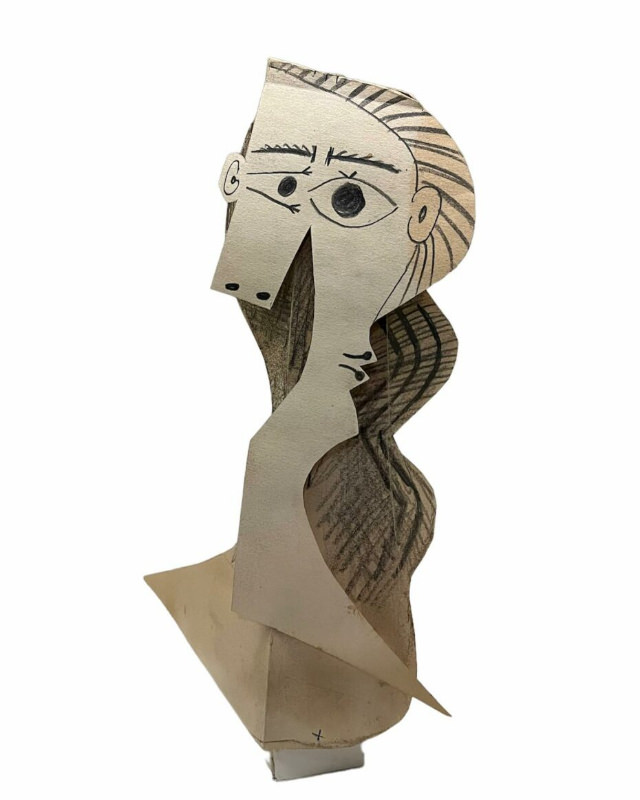
Angular paper folds rise into a stylized head, where a single wide eye and sharp brow marks are drawn in dark ink. The figure feels both delicate and bold: cream-toned paper becomes cheekbone and nose, while hatched lines suggest hair pulled back in sweeping bands. Even against a plain background, the cut edges and subtle shadows give the work a sculptural presence, halfway between drawing and object.
Paper Mosaics: Picasso&;s Rare Cut-Paper Artworks Artworks points toward a lesser-seen corner of modern art, where scissors and glue replace the brush without losing any intensity. Here, the economy of means is the message—simple materials, confident lines, and a face reduced to essentials, yet full of character. The interplay of collage, cut-paper construction, and hand-drawn detailing echoes the restless experimentation that made Picasso’s studio practice so influential.
For collectors, students, and art-history readers searching for Picasso cut-paper art, this post invites a closer look at how paper can behave like sculpture. The folds and overlaps read like decisions made in real time, turning flat stock into volume and personality with astonishing speed. As a historical artifact and a design inspiration alike, this rare paper construction reminds us that innovation often starts with the most ordinary materials.