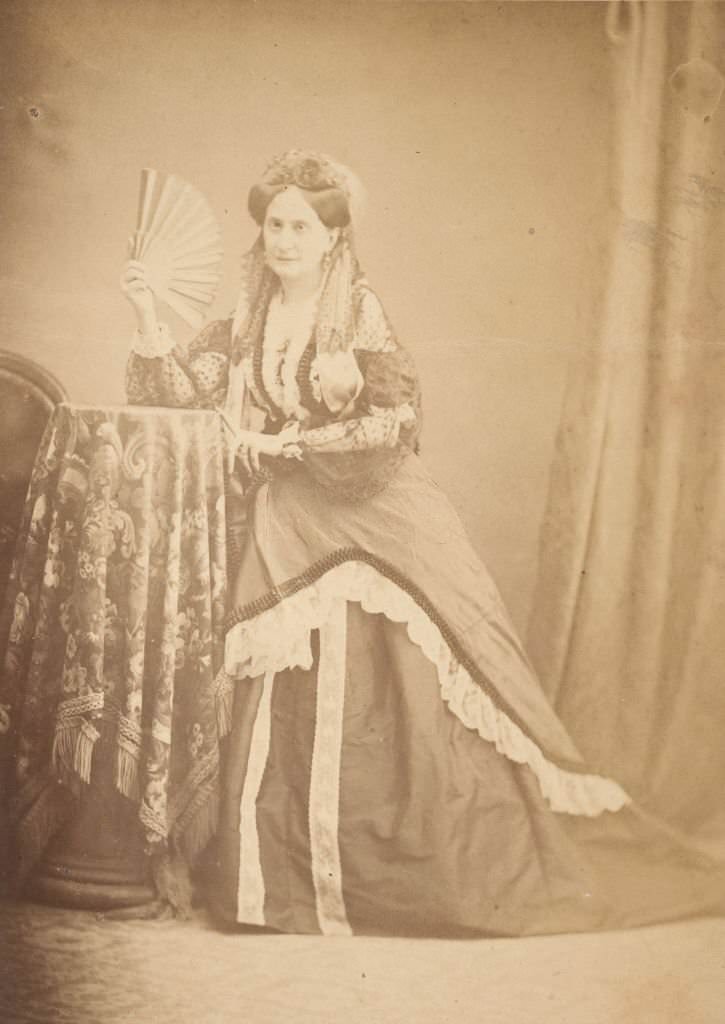
Seated beside a draped table, a poised comtesse meets the camera with a steady, practiced calm, her open hand fan lifted like a small flourish of theater. The studio backdrop fades softly into light, drawing attention to the carefully arranged silhouette and the quiet authority of her posture. Even in the haze of an early photographic print, the scene reads as a deliberate portrait of rank, composure, and cultivated taste.
Her dress speaks the language of 1860s fashion: a full crinoline-supported skirt, layered trims, and a bodice shaped to emphasize a narrow waist while showcasing lace and patterned fabric. A decorative headpiece and styled hair frame the face, and the fan—both accessory and signal—adds a note of elegance that suggests etiquette as much as personal style. The table covering, rich with fringe and floral motifs, contributes to the portrait’s texture and reinforces the sense of a curated interior.
“La Comtesse at Table Holding Fan” offers more than costume; it hints at how women of the upper classes were presented and remembered in the nineteenth century, through objects, fabrics, and controlled gestures. Studio portraiture turned fashion into biography, letting garments and accessories speak in place of movement and conversation. For modern viewers searching for 1860s crinoline dress, Victorian-era women’s fashion, or nineteenth-century culture, this image preserves a refined moment where status and style are woven into every detail.