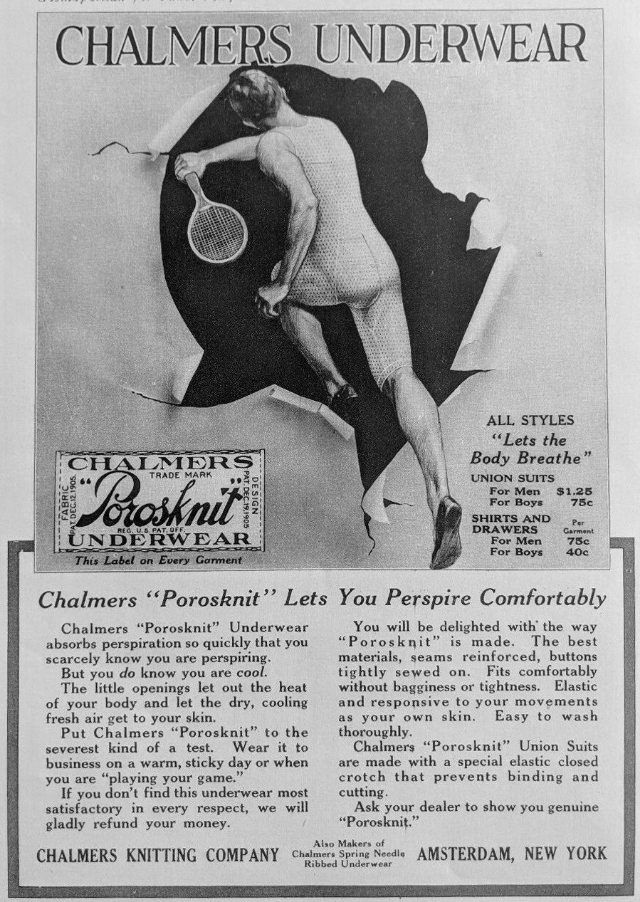
Bold typography announces “Chalmers Underwear” above a dynamic illustration of an athlete stepping through a torn, paper-like opening, as if breaking into the modern age of comfort. The figure wears a close-fitting, mesh-textured union suit, tennis racket in hand, turning underwear into sporting equipment for everyday life. With the “Porosknit” label prominently framed, the ad leans on the visual language of strength, motion, and masculinity that shaped early 1900s men’s fashion advertising.
On the right, the copy sells breathability as a virtue—“Lets the Body Breathe”—and pairs that promise with a neat menu of styles and prices for men and boys. The emphasis on union suits, shirts, and drawers suggests a moment when ready-to-wear basics were becoming standardized, branded, and compared like any other consumer good. Even in a simple newspaper-style layout, the marketing logic is clear: performance, comfort, and choice, all wrapped in a recognizable trademark.
Lower text blocks read like a practical manifesto for modern underwear, praising quick-drying fabric, reinforced seams, secure buttons, and a fit that avoids “bagging or tightness.” Perspiration is framed not as embarrassment but as a problem engineering can solve, with porous knit construction positioned as the answer for workdays and warm-weather “games” alike. As a piece of fashion and culture history, the ad offers a candid window into how early twentieth-century brands taught customers to think about hygiene, athleticism, and the everyday body.