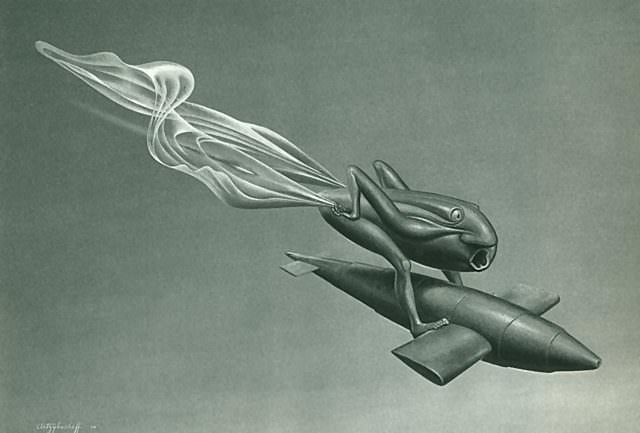
Surreal menace and sharp satire collide in Boris Artzybasheff’s wartime illustration, where a grotesque, amphibian-like creature clings to a sleek missile as if it were a mechanical steed. Ribboning plumes trail behind, turning propulsion into something ghostly and theatrical, while the creature’s tense posture and hollow gaze push the scene into nightmare territory. The composition feels engineered to unsettle: smooth metal, strange anatomy, and a barren sky that offers no refuge.
Artzybasheff’s anti-Nazi WWII artworks often used distortion and metamorphosis to expose authoritarian violence, and this piece leans hard into that visual language. By fusing organism and weapon, the artist suggests a regime that thrives on machinery, fear, and dehumanization—an enemy imagined not just as soldiers, but as a parasitic force riding modern destruction. The result is propaganda with teeth, designed to be read quickly yet remembered for its uncanny symbolism.
For collectors, researchers, and fans of World War II art, this historical image offers a vivid example of how illustration shaped public emotion alongside news and posters. Its dramatic lighting and polished airbrushed look echo the era’s magazine aesthetics, while the fantastical allegory keeps it firmly in Artzybasheff’s distinctive realm of political surrealism. Whether approached as anti-Nazi commentary, graphic design history, or a study in wartime visual culture, the artwork still hits with startling immediacy.