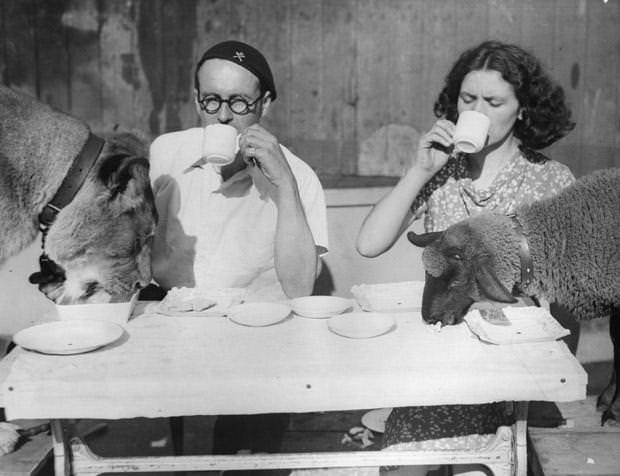
Afternoon tea becomes a sideshow-worthy tableau when “Tornado” Smith—billed as a Wall of Death rider—and his wife sit at a simple wooden table, cups raised, as their unlikely companions crowd in. A young lion leans over the edge of the setting, intent on the saucers, while a lamb rests its head on the tabletop with the drowsy calm of a house pet. The plain backdrop and everyday crockery make the scene feel even more surreal, as if domestic routine and carnival spectacle have been stitched together in a single moment.
Wall of Death performers lived by the promise of danger, racing motorcycles along near-vertical wooden tracks for audiences hungry for speed and bravado. Yet publicity in the fairground world wasn’t only about the roar of engines; it was also about the art of the memorable photograph, the kind that could stop passersby at a ticket booth. Pairing a tea service with animals that symbolize ferocity and innocence turns the rider’s daredevil identity into something larger—part showman, part family man, part master of controlled chaos.
For anyone searching for 1930s circus history, British fairground culture, or Wall of Death ephemera, this image delivers the era’s taste for the startling and the playful. It also hints at the complicated realities behind such stunts: animals presented as tame, danger made to look safe, and spectacle staged to feel effortless. Funny at first glance, the photograph lingers because it captures how entertainment in 1936 could transform the ordinary ritual of tea into a headline-worthy act.