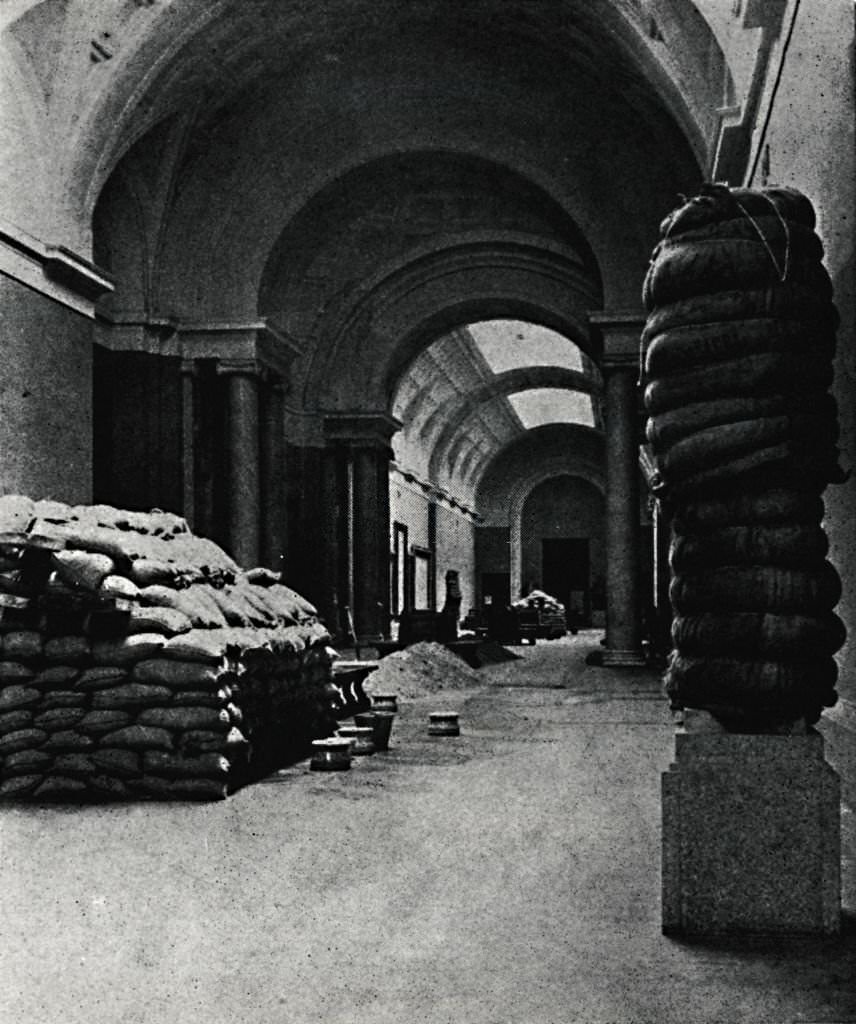
Under the high, vaulted arches of the Prado Museum, wartime necessity interrupts the usual quiet rhythm of galleries and corridors. Sandbags rise in thick, improvised walls, stacked with the blunt confidence of emergency architecture, turning a cultural landmark into a defensive interior. The long perspective of the hallway—columns, repeating archways, and distant doorways—draws the eye forward while the barriers insist on the danger pressing in from outside.
Nothing here feels temporary, even though it was meant to be: a museum corridor becomes a bunker-like passage where protection takes precedence over display. The bundled column at the right and the broad mound of sandbags at the left suggest careful planning, as if every surface might need shielding. Scattered containers and debris along the floor add to the sense of hurried work, the kind done between alarms, when preservation becomes a form of resistance.
Titled “The Prado Museum, 1937” and marked by the shadow of civil wars, the photograph speaks to the vulnerability of art—and the determination to keep it standing. For readers searching for Spanish Civil War history, museum preservation in wartime, or the story of the Prado under threat, this scene offers a stark, memorable entry point. It’s a reminder that behind every protected canvas and sculpture lies a hidden chapter of logistics, fear, and resolve, carried out in places usually reserved for beauty and contemplation.