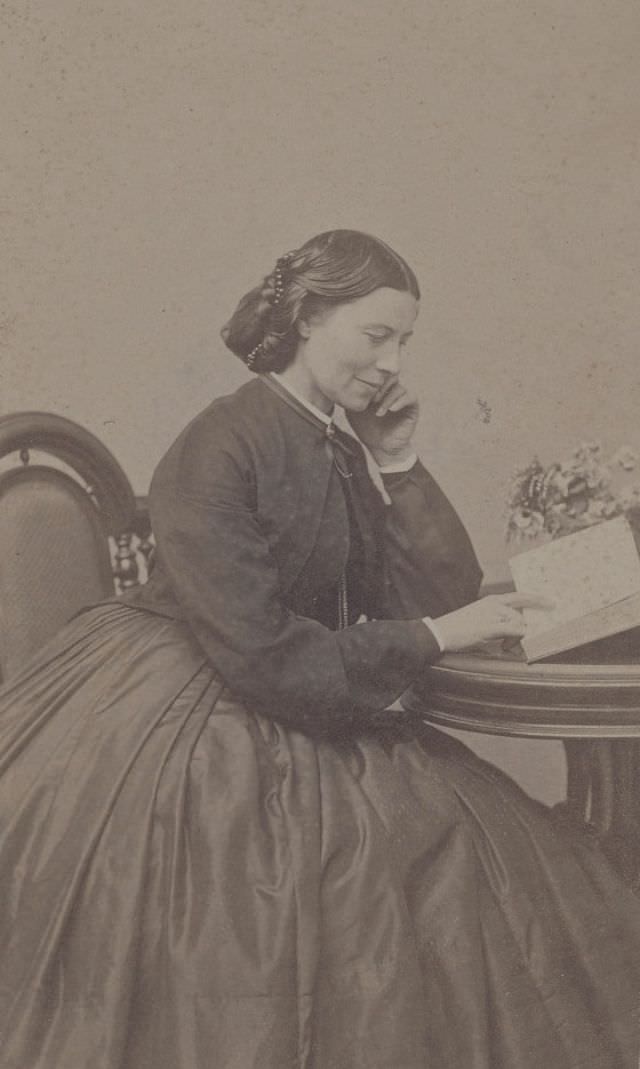
Seated beside a small round table, Clara Barton appears in a quiet, reflective moment—one hand resting against her cheek as she looks down toward an open book or album. Her dark dress, neatly styled hair, and the simple studio setting place the focus on expression rather than spectacle, suggesting the kind of composed determination that later audiences would associate with her Civil War service. A few flowers arranged nearby soften the scene, hinting at the domestic world she so often stepped away from in order to meet the demands of wartime care.
For readers exploring Civil War history, portraits like this offer a different entry point than battle maps and military uniforms. Barton is remembered as a Union nurse who organized supplies and tended wounded soldiers, and this photograph underscores the human presence behind that legacy—thoughtful, disciplined, and unmistakably real. The contrast between the calm of the studio and the harsh conditions of field hospitals invites a closer look at how women’s labor and leadership shaped the Union war effort.
The image also speaks to how nineteenth-century Americans chose to be seen: poised, purposeful, and ready to be remembered. As a historical photo of Clara Barton, it works both as a personal likeness and as a visual companion to her story, bridging private resolve and public duty. Whether you’re researching Union nursing, women in the Civil War, or Barton’s enduring influence, this portrait adds texture to the era’s most compelling narratives.