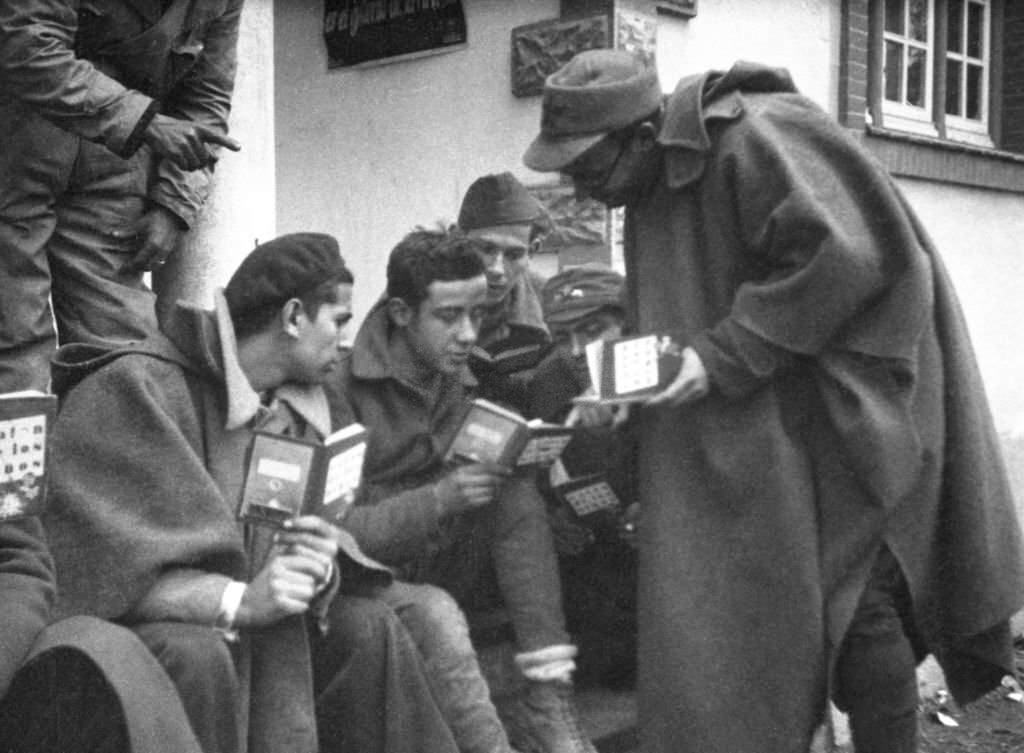
Along a Madrid street in March 1937, Republican militiamen pause the routines of war for a quieter kind of discipline: learning to read. Clustered on steps, they cradle small booklets and cards, their attention pulled toward an instructor leaning in close, cloak hanging like a curtain against the chill. The scene feels improvised and urgent, as if a lesson has been wedged into whatever time and shelter could be found.
Worn uniforms, caps, and heavy coats speak to the front-line world these men likely moved through, yet their posture is that of students—heads bowed, eyes fixed, fingers holding a place on the page. A wall behind them carries posters or notices, hinting at the political and social campaigns that threaded through daily life during the Spanish Civil War. Even without the sound, you can imagine the cadence of syllables being practiced, the careful repetition, and the brief fellowship of shared concentration.
Education and literacy were not side notes to the conflict but part of the broader struggle over Spain’s future, and this photograph makes that connection tangible. It’s a reminder that civil wars are fought not only with rifles and barricades, but also with words, classrooms, and the promise of participation in public life. For readers searching for Spanish Civil War history, Madrid in 1937, or the Republican militia’s social programs, this moment offers a vivid glimpse of learning carried out under pressure.