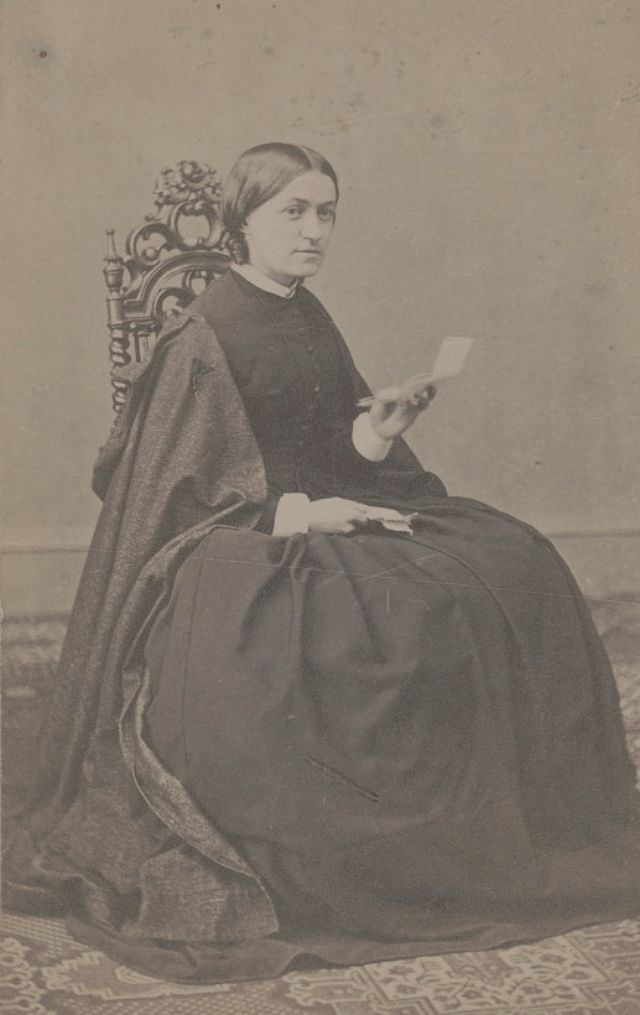
Seated in an ornate chair, Maria M. C. Hall meets the camera with a steady, unsentimental gaze that feels at odds with the delicate studio setting. Her dark dress and carefully arranged hair are typical of mid-19th-century portrait conventions, yet the small card in her hand adds a hint of purpose—as if she has paused mid-task rather than posed for a keepsake. The plain backdrop keeps attention on her expression, inviting viewers to consider the inner life behind the formal posture.
The post title traces Hall’s Civil War service through a chain of Union medical sites: the Patent Office Hospital in Washington, D.C., the hospital ship Daniel Webster during the Peninsula Campaign, Smoketown Hospital at Antietam, and the General Hospital in Annapolis. Those names evoke the wartime medical network that moved with armies and followed the wounded—government buildings converted into wards, floating hospitals on crowded waterways, and sprawling facilities near major transport hubs. Read alongside the portrait, her composed presence becomes a quiet doorway into the work of women who staffed and sustained these institutions amid crisis.
For readers searching Civil War nursing history, hospital ships, or Washington, D.C. wartime medicine, this photograph offers a human anchor to big events and place-names. It reminds us that behind every “hospital” in official records stood individuals navigating exhaustion, urgency, and improvisation day after day. Hall’s portrait endures not as spectacle, but as testimony—one life linked to the larger story of care in America’s most devastating conflict.