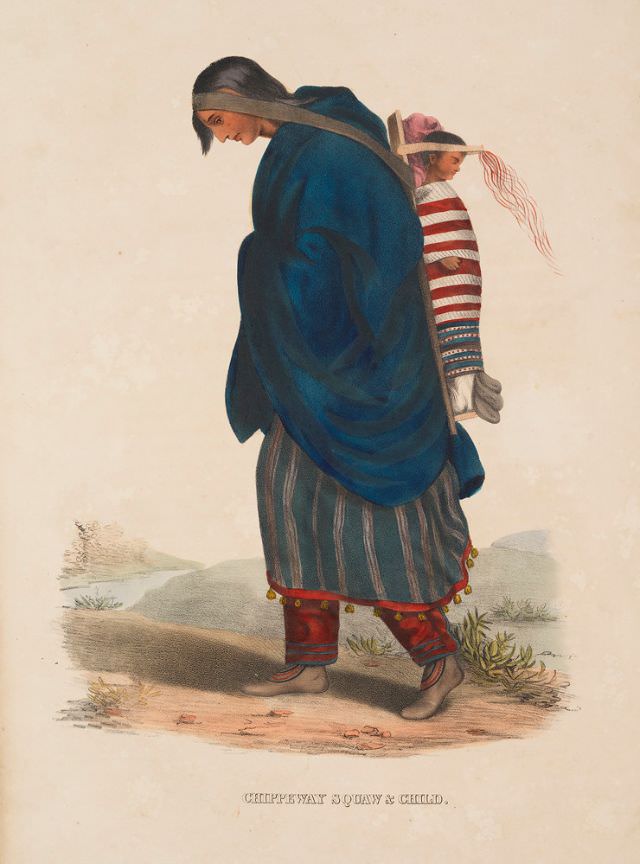
Quiet motion runs through “Chippeway Squaw & Child,” an artwork that follows a woman mid-stride as she carries a small child on a cradleboard. A deep blue wrap dominates the composition, falling in heavy folds over layered garments, while the child’s striped clothing and the cradleboard’s frame add crisp lines and contrast. Set against a sparse landscape with low plants and open ground, the figures become the clear focal point, suggesting travel, work, and daily endurance.
Details of dress and carrying method are rendered with careful attention: patterned leggings, a striped skirt, and moccasin-like footwear appear alongside the snug, upright position of the child. The mother’s bowed head and the child’s calm profile create an intimate, restrained tenderness, even as the scene remains formal and posed in the manner of many historic prints and illustrations. Color choices—especially the rich blue—lend the image a dignified gravity that draws the eye back to the relationship between parent and child.
As a historical depiction of Indigenous life, the piece also reflects the era’s outsider vocabulary, including the outdated term in the title; readers may prefer “Chippewa” or “Ojibwe” in modern discussion. For anyone researching Native American art, cradleboards, or nineteenth-century illustration practices, this print offers a concentrated study of clothing, childcare, and representation. It’s a compelling reminder that such images can be both visually beautiful and culturally complicated, inviting closer looking and careful context.