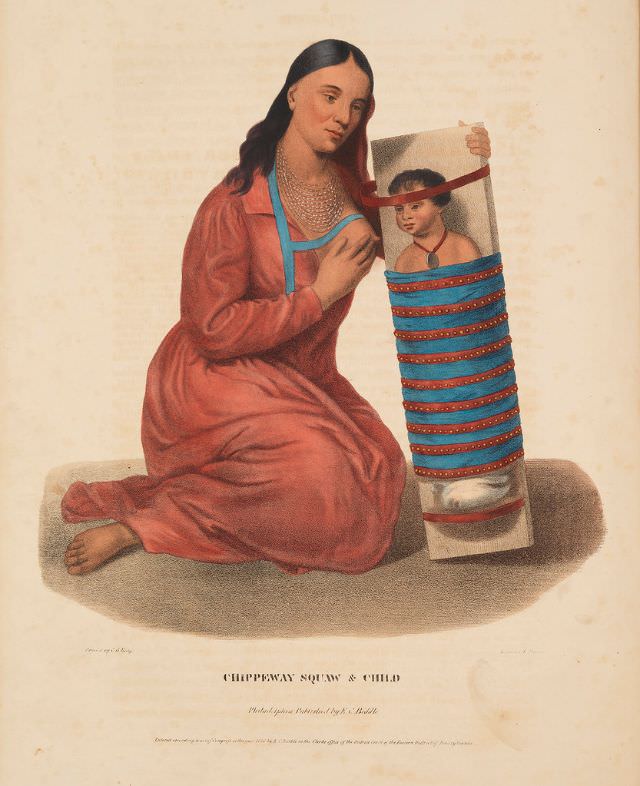
Soft color and careful linework give “Chippeway Squaw &; Child” the quiet presence of a studio-made print, where every fold of fabric and strand of hair feels deliberately observed. A seated woman in a long reddish dress turns toward the viewer with a calm, steady gaze, her dark hair parted and flowing over her shoulders. The pale background keeps attention on the figures, lending the composition a formal, almost intimate stillness.
Beside her, a small child peeks out from a cradleboard, secured with a wide red band and wrapped in a patterned covering of blue and red stripes. The contrast between the mother’s hand near her chest and the child’s contained posture suggests protection and closeness without overt sentimentality. Jewelry at the woman’s neck and the crisp detailing of clothing and textiles invite a slower look, encouraging viewers to notice the artist’s emphasis on material culture and domestic life.
As an artwork, this historical image sits at the intersection of portraiture, ethnographic interest, and nineteenth-century printmaking aesthetics, offering modern readers a window into how Indigenous subjects were represented for broader audiences. The title uses outdated terminology, yet the scene itself remains centered on a universal theme—caregiving—rendered with restraint rather than spectacle. For collectors, researchers, or anyone browsing historical Native American art imagery, this post provides a compelling example of period illustration focused on family and daily life.