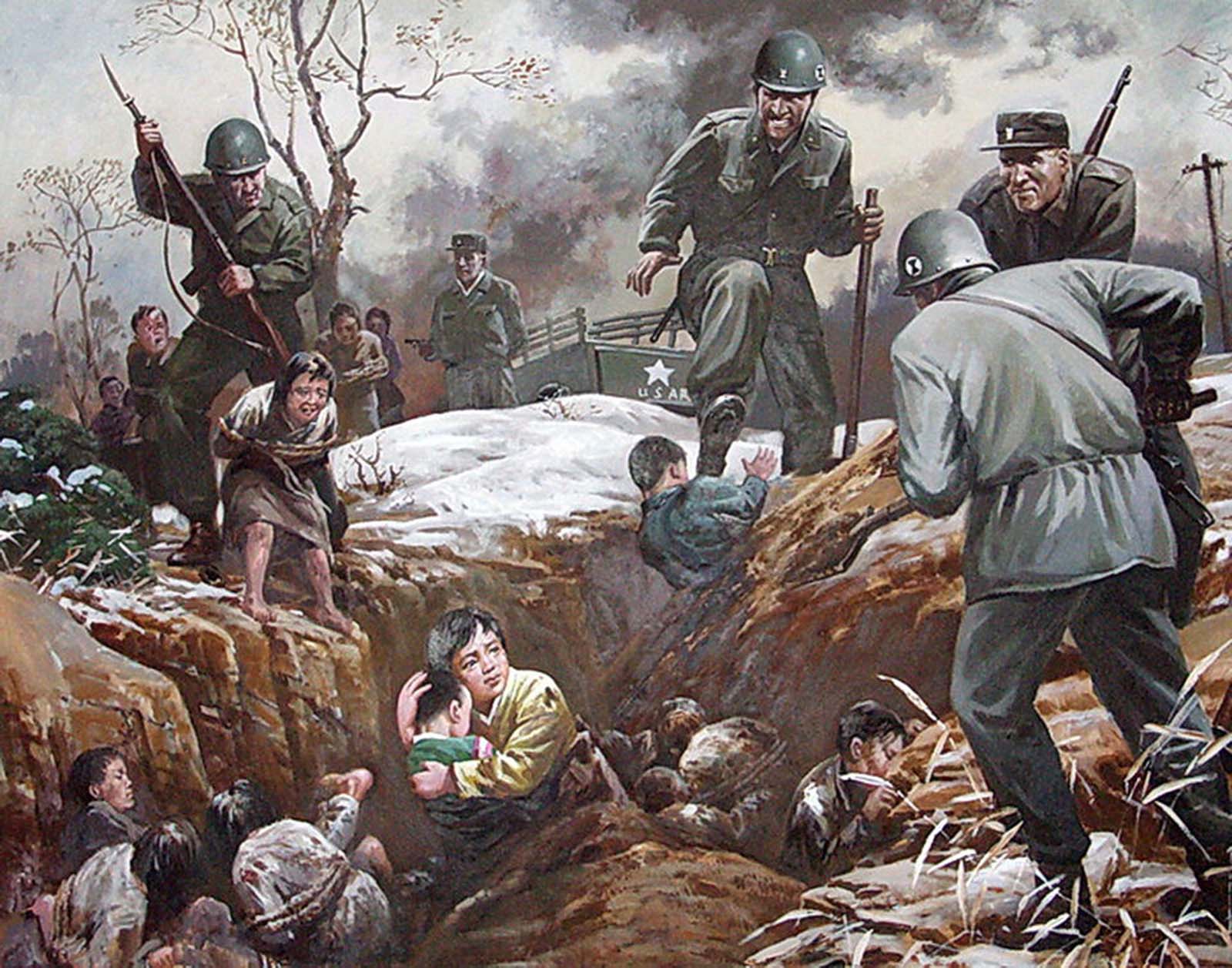
Set against a winter-bare landscape, armed soldiers loom over a rough earthen trench as civilians are driven downward in fear and confusion. A woman clutches a small child at the edge, while others already crouch below, crowded together in the pit. Smoke and churned dirt fill the background, amplifying the sense of violence and urgency that the title underscores.
Details in the scene lean toward an illustrated wartime artwork rather than a candid camera shot: uniforms are sharply rendered, faces are exaggerated with emotion, and the composition is staged for impact. A military vehicle marked “USA” sits behind the figures, placing the imagery within a broader Cold War-era visual language without offering a specific date or identifiable location. As propaganda, poster art, or dramatic reconstruction, it aims to make the viewer feel the imbalance of power—rifles raised, bodies pushed, and resistance made nearly impossible.
For readers searching North Korea history imagery, Korean War era art, or depictions of forced detainment and civilian suffering, this piece stands as a stark reminder of how conflict is remembered and represented. It invites questions about who created such scenes, who the intended audience was, and how visual narratives shape our understanding of wartime atrocities. Whether approached as historical evidence of attitudes or as a moral indictment rendered in paint, the work leaves an unsettling impression that lingers long after the first glance.