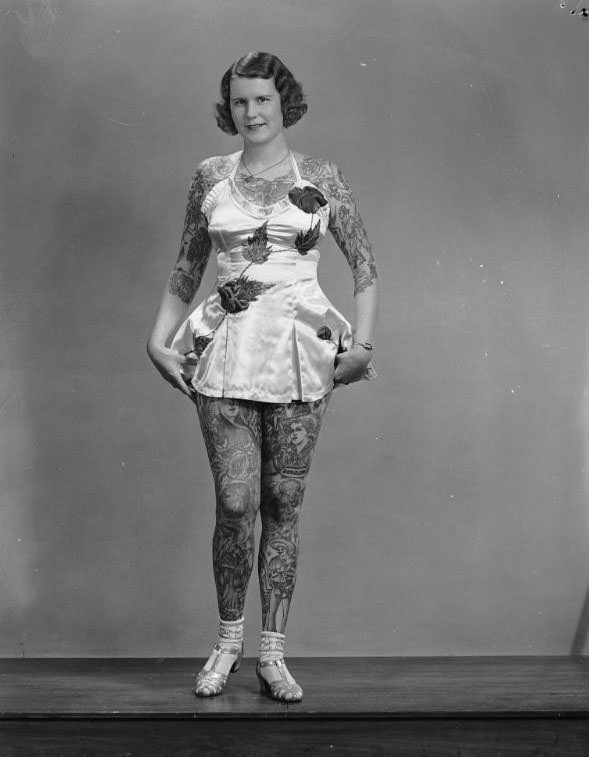
Betty Broadbent stands poised against a plain studio backdrop in Sydney, dated 4 April 1938, meeting the camera with an easy confidence that feels both theatrical and personal. Her satin costume catches the light in soft folds, while the simple setting keeps attention firmly on her figure and the intricate work that made her famous as the “Tattooed Venus.” The composition has the clean, promotional clarity of a performer’s portrait, meant to be read quickly and remembered.
What holds the gaze is the dense tapestry of tattoo art covering her arms and legs, a full-body gallery rendered in dark ink and detailed shading. Floral motifs and figurative scenes appear across her limbs, arranged like panels that guide the eye from shoulder to ankle; even without close-ups, the craftsmanship is unmistakable. The contrast between the polished stage outfit and the bold tattoos underscores how body art was presented at the time—simultaneously as adornment, spectacle, and modern marvel.
Seen today, this historical photo opens a window onto 1930s entertainment culture in Australia, when tattooed performers toured as headline attractions and living “artworks” in their own right. It also invites a broader look at changing attitudes to tattoos, women’s public personas, and the carefully curated imagery of the show world. For readers searching for Betty Broadbent, Tattooed Venus history, or Sydney in 1938, the portrait offers a striking, era-specific record of performance, identity, and ink.