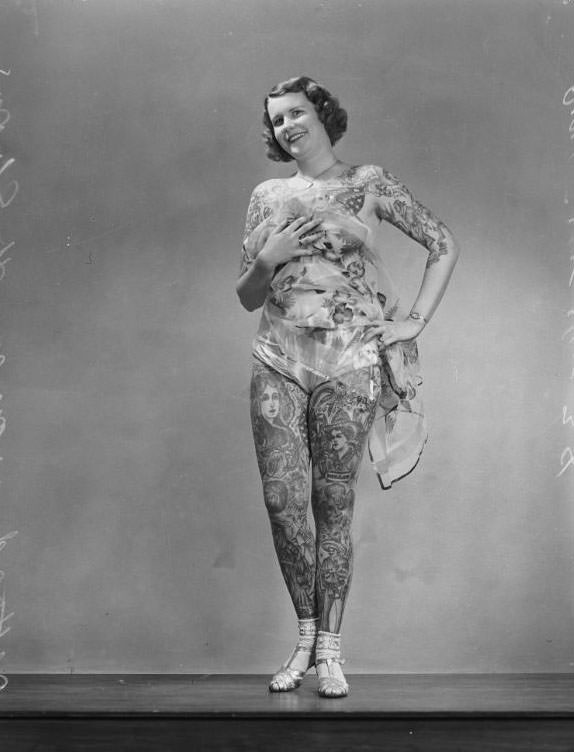
Poised against a plain studio backdrop, Betty Broadbent—billed as the “Tattooed Venus”—stands with an easy smile and the practiced confidence of a seasoned performer. A sheer, draped garment softens the outline of her figure while still revealing the dense, illustrative tattoo work that made her a headline attraction. The full-length pose, the careful placement of her hands, and the clean lighting suggest a promotional portrait intended to let audiences take in the spectacle in one uninterrupted view.
From shoulders to ankles, the body art reads like a gallery of storybook scenes and decorative flourishes, with portrait-style faces and ornamental motifs layered across arms, torso, and legs. Details such as open-toed shoes and simple jewelry keep attention on the tattoos themselves, emphasizing the contrast between everyday fashion and extraordinary self-adornment. For modern viewers, the photograph doubles as a record of tattoo aesthetics of the period—bold composition, legible imagery, and a commitment to coverage that turns skin into a curated surface.
Set in Sydney on 4 April 1938, the image also hints at the era’s fascination with novelty acts and the blurred line between art, entertainment, and “curiosity” marketing. Broadbent’s relaxed expression undercuts any sense of spectacle with warmth, inviting a more nuanced reading: not merely a performer on display, but a woman presenting her chosen identity with pride. As a historical photo and a piece of visual culture, it offers rich material for anyone interested in circus history, women’s performance, and the early public life of tattooing in Australia.