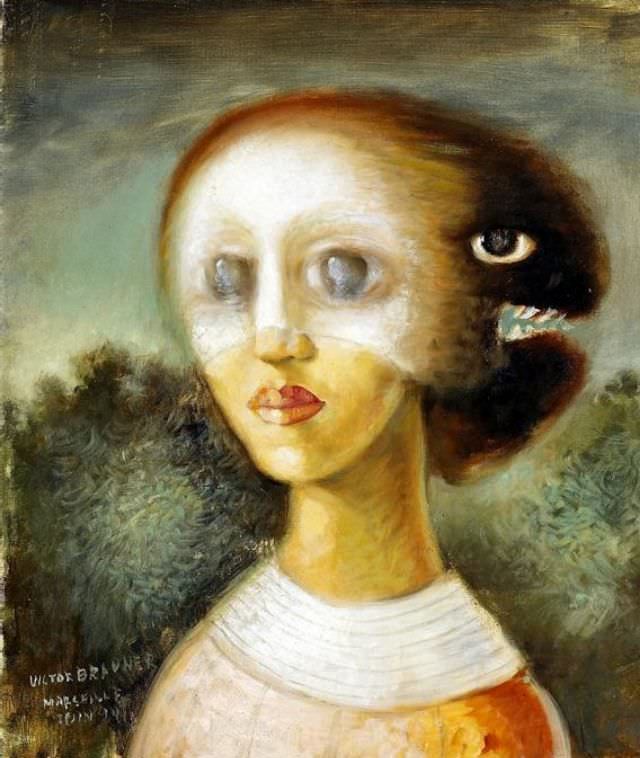
A pale, masklike face floats forward from a soft, wooded backdrop, its features smoothed into an uneasy calm while the eyes look strangely vacant. The figure’s warm-toned skin and carefully shaped lips suggest a portrait, yet the painterly haze and slightly blurred contours keep the viewer at a distance, as if memory itself has been overworked. Hints of a simple garment at the neckline and the muted greens behind her anchor the scene in the familiar—only long enough to make the unfamiliar feel sharper.
From the right side of the head, a dark, animal presence presses into the composition, marked by a single watchful eye and a row of teeth that seem to bite into the serenity of the sitter. The collision of human and beast reads like a visual argument about duality: tenderness against menace, innocence against appetite, selfhood against something invasive. In “Extreme Reconciliation, 1941,” the title lands like a challenge, asking what kind of peace is possible when two opposing forces occupy the same body and the same frame.
Seen today, this 1941 artwork carries the atmosphere of its era without needing explicit symbols—an unsettling portrait that feels shaped by anxiety, fracture, and the pressure to endure. The painter’s surreal approach makes it ideal for readers searching for historical art, wartime-era visual culture, or symbolic portraiture that confronts psychological conflict. As a WordPress feature, the image rewards slow looking, inviting interpretation while remaining insistently vivid in its quiet, unsettling dream logic.