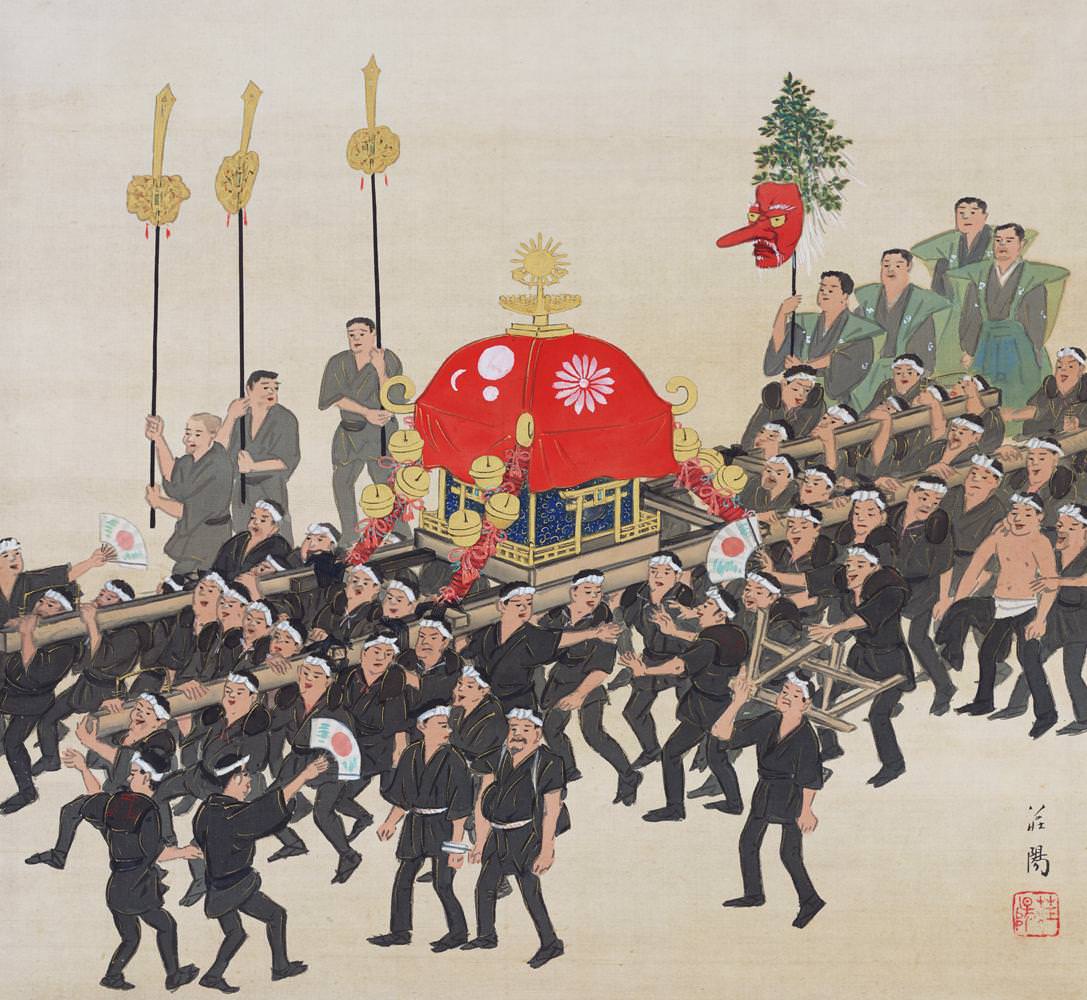
Energy floods the frame as a mikoshi procession surges forward, the shrine’s bright red canopy and gold fittings rising above a sea of carriers in dark festival dress and white headbands. Painted on silk with crisp linework and confident color, the scene balances movement with ornament—fans flick upward, shoulders strain beneath poles, and tall standards punctuate the pale background. A fierce red tengu mask and fresh greenery appear like floating emblems, hinting at the ritual theater that gives Kyoto’s Miyako festivals their unmistakable character.
Look closely and the artist’s storytelling becomes tactile: the mikoshi platform is studded with bells and tassels, while patterned textiles and lacquered details shimmer against the otherwise restrained palette. Faces are individualized—some determined, some chanting, some simply caught mid-step—creating a chorus of expressions that feels both documentary and celebratory. The open negative space typical of Japanese painting makes the crowd’s diagonal march even more dramatic, as if the procession is passing right out of the artwork.
For readers drawn to 1920s Japan, Kyoto history, or traditional matsuri imagery, these silk paintings offer a vivid window into public devotion and community spectacle. They sit at the crossroads of fine art and lived culture, preserving festival customs through elegant brushwork and design. As a WordPress feature, this artwork speaks to collectors and historians alike, blending Japanese festival iconography with the timeless appeal of handcrafted silk painting.