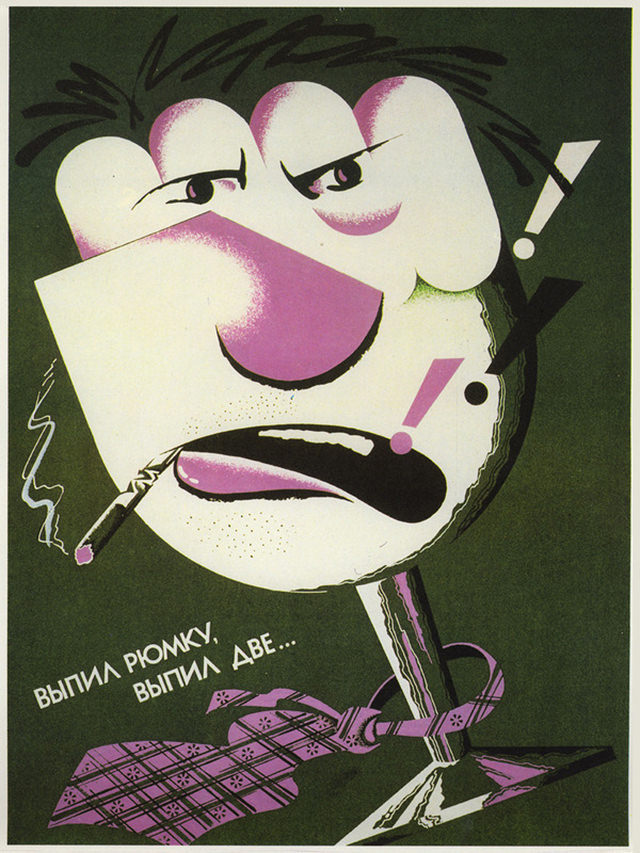
A stark, stylized face dominates the frame, rendered in bold blocks of black, white, and bruised purples that make the expression feel both comic and unsettling. One narrowed eye glares out from under heavy shading, while the mouth opens in a strained grimace that suggests anger, confusion, or regret. A cigarette droops from the corner of the lips, and sharp punctuation marks—exclamation points and a question mark—puncture the space like visual alarms.
Down near the bottom, Cyrillic text reads “Выпил рюмку, выпил две…” (“Had a shot, had two…”), a familiar refrain that turns into a warning when paired with the distorted features above. The checked tie and simplified suit hint at an ordinary working figure, making the message about alcohol abuse feel aimed at everyday life rather than distant caricature. Even without a stated date or place, the graphic language points to the world of public health and temperance propaganda, where posters used exaggeration and color contrast to jolt viewers into recognition.
“We shall overcome drunkenness” plays like a rallying cry, borrowing the cadence of collective struggle and applying it to a deeply personal battle. The artwork’s power lies in how it translates intoxication into a fractured mood—irritation, bravado, and vulnerability all squeezed into one face—so the viewer feels the cost before any sermon arrives. For readers searching historical anti-alcohol posters, Soviet-era style illustration, or social commentary art, this piece offers a memorable glimpse of how designers tried to turn shame, humor, and urgency into a call for change.