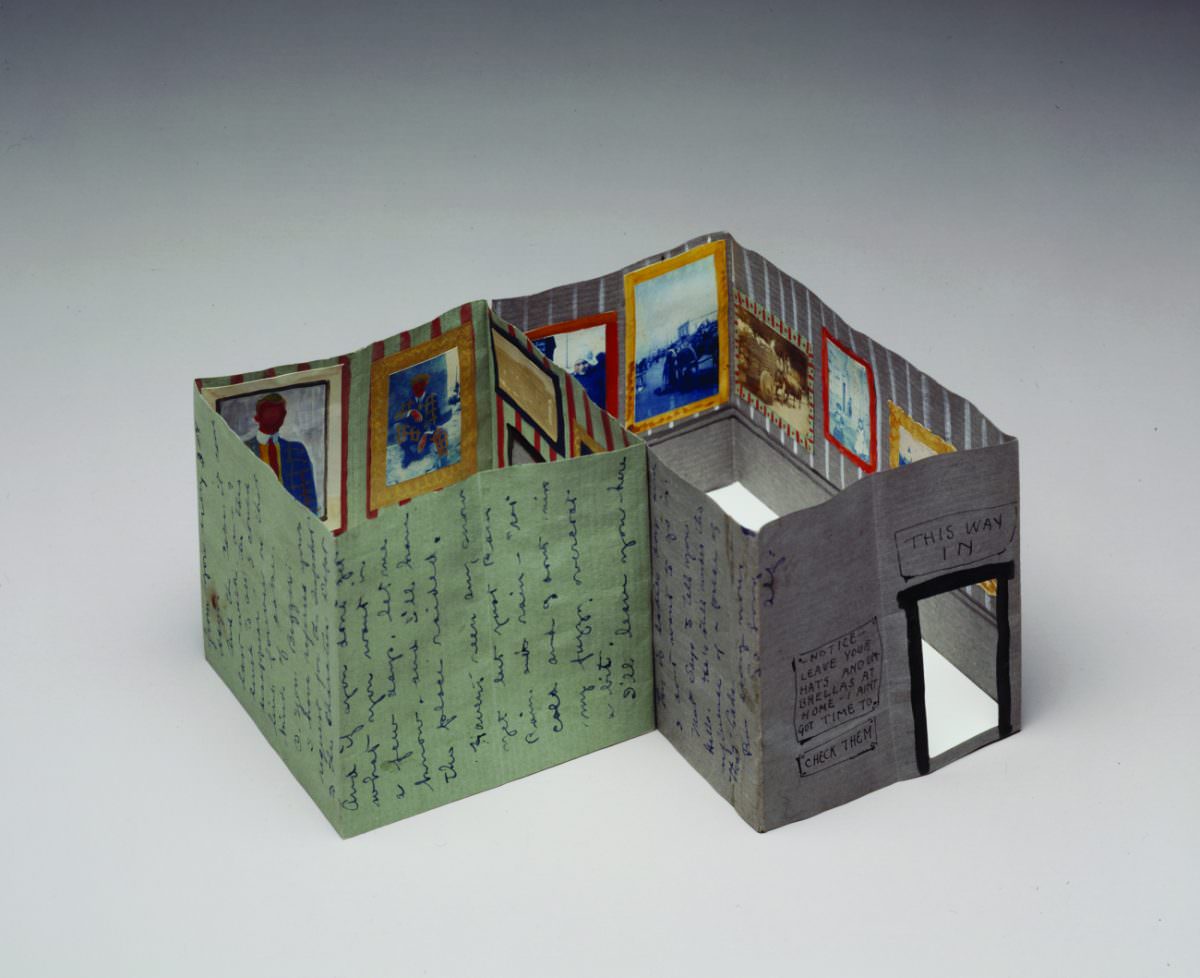
Folded into a compact, zigzag form, this 1913 piece attributed to Alfred Joseph Frueh and addressed to Giuliette Fanciulli feels like correspondence turned into a miniature stage set. Panels of handwritten text run across muted green and gray surfaces, while the upper edges open into a playful “gallery” of tiny framed images in bright borders. The result is part letter, part artwork—an intimate object meant to be handled, unfolded, and read.
Color and structure do much of the storytelling here: striped walls, postcard-like vignettes, and the deliberate rhythm of folds suggest movement through rooms, as if the recipient is invited to walk through memories and remarks. The painted frames resemble snapshots and sketches arranged salon-style, hinting at travel, society, or personal references without spelling them out. Even without decoding the cursive script, the visual cadence conveys a lively, witty tone characteristic of early 20th-century graphic sensibilities.
On the right, a drawn doorway labeled “THIS WAY IN” turns the whole construction into an invitation, and a handwritten warning about leaving “hats and heels” at home adds a mischievous note. Such details make the object a compelling example of artist-made mail and ephemera, bridging private communication and modern design. For readers searching historical artworks, early 1900s illustrated letters, or Alfred Joseph Frueh materials, this unusual 1913 work offers a vivid glimpse into how art could travel by post and arrive as an experience rather than a page.