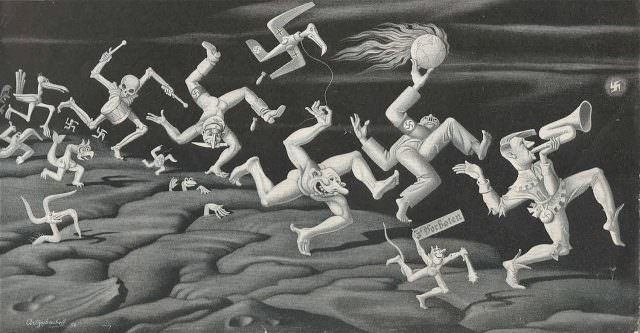
Surreal bodies tumble across a barren, cratered ground, their limbs splayed like broken marionettes while swastikas repeat in the background as a sickening motif. Boris Artzybasheff turns Nazi symbolism into grotesque caricature, pushing it into the realm of nightmare where propaganda collapses into absurdity. The result is a WWII-era anti-Nazi illustration that feels both satirical and ominous, a visual jolt meant to stick in the mind.
Figures with skull-like heads and exaggerated hands scramble, fall, and collide, suggesting a chaotic stampede rather than any heroic march. A trumpet-like form and other distorted details hint at militarism and spectacle, yet everything is rendered as farce—an army of twisted shapes losing control of its own performance. Even without a specific caption, the composition reads as a condemnation of fascist violence and the dehumanizing machinery behind it.
Artzybasheff’s wartime artwork belongs to a tradition of political illustration that fought on the cultural front, using bold invention to undermine totalitarian imagery. For readers searching WWII art, anti-Nazi posters, and Boris Artzybasheff illustrations, this piece offers a striking example of how satire and horror can share the same frame. It reminds us that creative resistance was not only printed in words, but drawn in unsettling visions that challenged viewers to see ideology as monstrous and ultimately self-destructive.