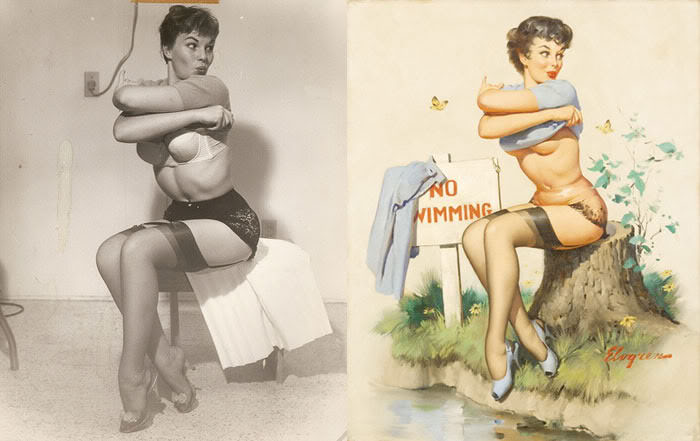
Across a split frame, the working reality of a studio pose sits beside the polished fantasy of a finished pin-up painting. On the left, a model perches on a simple stool in lingerie and stockings, arms folded around herself as she turns her gaze sideways under bright, plain lighting. On the right, that same pose is transformed into a vivid, idealized illustration: softened skin tones, stylized curls and makeup, and a carefully staged outdoor setting with a cheeky “NO SWIMMING” sign and shimmering water at her feet.
The comparison lays bare how mid-century pin-up art was built—part photography, part imagination, and a great deal of retouching. Fabric, posture, and proportions are subtly reworked; a bare studio wall becomes grass, butterflies, and a sunlit shoreline; and practical shadows give way to painterly highlights. It’s a reminder that “incredibly beautiful” pin-up images weren’t spontaneous snapshots but crafted compositions shaped by artists, editors, and the era’s taste for glamour.
For readers interested in vintage pin-up models before and after editing, this pairing offers a rare look behind the curtain at the real women who inspired iconic popular art. It also invites a wider conversation about beauty standards, commercial illustration, and the way visual culture refined everyday bodies into aspirational ideals. Browse, zoom in, and notice the small choices—because it’s in those details that the history of pin-up paintings truly comes alive.