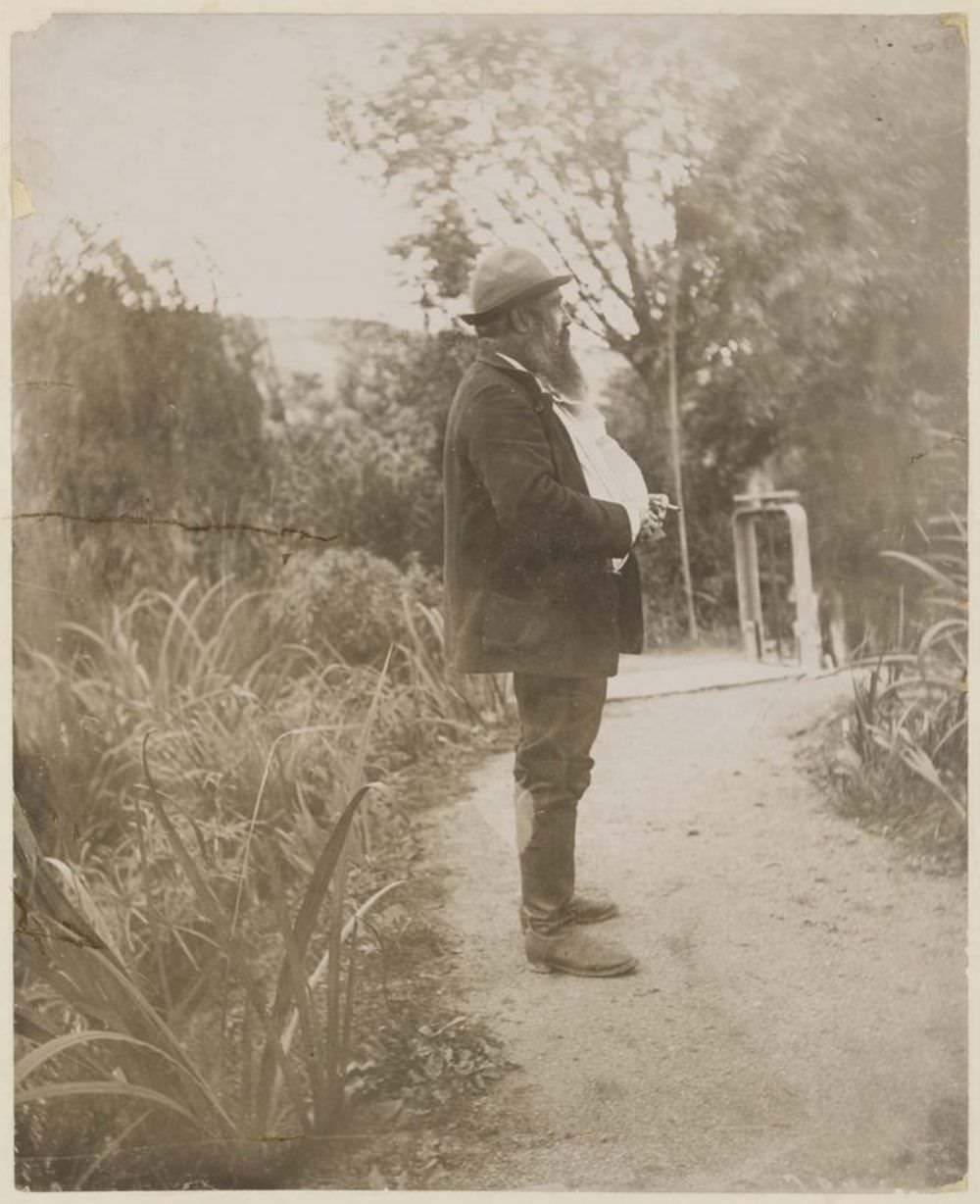
Along a quiet garden path, a bearded man in a brimmed hat pauses as if listening to the landscape. Tall grasses spill into the walkway, trees soften the horizon, and a pale footbridge-like structure emerges in the background, hinting at the carefully shaped world that made Giverny synonymous with Claude Monet’s vision. The photograph’s gentle blur and aged surface add to the sense of memory—an artist’s sanctuary caught in passing.
Giverny was never simply a backdrop; it was a living studio, cultivated with the same attention Monet gave to canvas and pigment. The path, the plantings, and the built elements suggest a space designed for looking—where shifting light, seasonal growth, and reflections could be studied day after day. Even without naming every feature, the scene evokes the rhythms that fed his garden paintings and later works inspired by water and foliage.
For readers drawn to Impressionism, Monet’s studio and gardens at Giverny remain an essential key to understanding the artworks that followed. This post pairs the historical atmosphere of the photograph with the idea of a “personal eden,” exploring how a private landscape became an engine for color, composition, and experimentation. Step into the mood of the place, and the familiar paintings feel newly rooted in soil, weather, and time.