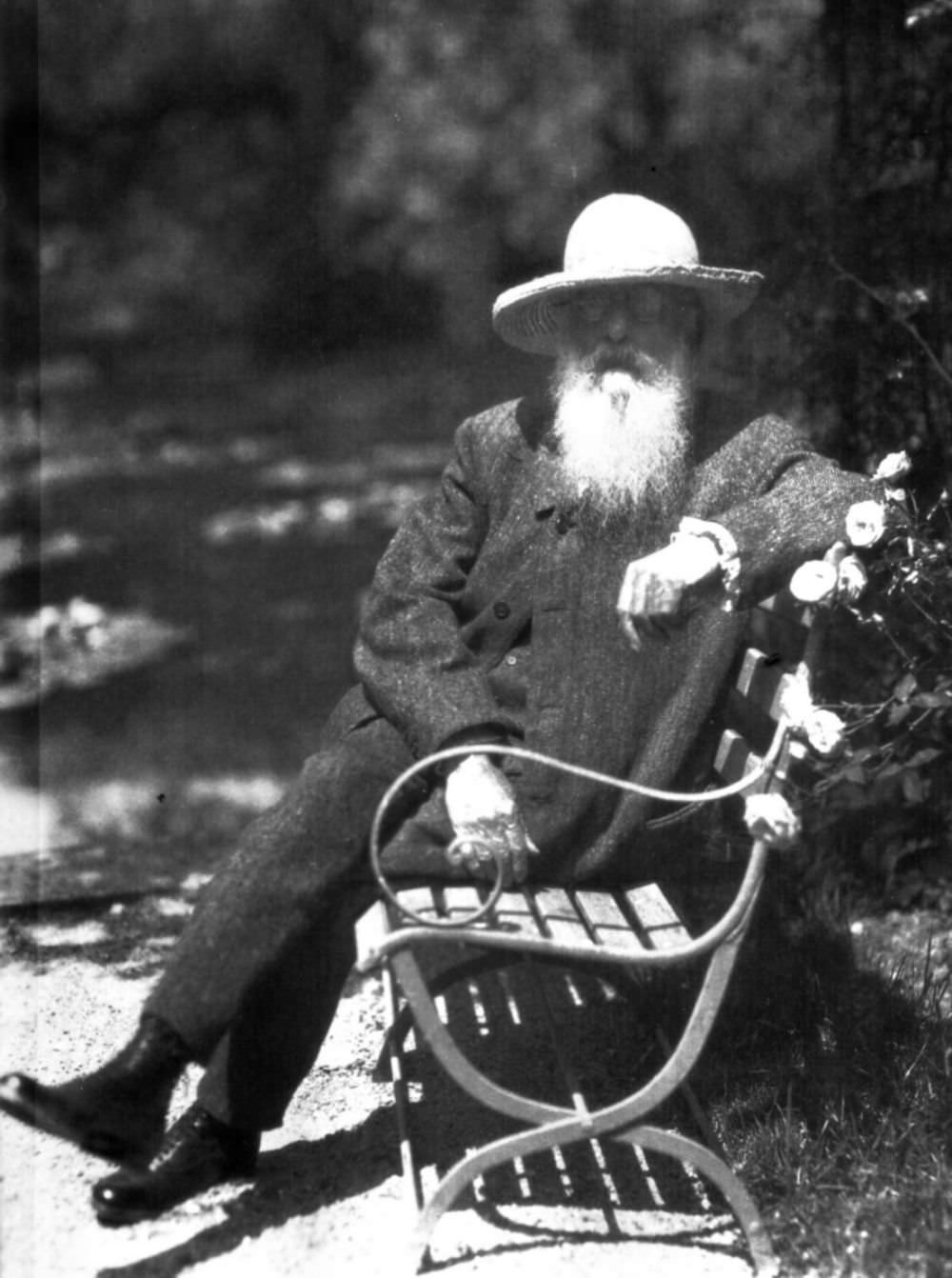
A bearded man in a broad-brimmed hat rests on a garden bench, half in sun and half in shade, as pale blossoms spill into the frame beside him. The soft focus of the background—suggesting water and dense greenery—creates the same kind of atmospheric hush that makes Claude Monet’s world feel both intimate and infinite. Even without color, the scene reads like a study in light, texture, and leisure, echoing the rhythms that shaped Impressionist vision.
Giverny was more than a home; it functioned as a personal laboratory where paths, plantings, and reflections could be arranged and revisited until nature itself became a studio. In the curve of wrought iron, the gravel underfoot, and the nearby flowers, you can sense the everyday structures that quietly supported an extraordinary body of work. The garden setting links directly to the themes visitors associate with Monet—water surfaces, shifting seasons, and the patient observation of a single place.
Within the broader story of Claude Monet’s studio and gardens at Giverny, images like this offer a human pause between the celebrated canvases. They invite readers to imagine how the artist moved through his own “personal eden,” watching sunlight flicker across leaves and pond, then returning to translate that experience into paint. For anyone exploring Monet’s Giverny artworks, this historical glimpse helps bridge biography and landscape, showing the lived environment behind the enduring motifs.