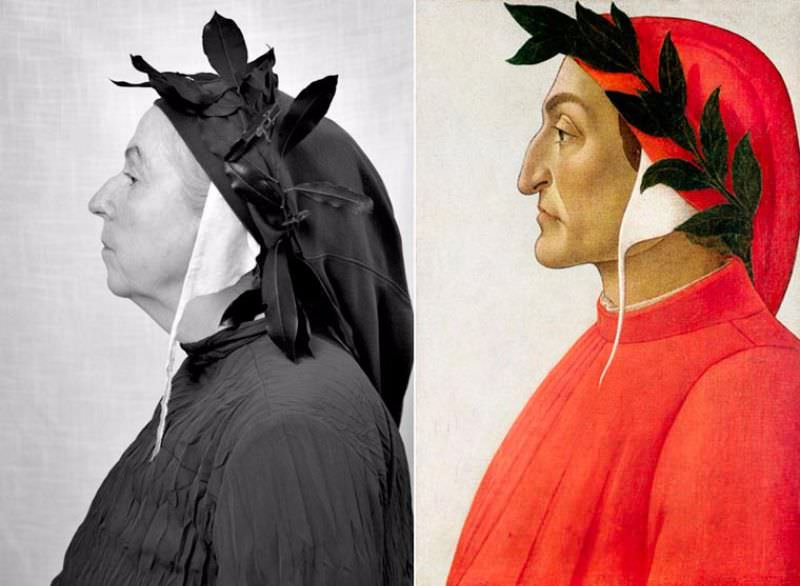
A striking side-by-side comparison brings Dante Alighieri into focus through two very different lenses: a grayscale profile on the left and Sandro Botticelli’s iconic painted likeness on the right. Both figures turn the same way, emphasizing the poet’s sharp nose, composed expression, and the distinctive headwear that has come to symbolize Dante’s public image. The pairing invites a close look at how a single profile can move between documentation and interpretation.
Botticelli’s portrait—rich in reds and framed by the laurel wreath—leans into the visual language of honor, learning, and literary triumph, qualities long associated with the author of the Divine Comedy. The clean contours and simplified background keep attention on the silhouette, making the face read almost like a seal or emblem. Even without a caption, the Renaissance styling communicates how strongly later artists shaped the memory of medieval writers.
Placed together, these images work as a compact lesson in art history and reception: Dante as an enduring cultural figure, Botticelli as the interpreter who helped fix his appearance for generations. For readers searching for Dante Alighieri art, Botticelli Dante portrait, or Renaissance depictions of literary icons, this post offers an engaging point of entry. It’s a reminder that portraits don’t just record faces—they build legends.