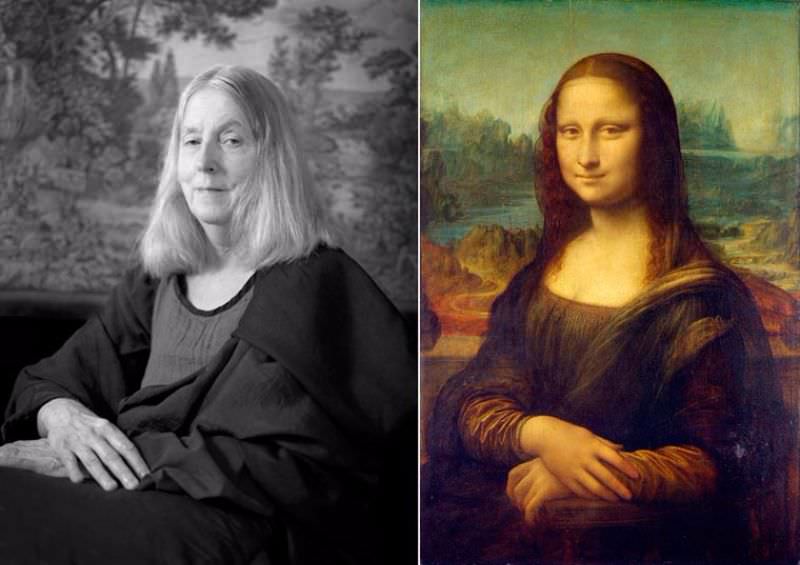
Few works in Western art have been reproduced, debated, and guarded as fiercely as Leonardo da Vinci’s Mona Lisa, and the photo here leans into that legend by pairing a modern portrait with the instantly recognizable painted face. The visual echo between sitter and masterpiece invites a closer look at what makes the painting so magnetic: the calm, frontal pose, the subtle modeling of the features, and the famous half-smile that seems to shift with every glance.
Leonardo’s portrait is often discussed as a triumph of Renaissance technique, and the composition still rewards slow viewing in the digital age. The softly graded shadows, the gentle transitions of skin tones, and the atmospheric landscape that recedes into the distance create depth without spectacle, letting mood do the work of drama. Even for readers who know the Mona Lisa mostly through posters and thumbnails, the details—hands folded, gaze steady, background hazy—reassert why the original remains a touchstone for art history.
Alongside this juxtaposition, the post becomes a reminder that great artworks live many lives beyond the museum wall, continually reinterpreted through photography, parody, homage, and study. That ongoing conversation is part of the Mona Lisa’s power: it is both a specific Renaissance portrait by Leonardo da Vinci and a cultural mirror reflecting each era’s ideas about beauty, identity, and mystery. For anyone browsing artworks online or building a WordPress gallery of iconic paintings, this pairing offers an engaging entry point into the enduring story of the world’s most famous smile.