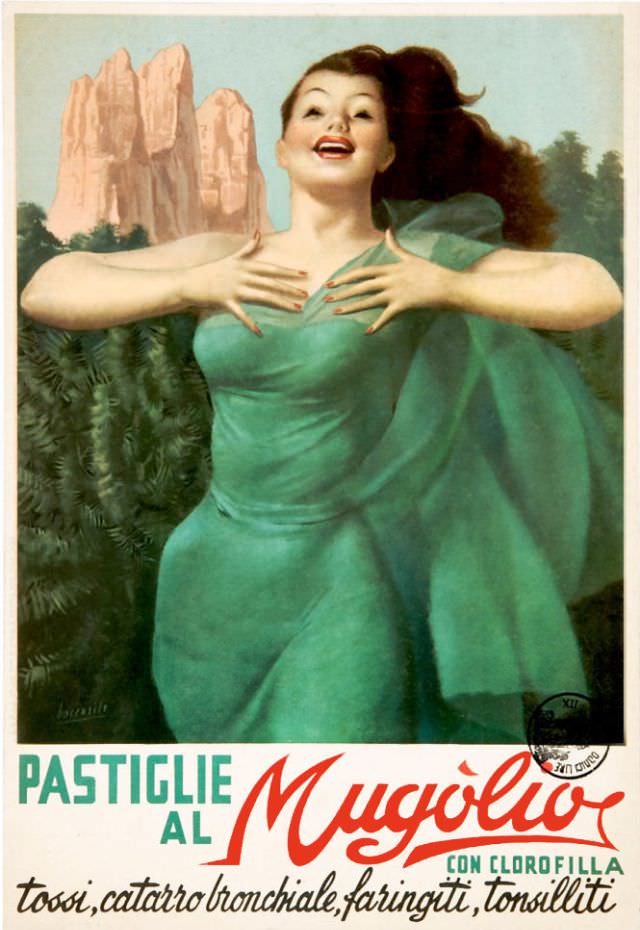
A sweep of emerald fabric and an upturned, smiling face set the tone for this circa-1930s Italian advertisement for “Pastiglie al Mugòlio con Clorofilla.” The central figure seems to inhale mountain air with theatrical delight, her hands lifted toward her chest as if relief has just arrived. Behind her, jagged peaks rise above dark firs, turning the poster into a miniature alpine escape where freshness and ease are part of the promise.
Typography does much of the selling: the bold, flowing “Mugòlio” signature in red dominates the lower band, while the supporting text—“con clorofilla”—leans into modern-sounding science for its day. The list of ailments in Italian (including coughs and bronchial catarrh, pharyngitis, and tonsillitis) grounds the artwork in the everyday realities of respiratory discomfort, making the glamorous pose feel like a visual shorthand for open breathing. Color is used strategically too, with greens echoing chlorophyll and pine, linking product, landscape, and sensation into one coherent message.
Seen today, the piece works both as graphic design history and as a window into interwar-era consumer culture, when health remedies were marketed through beauty, nature, and a touch of optimism. It’s an “Artworks” entry that rewards close looking—at the painterly shading, the staged breeze in the hair, and the careful balance between illustration and bold commercial lettering. For collectors, researchers, or anyone drawn to vintage Italian posters, this print captures how advertising turned wellness into an aspirational, almost cinematic experience.