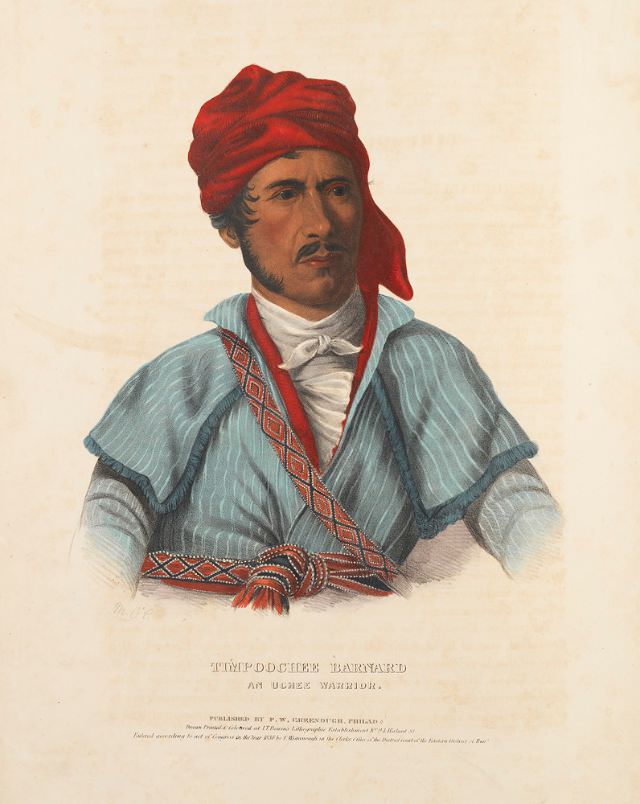
Timpoochee Barnard is presented in a formal, carefully composed portrait that reads as both artwork and historical document. The figure faces slightly to the side, his gaze steady and reserved, while a vivid red headwrap draws the eye upward and frames his expression. Beneath it, a striped blue garment and neatly tied neckcloth suggest a deliberate blend of personal identity and the visual conventions expected by the printmakers who circulated Indigenous portraits for wider audiences.
Color and pattern do much of the storytelling here. A broad, woven sash crosses the chest in diamond motifs, then gathers at the waist in a prominent knot, giving texture and rhythm against the softer folds of cloth. The artist’s controlled shading along the cheekbones and jawline, together with the crisp edges of fabric, signals a studio-like intent—an image designed to be read closely, reproduced, and remembered.
As a depiction titled “Timpoochee Barnard, An Uchee Warrior,” the print invites viewers to consider how Native leaders were represented in popular visual culture and how those representations shaped public understanding. It stands as a compelling example for anyone researching Uchee history, Indigenous portraiture, or early American print art, where identity, diplomacy, and mythmaking often intersect on the same sheet of paper. Seen today, the portrait rewards slow looking—at the details of dress, the dignity of posture, and the layered story implied by the word “warrior.”