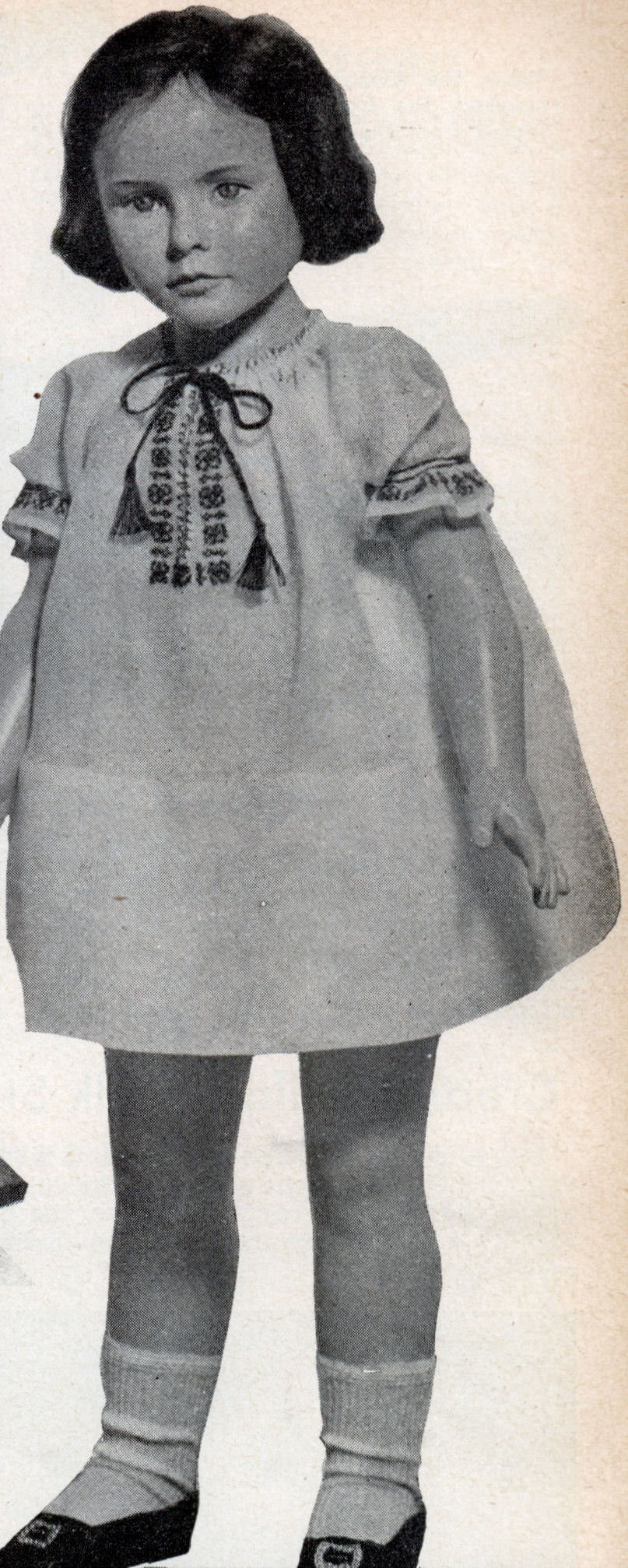
A child-sized figure stands alone against a plain backdrop, posed with the quiet formality of an object meant to be admired. The title, “The finished doll,” invites a second look: the smooth, stylized features and the carefully arranged stance echo the showroom stillness of a newly completed creation. Even in a simple studio setting, the composition emphasizes presentation—an “artwork” meant to be seen head-to-toe.
Details of clothing do much of the storytelling here, from the short sleeves to the prominent embroidered panel at the chest, tied with a neat bow. The dress reads as deliberately traditional in spirit, suggesting how dolls were often dressed to reflect idealized childhood, folk costume, or craftsmanship rather than everyday play clothes. Dark stockings and sturdy shoes ground the figure, reinforcing the sense of a finished, ready-for-display object.
What makes this historical image compelling is the tension between intimacy and manufacture: dolls imitate life, yet they also reveal the tastes and techniques of their makers. For readers interested in vintage toys, textile decoration, or the history of childhood material culture, “The finished doll” offers a striking reference point—part portrait, part product. As a piece of visual documentation, it preserves the artistry of dress and design in a single, unforgettable pose.