Category: Artworks
Step into the world of timeless artworks that shaped our visual culture. Explore rare paintings, sculptures, and creative masterpieces that reveal the evolution of artistic expression through centuries.From Renaissance genius to modern minimalism, each piece tells a story of imagination, innovation, and beauty that continues to inspire artists and collectors worldwide.
-
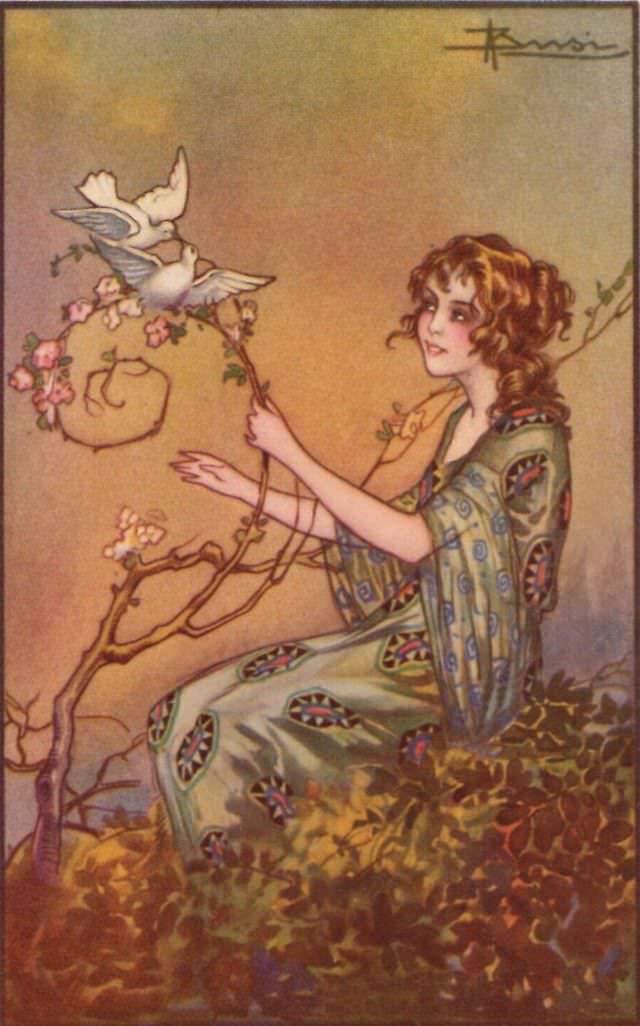
#14 Pretty lady with doves, circa 1920s
Soft color washes and delicate linework give this circa-1920s artwork the dreamy calm of an illustrated postcard. A young woman with short, curling hair sits among leafy greenery, her patterned dress draping in flowing folds while she turns her gaze toward a small burst of motion overhead. The palette—warm browns, gentle greens, and rosy accents—echoes…
-

#7 Stunning Silk Paintings depicting different Miyako Festivals of Kyoto, Japan from the 1920s #7 Artworks
Across the pale, misted ground of this silk painting, a single festival performer commands attention in a blaze of red and jewel-toned patterning. The figure’s mask-like face, padded sleeves, and richly ornamented chest piece evoke the theatrical splendor associated with Kyoto’s Miyako Odori tradition, while the airy negative space keeps the scene poised and ceremonial.…
-
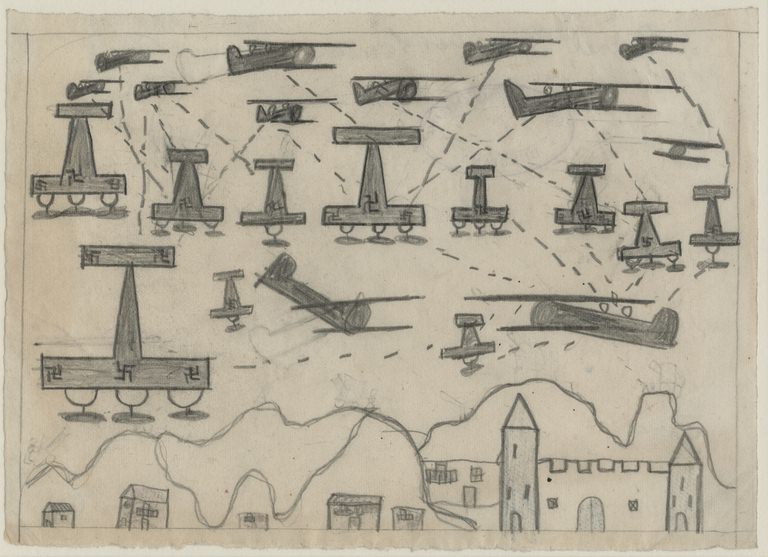
#2 The Spanish Civil War of 1936 through Children Drawings #2 Artworks
Over a sketched horizon of hills and small houses, a formation of airplanes fills the sky, their blunt wings and simple bodies drawn with the directness of a child’s hand. Dashed lines arc between the aircraft like hurried trails, turning the empty space into a web of motion and threat. Below, a walled building with…
-
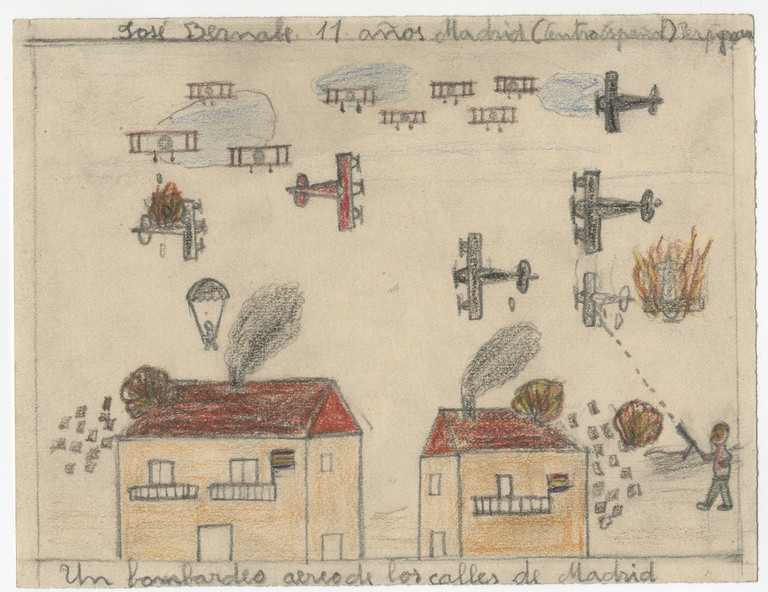
#18 José Bernabe, age 11, Madrid (Spanish Center), Perpignan. An aerial bombing of the streets of Madrid
José Bernabe’s drawing, identified in the title as made at age 11 in Perpignan’s Spanish Center, turns the terror of Madrid under aerial attack into a child’s blunt, unforgettable language. Across a pale sky, airplanes crowd the page in rough formation while small parachutes drift downward, and the scene below is anchored by two simple…
-
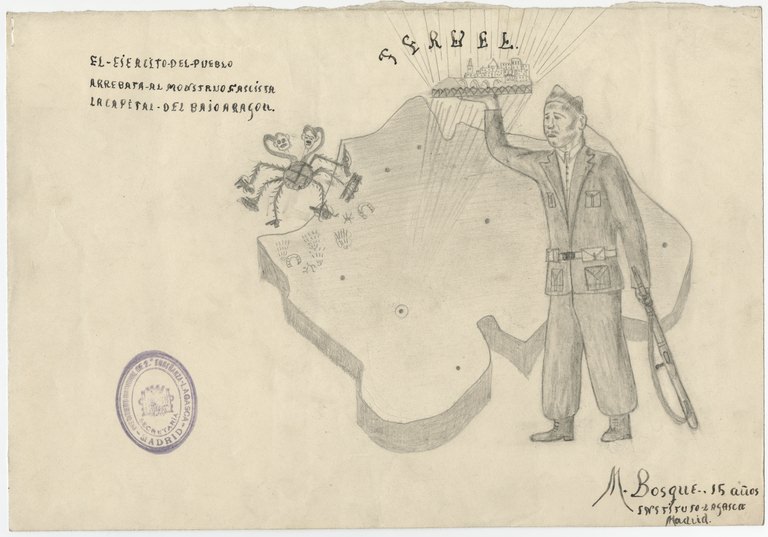
#34 The Spanish Civil War of 1936 through Children Drawings #34 Artworks
A child’s pencil lines turn the Spanish Civil War of 1936 into a stark little drama: a uniformed figure stands with an arm raised beneath the word “GREBEL,” while a rough map-like shape stretches across the page and a strange, spider-like creature hovers nearby. The simple shading, oversized symbols, and bold lettering feel less like…
-
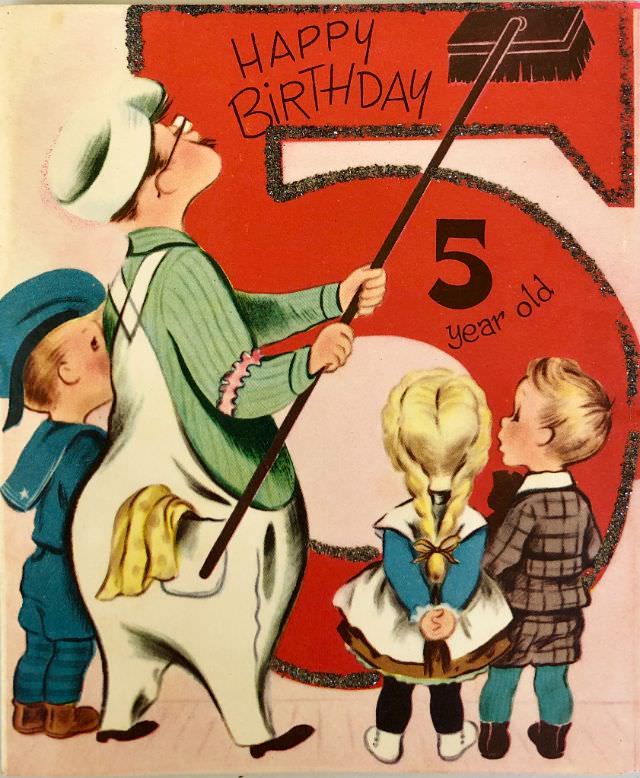
#15 Happy Birthday 5 Year Old
Bright reds and playful lettering announce “HAPPY BIRTHDAY” while a giant number 5 dominates the scene, turning a simple greeting into a bold piece of party-era graphic art. The illustration feels like a mid-century celebration card: clean shapes, soft shading, and a warm palette designed to pop on a mantel or in a scrapbook. Even…
-
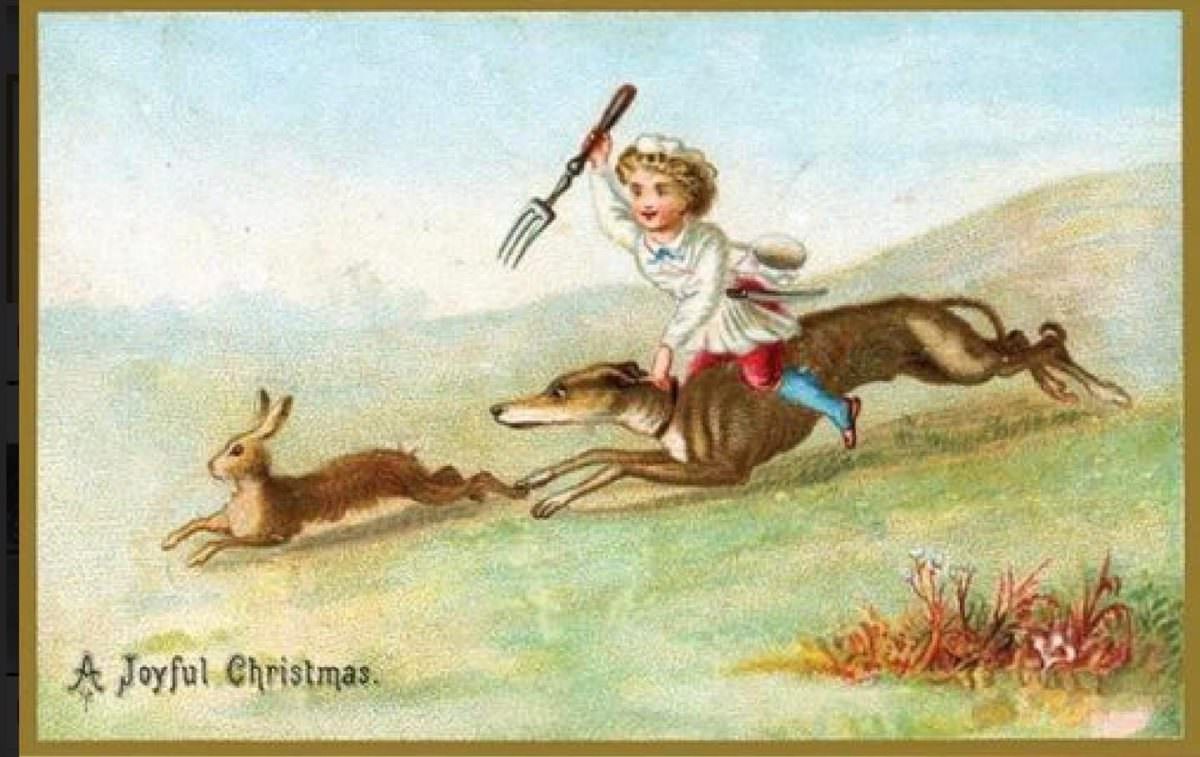
#2 Hilariously Bizarre Christmas Cards from the Victorian Era featuring Animals #2 Artworks
Across a rolling countryside, a bonneted child clings to a racing greyhound while brandishing a fork, as a hare bounds ahead in a blur of motion. The cheerful greeting “A Joyful Christmas” sits at the bottom, an almost comically calm caption for a scene that feels more like a chase poster than a holiday wish.…
-

#18 Hilariously Bizarre Christmas Cards from the Victorian Era featuring Animals #18 Artworks
A flock of jaunty birds marches across a snowy, twilight-blue scene, each one improbably balancing a tiny flaming torch like a feathered holiday procession. The illustration leans into that distinctly Victorian taste for whimsy—part natural history, part nonsense—where animals become stand-ins for people in playful little dramas.
-
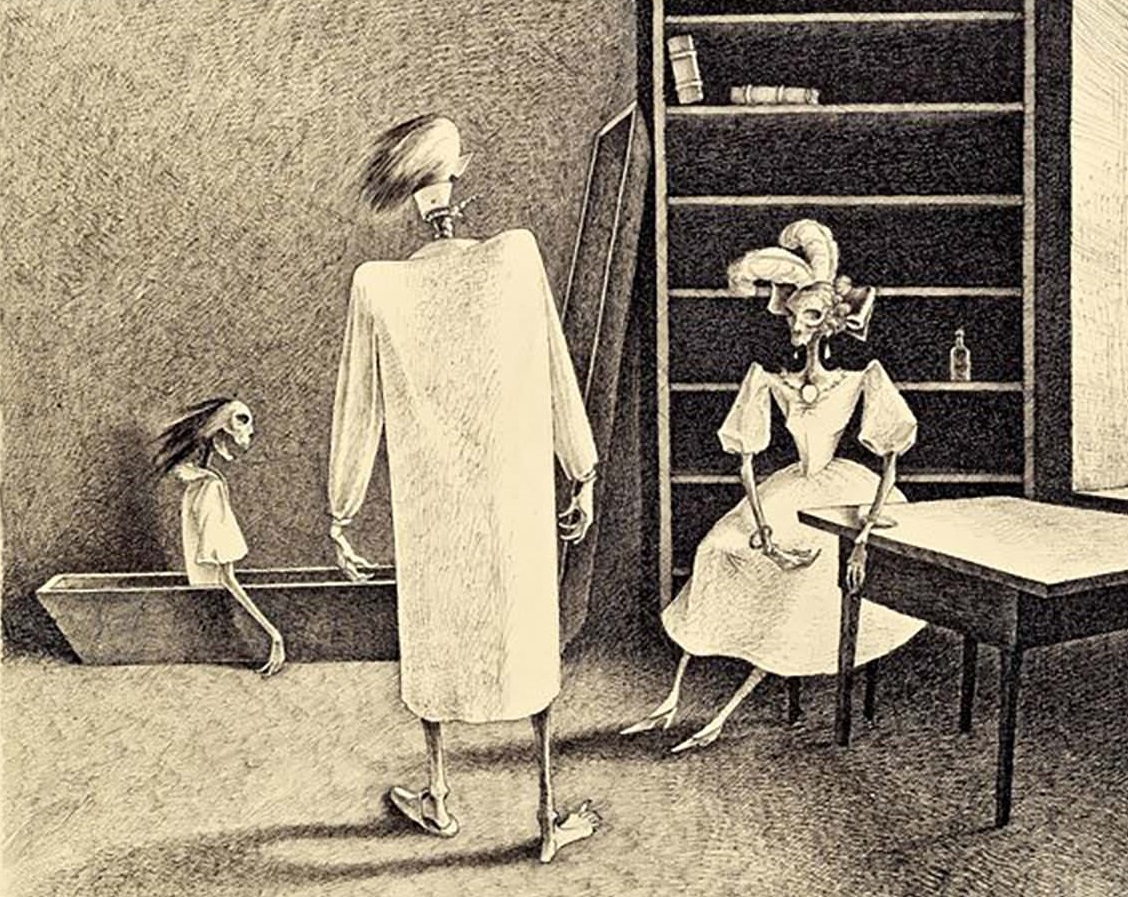
#6 The Sad Family, 1935
An unsettling domestic scene unfolds in “The Sad Family, 1935,” where three gaunt figures occupy a spare interior that feels more like a stage than a home. One adult stands with their back turned, a long garment hanging like a shroud, while another sits rigidly at a table, all angles and tension. Off to the…
-
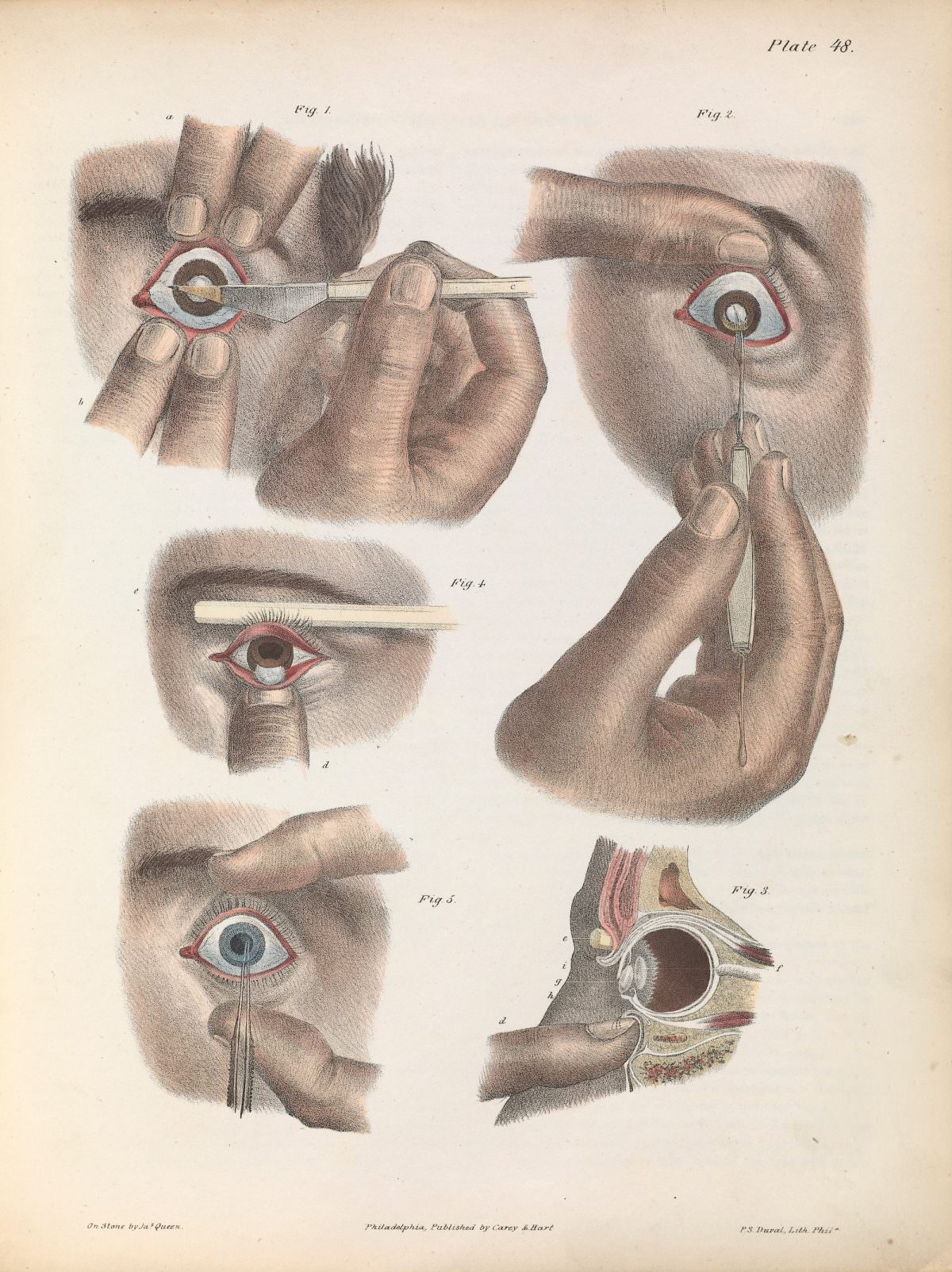
#5 Plate XLVIII. Illustration of surgery on the eye for the removal of a cataract. Operation by extraction – inferior section of the cornea.
Plate 48 lays out cataract surgery as a carefully choreographed sequence, rendered with the calm precision of a medical atlas. Multiple figures guide the viewer through an “operation by extraction,” focusing on the inferior section of the cornea, with each hand position and instrument angle presented as if in slow motion. The restrained palette and…