Category: Colorization
See history come to life with colorized photographs of the past. From wars to daily life, these restored images bridge time with emotion and realism.
Each colorized photo revives forgotten stories and gives a fresh perspective on iconic historical moments.
-
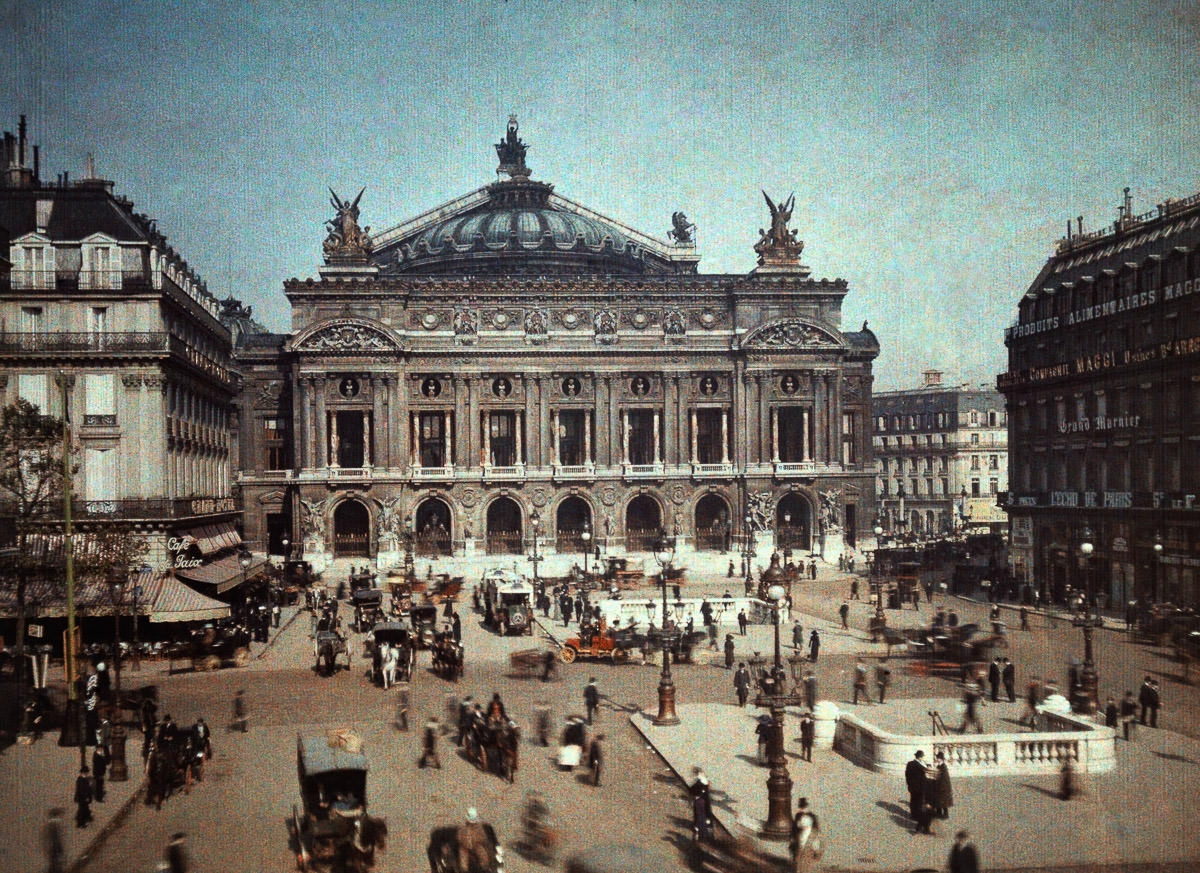
#111 Paris, 1920s
Paris in the 1920s comes alive here in a colorized street scene dominated by a grand opera-house façade, its sculpted figures and domed roof rising above a busy square. The softened tones lend warmth to the stonework and help pick out architectural details—arched entrances, rows of columns, and ornamental statuary—that can disappear in older monochrome…
-
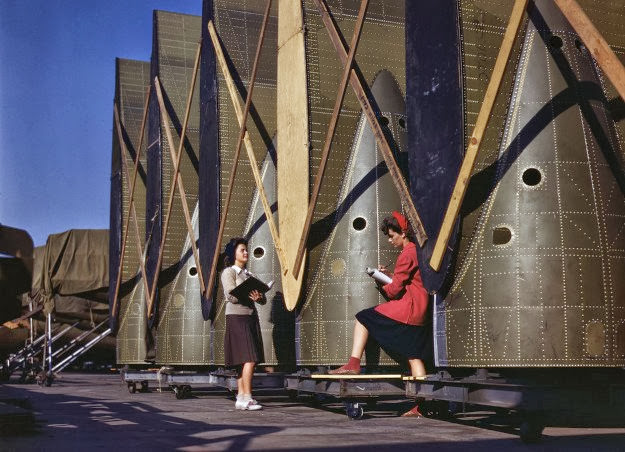
#6 Women inspectors check cargo transport innerwings at Douglas Aircraft Company in Long Beach, California, 1942.
Along a sunlit stretch of tarmac at the Douglas Aircraft Company in Long Beach, California, aircraft components stand in a row like enormous ribs, their metal skins patterned with rivet lines and inspection markings. The title points us to the inner wings for a cargo transport, and the scale is unmistakable: each panel dwarfs the…
-
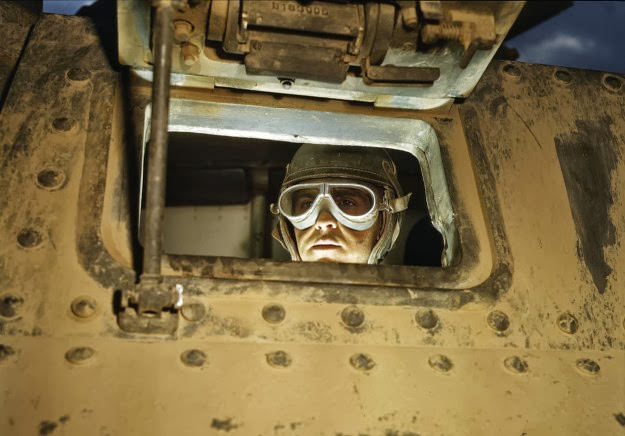
#22 A tank driver at Fort Knox, Kentucky, 1942.
Peering out from a narrow hatch, a tank driver at Fort Knox, Kentucky, fixes his attention on whatever lies ahead, his face framed by riveted armor and the heavy geometry of the vehicle. Protective goggles and a close-fitting helmet hint at the grit, vibration, and flying dust that came with armored training, while the cramped…
-
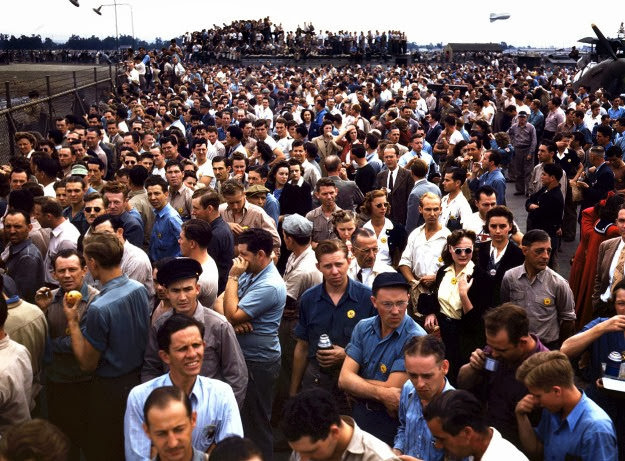
#38 Workers on Liberator Bombers at Consolidated Aircraft Corp., Fort Worth, Texas, 1942.
A dense sea of faces fills the frame at Consolidated Aircraft Corp. in Fort Worth, Texas, evoking the sheer scale of wartime production in 1942. The colorization brings out sunlit shirts, work caps, and factory badges, turning what might have been a distant moment into something immediate and crowded, like a shift change frozen in…
-
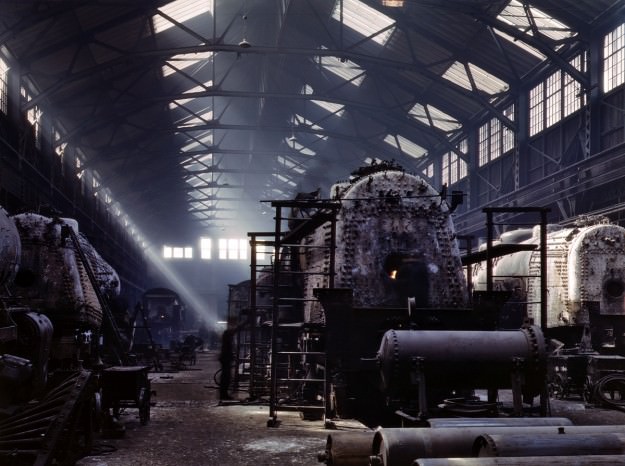
#9 Santa Fe R.R. locomotive shops, Topeka, Kansas. March 1943. 4×5 Kodachrome transparency by Jack Delano.
Sunlight pours through the high clerestory windows of the Santa Fe R.R. locomotive shops in Topeka, Kansas, cutting bright shafts across a cavernous industrial hall. The Kodachrome color makes the scene feel immediate: steel trusses and skylights overhead, a gritty shop floor below, and hulking locomotive bodies standing in rows like unfinished monuments. Dust and…
-
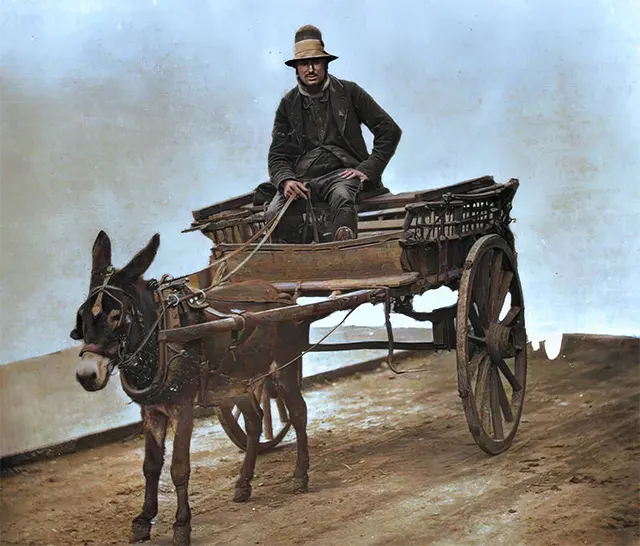
#2 A coster uses a donkey to get around, 1890s.
Perched high on a simple two-wheeled cart, a costermonger rides with an easy, workingman’s confidence as his donkey waits patiently at the traces. The colorization brings out small, telling details—the worn brim of a straw hat, the dark, creased clothing suited to long hours outdoors, and the rough timber of the cart built for practicality…
-
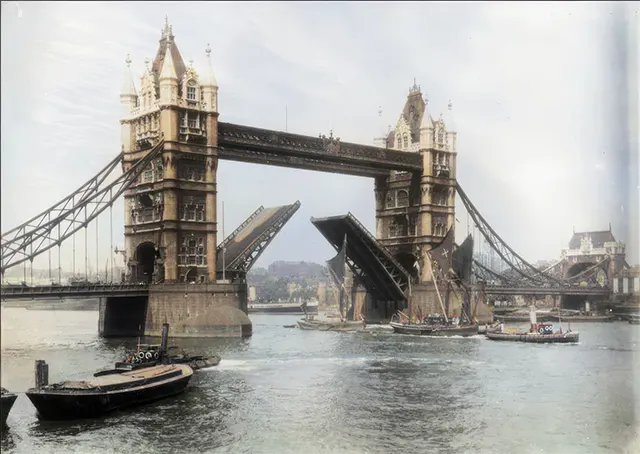
#18 Tower Bridge spans the River Thames, completed in 1894.
Rising above the River Thames, Tower Bridge appears here as both a landmark and a working machine, its twin Gothic Revival towers anchored firmly to the embankments. The colorization brings out warm stone tones, dark ironwork, and the lattice of suspension elements that guide the eye toward the high-level walkway. With the bascules lifted, the…
-
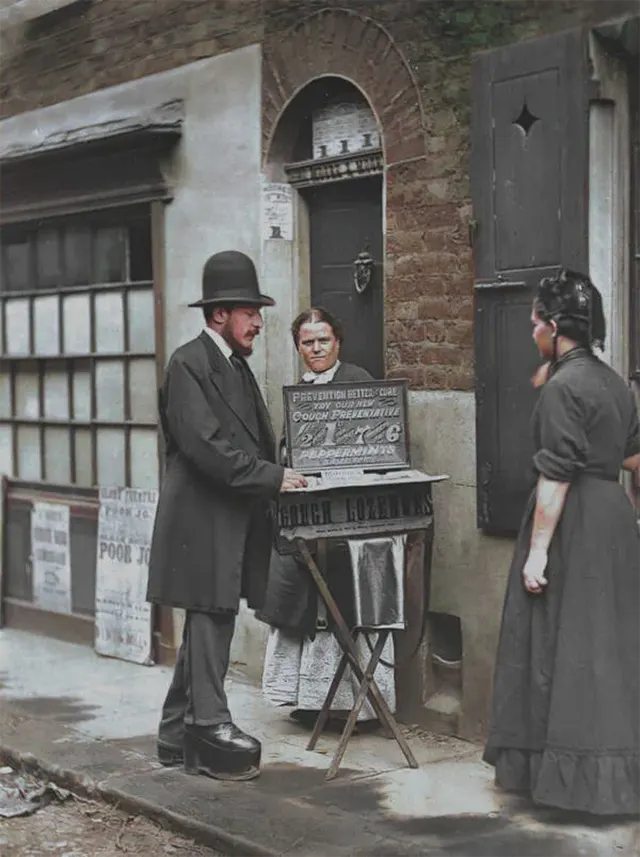
#34 A street doctor sells new cough drops, 1890s.
Under a brick archway and beside shuttered windows, a self-styled street doctor turns a narrow patch of pavement into a storefront. A small folding stand supports a bold sign advertising “cough drops,” while the vendor—aproned and watchful—holds the center of the scene like a stage performer between doorways. The colorization brings out the everyday textures:…
-

#9 The bodies of two would-be thieves named Robert Green and Jacob Jagendorf after a failed robbery attempt that ended when they accidentally fell down the building’s elevator shaft. New York, 1915.
Down at the bottom of a New York elevator shaft in 1915, the aftermath of a failed robbery attempt lies starkly exposed. The bodies of Robert Green and Jacob Jagendorf rest amid grit and scattered debris, their clothing rumpled and dusted as if the building itself has swallowed them. Coiled springs, heavy chains, and splintered…
-

#25 The murder scene of Arthur “Dutch Schultz” Flegenheimer, a powerful New York gangster in the 1920s and ’30s who was ultimately killed in Newark, New jersey by an assassin hired by the Mafia Commission.
A uniformed officer leans toward a cracked mirror, studying a spiderweb of damage that still seems to vibrate with the shock of violence. In the foreground, a round table remains set with glasses beneath a white cloth, now stained and smeared in red—an unnerving contrast to the otherwise ordinary dining-room arrangement of wooden chairs and…