Category: Cover Art
Dive into a gallery of vintage cover art from books, magazines, and albums. Discover how graphic design and illustration reflected the moods of their times.
These covers capture the essence of cultural evolution — from bold propaganda to elegant minimalism.
-

#4 Screenland magazine cover, July 1923
Bold red lettering and the promise of “Screenland from Hollywood” set the tone on this July 1923 magazine cover, a piece of cover art designed to leap off a newsstand. Centered within a dark circular frame is a softly painted portrait of a smiling young woman, her blonde curls arranged in neat ringlets and accented…
-
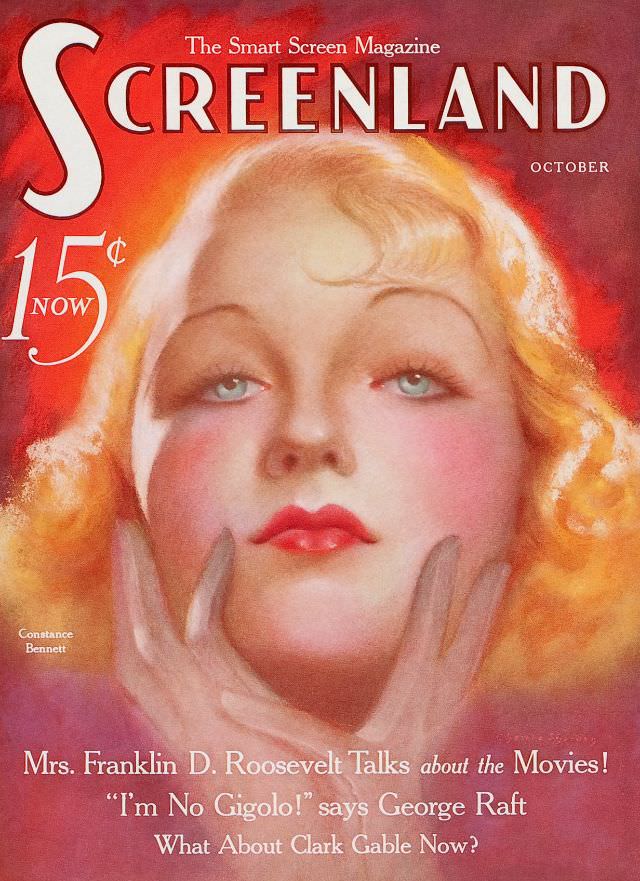
#20 Screenland magazine cover, October 1932
Bold color and glamorous illustration set the tone on the October 1932 cover of Screenland, billed as “The Smart Screen Magazine.” A luminous, close-up portrait of Constance Bennett dominates the design, her softly waved blonde hair and rosy makeup rendered in a dreamy, airbrushed style that feels quintessentially early-1930s Hollywood. The large “SCREENLAND” masthead and…
-

#1 The Ugly Truth About Yugoslavian Album Art in the 1970s and 1980s #1 Cover Art
A bold red field, a studio-lit pose, and the playful “Klik-Klak” title do most of the shouting here, while the performer stands front and center in a white outfit trimmed with dark accents, smiling with the confidence of a nightclub poster. The typography fights for attention—large, heavy lettering for “Miljuš Svetlana,” plus a sweeping subtitle—creating…
-

#17 The Ugly Truth About Yugoslavian Album Art in the 1970s and 1980s #17 Cover Art
Leopard print clings to the singer as she lounges against a pale birch trunk, turning a woodland setting into a stage set that feels equal parts glamour shot and tabloid tease. The pose is deliberate, the makeup and feathered hair unmistakably late-20th-century, and the contrast between “natural” scenery and highly stylized sensuality lands with the…
-

#33 The Ugly Truth About Yugoslavian Album Art in the 1970s and 1980s #33 Cover Art
A cream-colored sleeve, already creased and scuffed like something pulled from a long-loved record crate, frames a studio portrait that leans hard into late-20th-century pop bravado. The singer stands front and center in a bright red graphic T-shirt and high-waisted blue trousers, a white belt cinched tight, while a sporty jacket is slung over one…
-
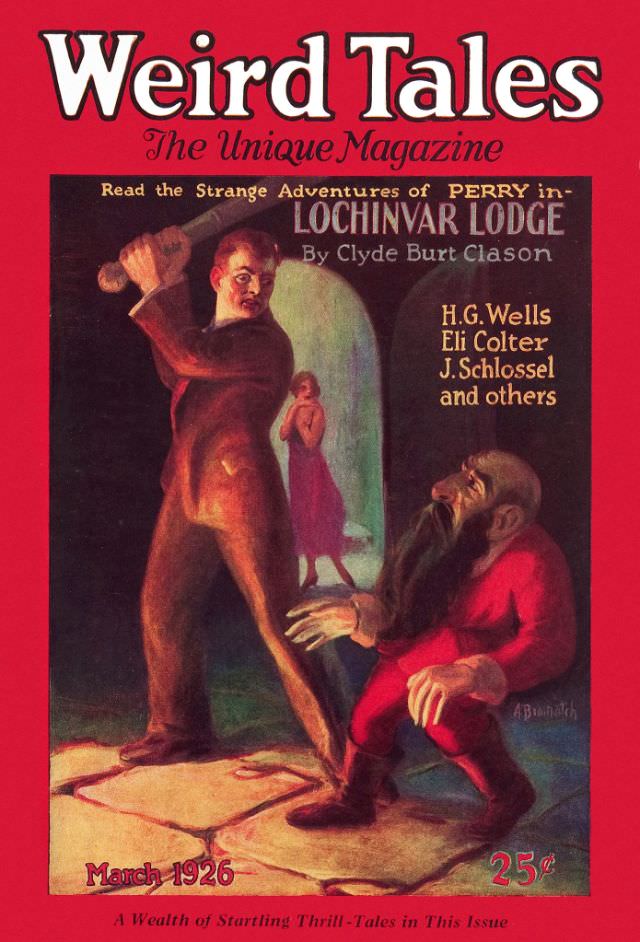
#9 Weird Tales cover, March 1926
Bold reds and shadowy greens dominate the March 1926 cover of *Weird Tales*, where danger is staged like a feverish play under an arched doorway. A tense figure raises a club overhead, while a bearded man in red recoils on the stone floor, hands lifted in a last-second plea. In the background, a smaller onlooker…
-
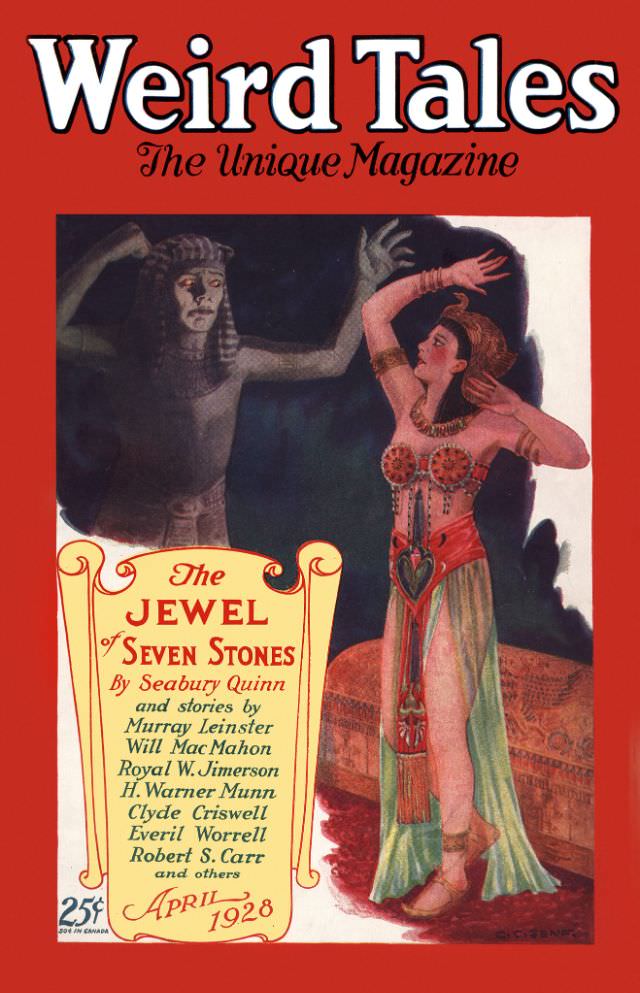
#25 Weird Tales cover, April 1928
Bold scarlet borders and oversized lettering announce *Weird Tales: The Unique Magazine*, pulling the eye straight into the lurid theater of pulp-era imagination. The April 1928 cover teases “The Jewel of Seven Stones,” and the composition delivers: a richly dressed dancer in an exoticized setting recoils as a looming, gray-green apparition reaches toward her from…
-
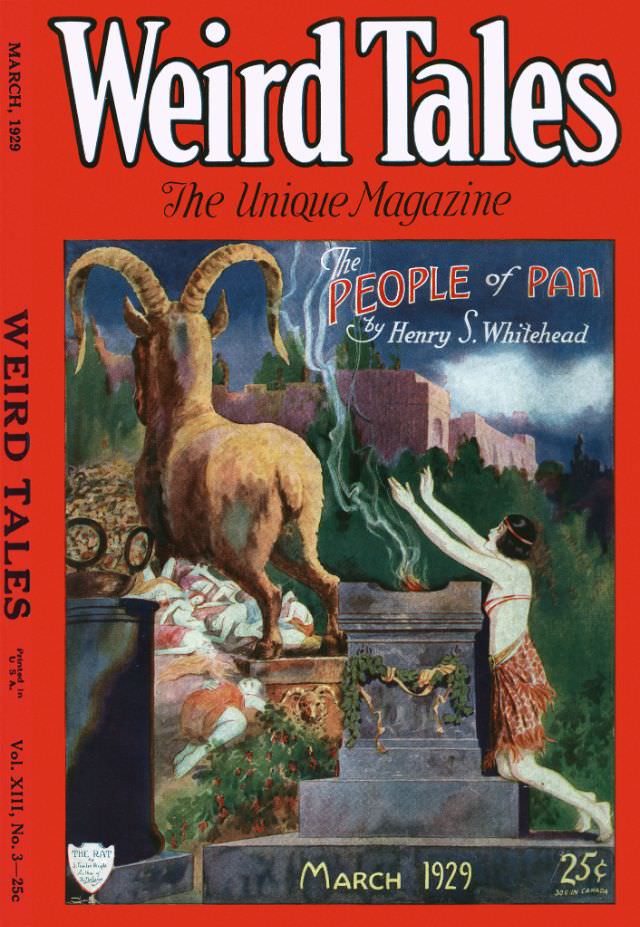
#41 Weird Tales cover, March 1929
Bold red framing and oversized lettering announce Weird Tales with the confidence of a pulp magazine that knew exactly how to command a newsstand. The March 1929 cover leans into spectacle, pairing “The Unique Magazine” tagline with an illustrated scene that blends sensuality, superstition, and threat in a single glance. Even before a reader reaches…
-
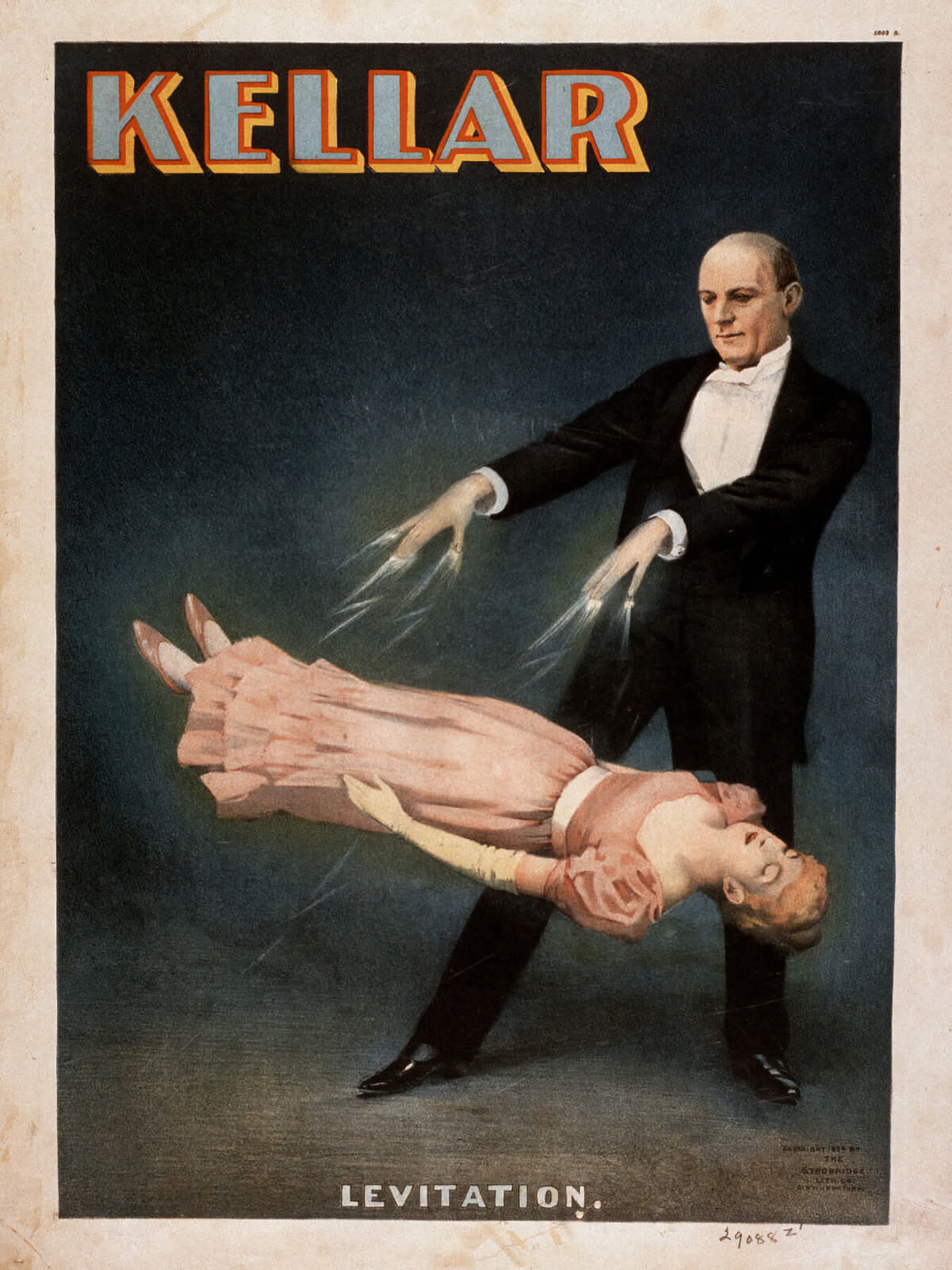
#12 Harry Kellar. Levitation Magic Trick, 1914
Bold letters spelling “KELLAR” crown this 1914 cover art, setting the stage for a classic piece of stage illusion: levitation. A sharply dressed magician in formal evening wear extends his hands as if channeling invisible forces, while a woman in a flowing pink dress floats horizontally before him. Against a dark, theatrical backdrop, the composition…
-
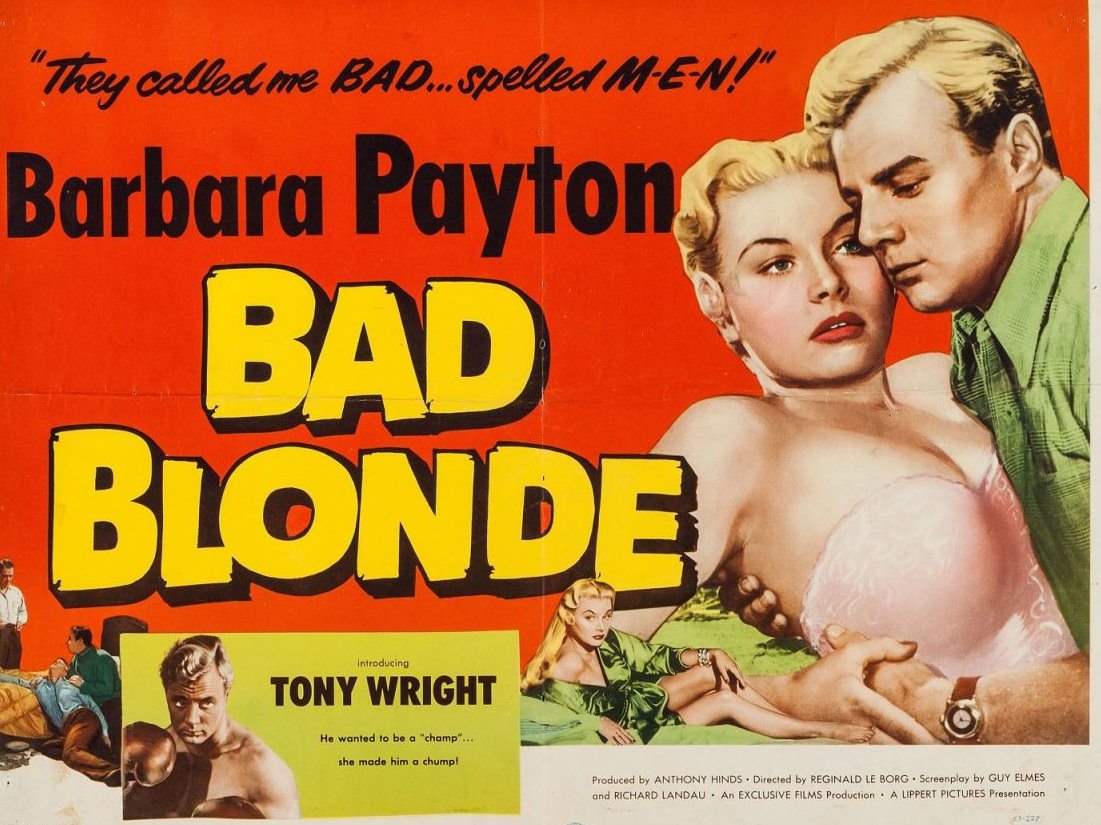
#15 Bad Blonde (1953).
Hollywood’s early‑1950s appetite for scandal and sultry melodrama is written all over the cover art for *Bad Blonde (1953)*, where bold typography and a hot red backdrop set the temperature before a single scene begins. The tagline—“They called me BAD… spelled M‑E‑N!”—leans into the era’s punchy, moralizing wordplay, promising danger, desire, and consequences in the…