Category: Inventions
Explore the fascinating evolution of technology through historic inventions that changed the world. From early aviation to bizarre gadgets — creativity knows no bounds.
Each photo celebrates human innovation and the spirit of discovery that pushed civilization forward.
-
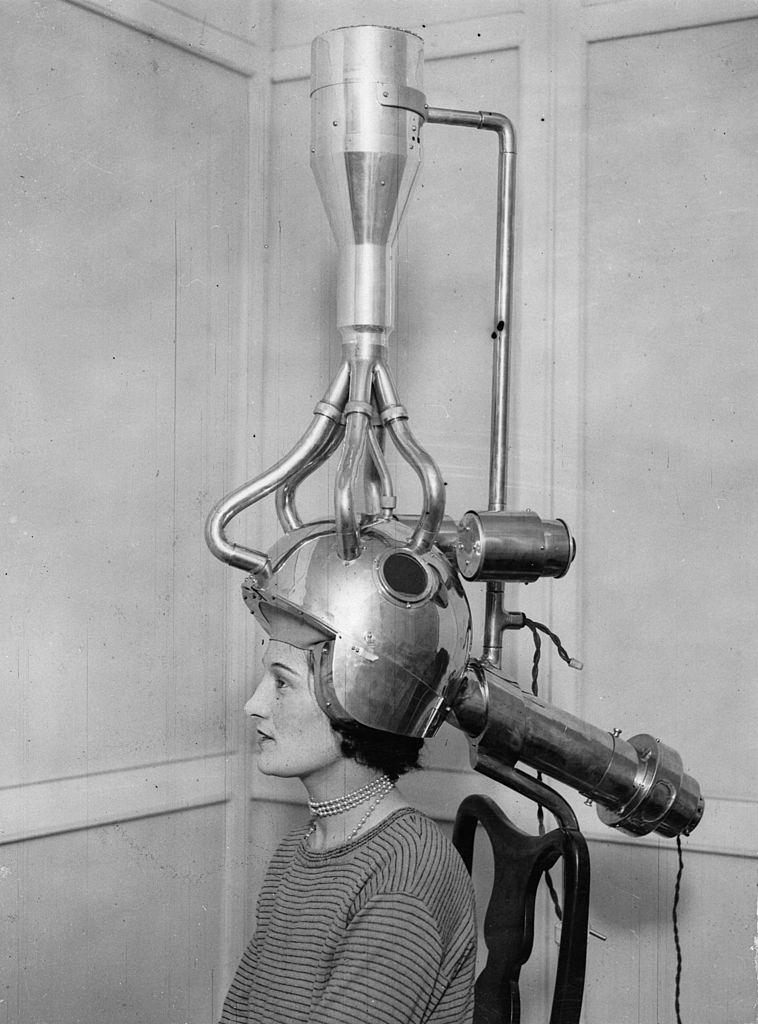
#30 The Bizarre History and Photos of Different Hair Dryer Models from the 20th Century #30 Inventions
A woman sits in profile wearing a gleaming metal “helmet” connected to a tangle of tubes and a tall, funnel-like chamber above her head, as if a small factory has been mounted to a salon chair. The contraption’s polished surfaces, rivets, and exposed wiring underline an era when beauty technology borrowed heavily from industrial design.…
-
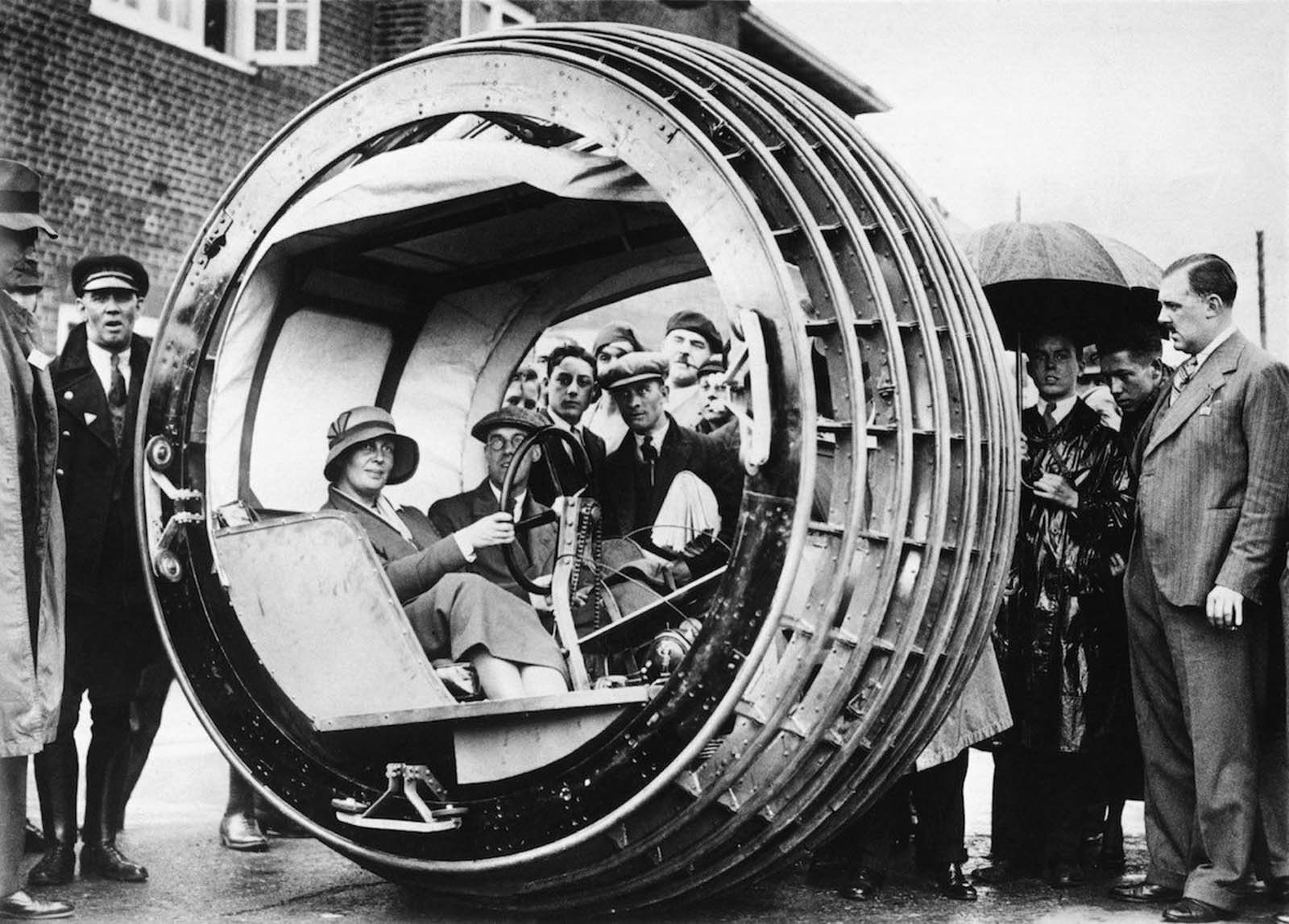
#11 Weybridge, Surrey, England, UK -The Dynasphere is demonstrated, 1932.
In Weybridge, Surrey, in 1932, a crowd gathers close to an invention that looks more like a piece of aircraft engineering than a road vehicle: the Dynasphere. The machine is essentially a single giant wheel, its ribbed metal rim forming a cage around a small seated cabin. At the controls, a driver grips a steering…
-
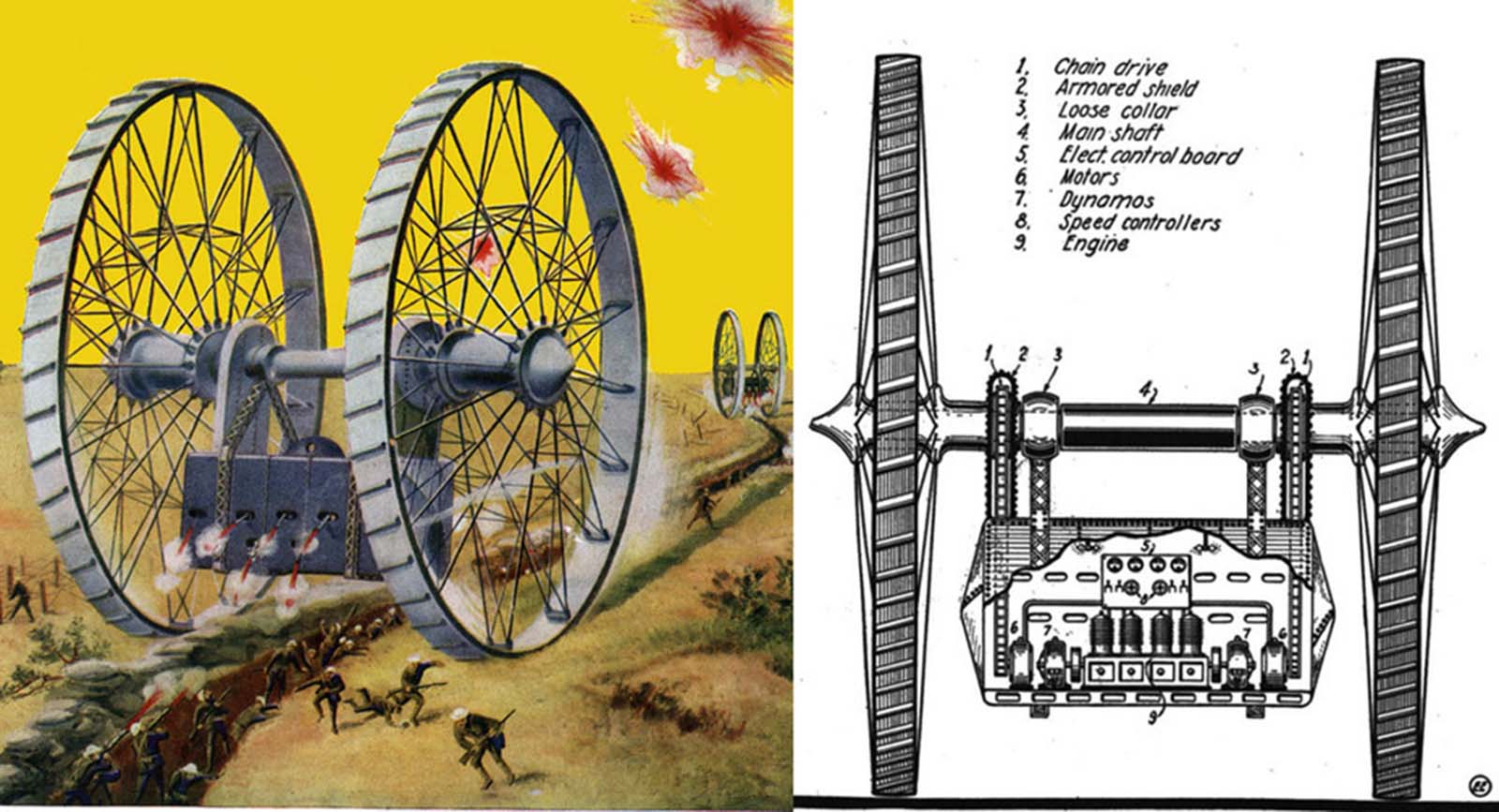
#27 Hugo Gernsback’s trench destroyer.
Hugo Gernsback’s “trench destroyer” leaps off the page as a bold piece of early military futurism, built around two towering spoked wheels that stride over broken ground like an industrial insect. In the colored scene, the machine rolls along a scarred battlefield, its low central body hanging between the rims while small figures below scatter…
-
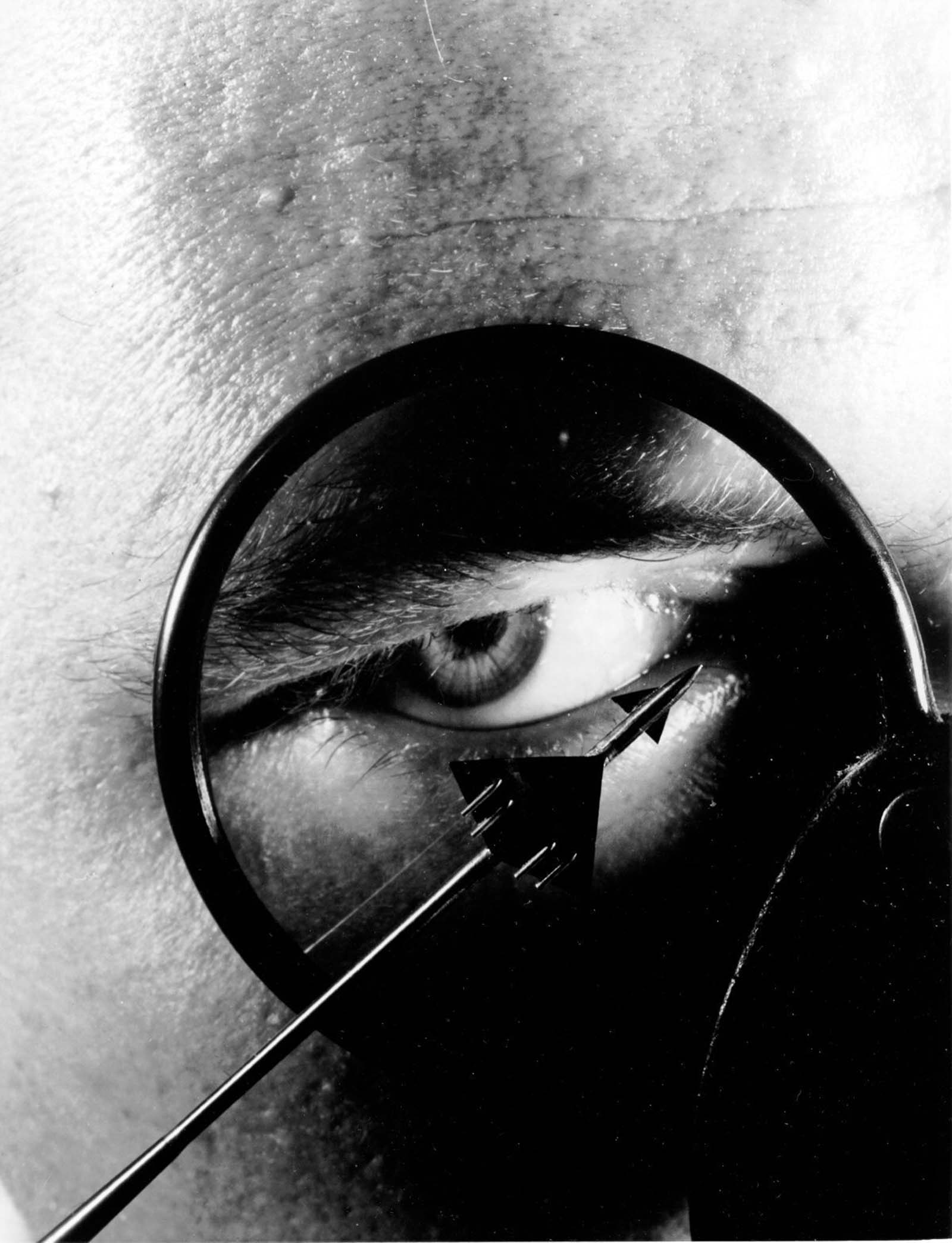
#14 A one-inch scale model of a typical supersonic airplane design is examined before being installed for sonic boom studies in the four-foot supersonic tunnel at Langley Research Center.
A single eye fills the frame, ringed by a magnifier that turns inspection into drama, while a tiny supersonic airplane model hovers in sharp silhouette. The stark black-and-white contrast emphasizes scale: a one-inch design held close enough to reveal its needle nose, delta-like planform, and carefully finished surfaces. It’s an intimate view of aerospace research,…
-
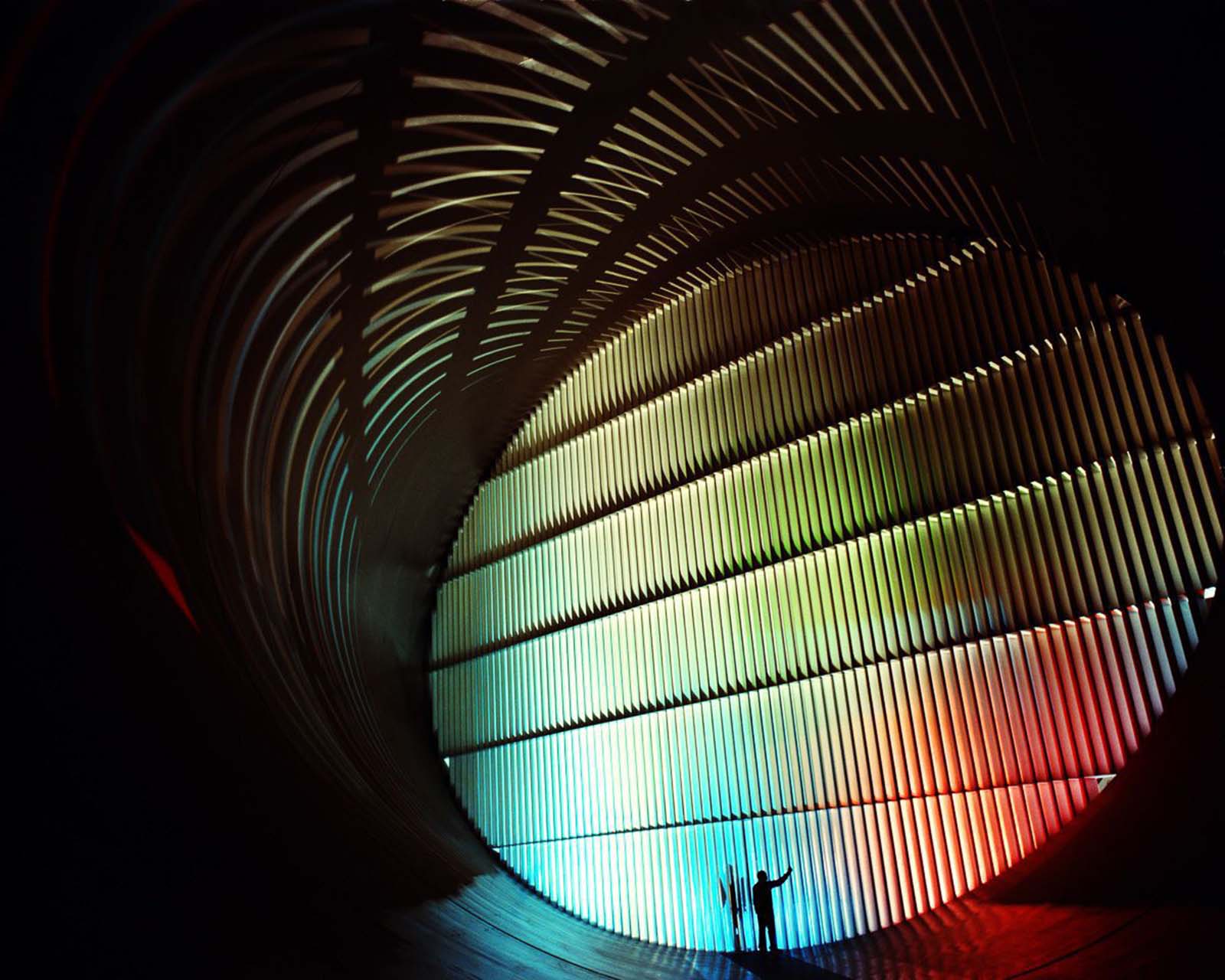
#30 Turning vanes in the 16-Foot Tunnel at Langley, 1990.
Curving ribs of metal draw the eye down the throat of the 16-Foot Tunnel at Langley, where rows of turning vanes form a precise, almost architectural spiral. The lighting washes across the blades in bands of cool and warm color, turning a piece of aerodynamic hardware into something that feels both industrial and luminous. Even…
-
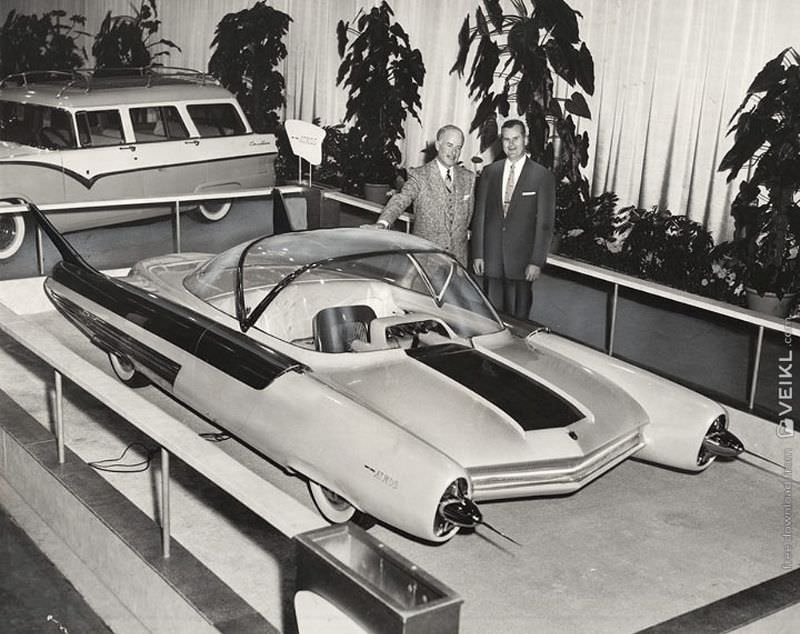
#14 1954 Ford FX-Atmos: The Futuristic Car with Glass Dome Roof, Tail fins, and Rocket exhaust taillights #14
Curving low behind display rails, the Ford FX-Atmos concept looks less like a conventional automobile and more like a jet-age experiment that escaped the drawing board. A clear glass dome roof forms a cockpit canopy over the seats, while the body narrows into sharp, sculpted lines that emphasize speed even at rest. The overall silhouette—long,…
-
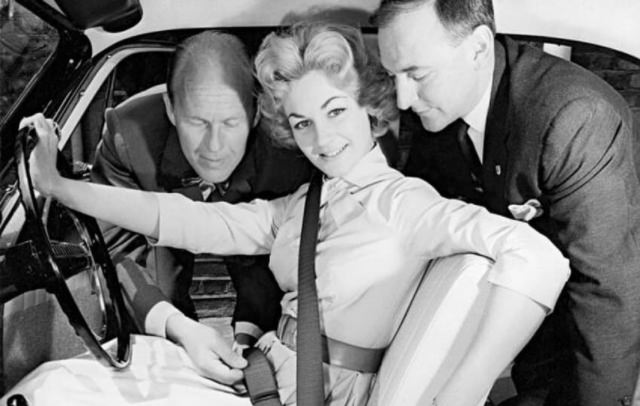
#10 V-Shaped Three-Point Safety Belt made by Volvo that saved One Million Lives #10 Inventions
Inside a car’s front seat, a woman is posed with a diagonal strap crossing her chest while two suited men lean in to inspect and adjust the restraint, turning a simple cabin into a small stage for a big idea. The V-shaped geometry suggested by the title is easy to read in the way the…
-
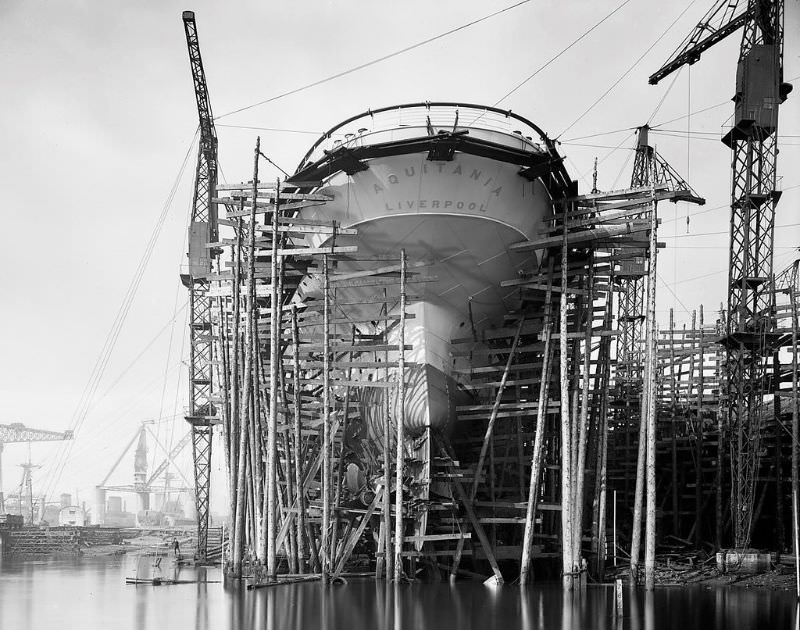
#4 Cunard’s Aquitania on the stocks at John Brown & Company of Clydebank; the same Scottish yard that would later build the Queen Mary, Queen Elizabeth and Queen Elizabeth 2, circa 1913
Rising above a forest of timber props and scaffolding, Cunard’s Aquitania sits on the stocks at John Brown & Company in Clydebank, her bow looming like a cliff over the quiet water of the yard. The ship’s name and “Liverpool” are visible on the hull, a reminder that this immense structure was being shaped for…
-

#20 Interior of Aquitania showing the 3rd Class General Room (or Non Smoking Compartment), on the Upper Deck (D Deck), a view of the port side, looking forward, April 1914
Quietly utilitarian yet carefully finished, the third-class general room aboard the RMS Aquitania opens out along the Upper Deck (D Deck), looking forward on the port side. Dark wood paneling, sturdy columns, and a low ceiling threaded with beams create a space designed to endure constant motion and heavy use, while still offering a sense…
-
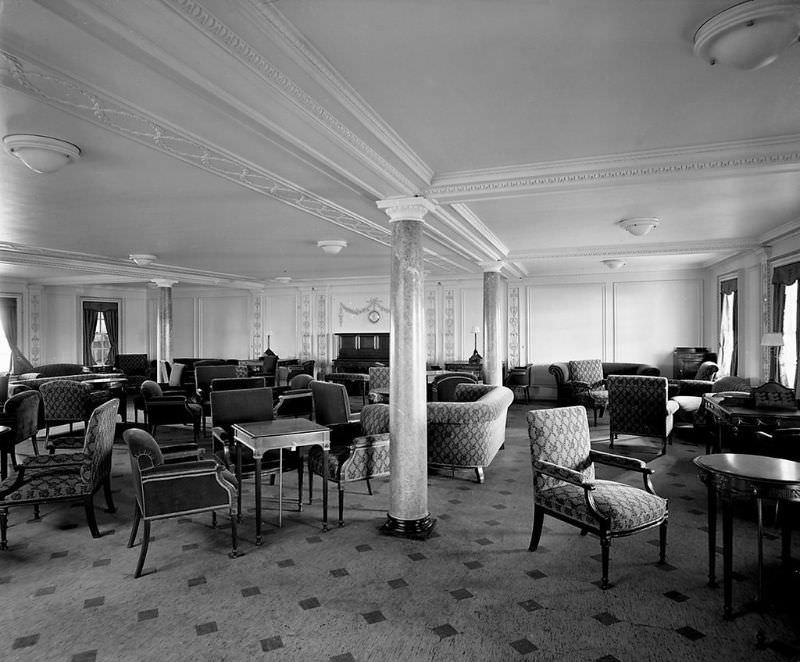
#36 Aquitania’s 2nd Class Lounge. The Louis XVI-style Second Class Lounge was on the Promenade Deck (D Deck). This is a view from the port side, looking towards the piano at the after end, May 1914
Elegance was not reserved for the most expensive cabins aboard RMS Aquitania, and the Second Class Lounge on the Promenade Deck (D Deck) makes that clear at a glance. Louis XVI-inspired paneling frames the room in crisp symmetry, while smooth columns and restrained plasterwork guide the eye toward the after end where a piano anchors…