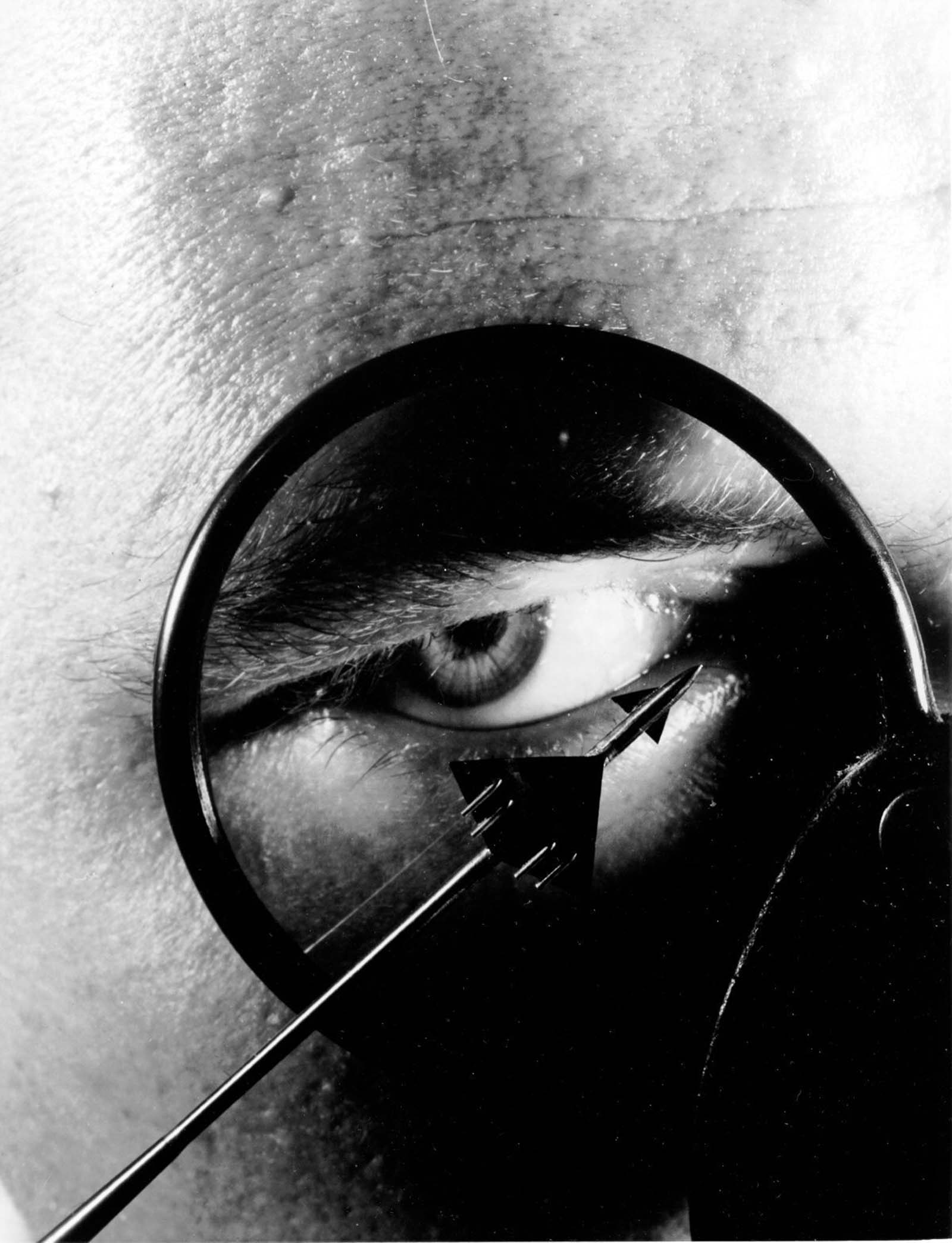
A single eye fills the frame, ringed by a magnifier that turns inspection into drama, while a tiny supersonic airplane model hovers in sharp silhouette. The stark black-and-white contrast emphasizes scale: a one-inch design held close enough to reveal its needle nose, delta-like planform, and carefully finished surfaces. It’s an intimate view of aerospace research, where vision, patience, and precision mattered as much as raw speed.
Inside Langley Research Center’s four-foot supersonic tunnel, miniatures like this stood in for full-size aircraft, allowing engineers to probe what the atmosphere would do at high Mach numbers. Before installation, every edge and junction had to be checked, because small imperfections could skew measurements of shock waves and pressure patterns. The title’s focus on sonic boom studies hints at the broader stakes—understanding the loud, far-reaching signature of supersonic flight and how design choices might shape it.
Rather than celebrating a single invention, the photograph captures a method: reducing a complicated problem to something you can hold, measure, and test repeatedly. The magnifying glass becomes a symbol of the era’s research culture, when wind tunnels, model-making, and careful observation drove breakthroughs in aerodynamics. For readers searching aviation history, NASA Langley wind tunnel research, or the story behind sonic boom experimentation, this image offers a compelling doorway into the engineering behind supersonic aircraft design.